

How do epoxy primer and zinc preparations work together to maximise protective qualities for metal surfaces?
Epoxy primer and zinc preparations work together by combining corrosion-inhibiting zinc pigments with the strong adhesion and moisture barrier of an epoxy binder. The zinc-based layer helps limit corrosion at the metal interface, while the epoxy film seals the surface and provides a sound foundation for the powder coating or subsequent finish.
Epoxy primer and zinc preparations maximise protection by addressing different corrosion risks within the coating system. The zinc component improves protection at or near the metal interface, while the epoxy layer provides a continuous, strongly adherent film that separates the substrate from moisture, oxygen and contaminants. When correctly selected and applied, the resulting system gives the subsequent powder coat a stable, well-bonded surface rather than relying on the topcoat alone.
“Zinc preparation” can describe more than one treatment. Zinc phosphate is commonly used as a conversion coating or as the active pigment in an epoxy primer. It supports adhesion and provides corrosion-inhibiting characteristics within the primer film, but it is not the same as a zinc-rich primer. A zinc-rich system contains a high proportion of metallic zinc and can offer sacrificial, or galvanic, protection where the coating is damaged. The choice between zinc phosphate, zinc-rich primer and another zinc-based treatment depends on the substrate, exposure conditions, finish requirements and the coating specification.
In an epoxy zinc phosphate system, the preparation first improves the condition of the metal surface for coating. It can help create a more receptive interface and reduce the likelihood that corrosion will spread beneath the coating. The epoxy binder then holds the active material in a cohesive film. This matters because loose or poorly bonded corrosion products can undermine an otherwise sound-looking finish. The primer must remain attached to the prepared metal while also providing a compatible surface for the powder coat.
The layers therefore contribute to protection in sequence:
- Metal preparation removes oil, dirt, mill scale, rust and other contaminants that could prevent adhesion.
- Zinc treatment or zinc-containing primer supports corrosion control at the substrate and helps create a suitable interface.
- Epoxy film consolidates the primer layer and restricts the movement of moisture and corrosive substances through the coating.
- Powder topcoat adds the specified colour, appearance and additional resistance required for the component’s service environment.
This layered approach is particularly important at vulnerable areas such as edges, corners, drilled holes, welds and joints. These locations may have thinner coverage, altered surface chemistry or residual fabrication contamination. Abrasive cleaning, suitable rounding or dressing of sharp edges, and careful removal of weld residues help the primer reach and remain attached to these areas. A zinc preparation cannot compensate for grease, flash rust or loose scale left on the steel, so preparation quality remains fundamental to the whole system.
Application control also determines whether the layers work together. The primer must be applied at a suitable thickness and allowed to cure in accordance with its technical requirements. Excessive thickness can create curing or solvent-release problems, while insufficient coverage may leave weak points in the protective film. The powder coat must also be compatible with the primer and applied within the relevant recoat or overcoating conditions. If the surface is contaminated between stages, or if the primer is over-cured, under-cured or damaged before powder coating, adhesion between the layers can be reduced.
Correct curing is important because epoxy primers develop their protective properties through a controlled chemical reaction. The final result depends on the specified time and temperature, the mass and geometry of the component, and the equipment used. Large or complex fabrications may heat differently from small parts, leaving recessed areas or heavy sections with a different cure history. Coating schedules should therefore be based on the metal temperature and the product specification rather than simply the oven air temperature or elapsed process time.
The combined system should be selected according to the environment in which the metal will be used. Indoor, sheltered and dry applications may require a different specification from components exposed to persistent moisture, salts, chemicals, condensation or outdoor weathering. Contact with dissimilar metals, trapped water at joints and damage caused during installation can also affect performance. A zinc-rich approach may be considered where sacrificial protection is a specific requirement, whereas an epoxy zinc phosphate preparation may be appropriate where adhesion, inhibitive protection and compatibility with a powder finish are the main priorities.
Inspection should cover more than appearance. The finished component should be checked for adequate coverage, visible defects, contamination, pinholes, runs, missed areas and damage around edges or handling points. Where the specification requires it, dry film thickness and adhesion can be assessed using suitable methods. Any repair must use a compatible material and follow the coating system’s instructions; applying an unrelated touch-up product can introduce a weak interface or create an uneven finish.
In practice, the most reliable specification identifies the substrate, required preparation standard, zinc treatment or primer type, film build, curing conditions and powder topcoat as one system. Treating each stage independently can produce incompatibility, inadequate coverage or unnecessary coating thickness. For manufacturers and fabricators, discussing the metal grade, component design, expected exposure and end-use handling before processing helps determine whether epoxy with a zinc preparation is suitable and how it should be applied.
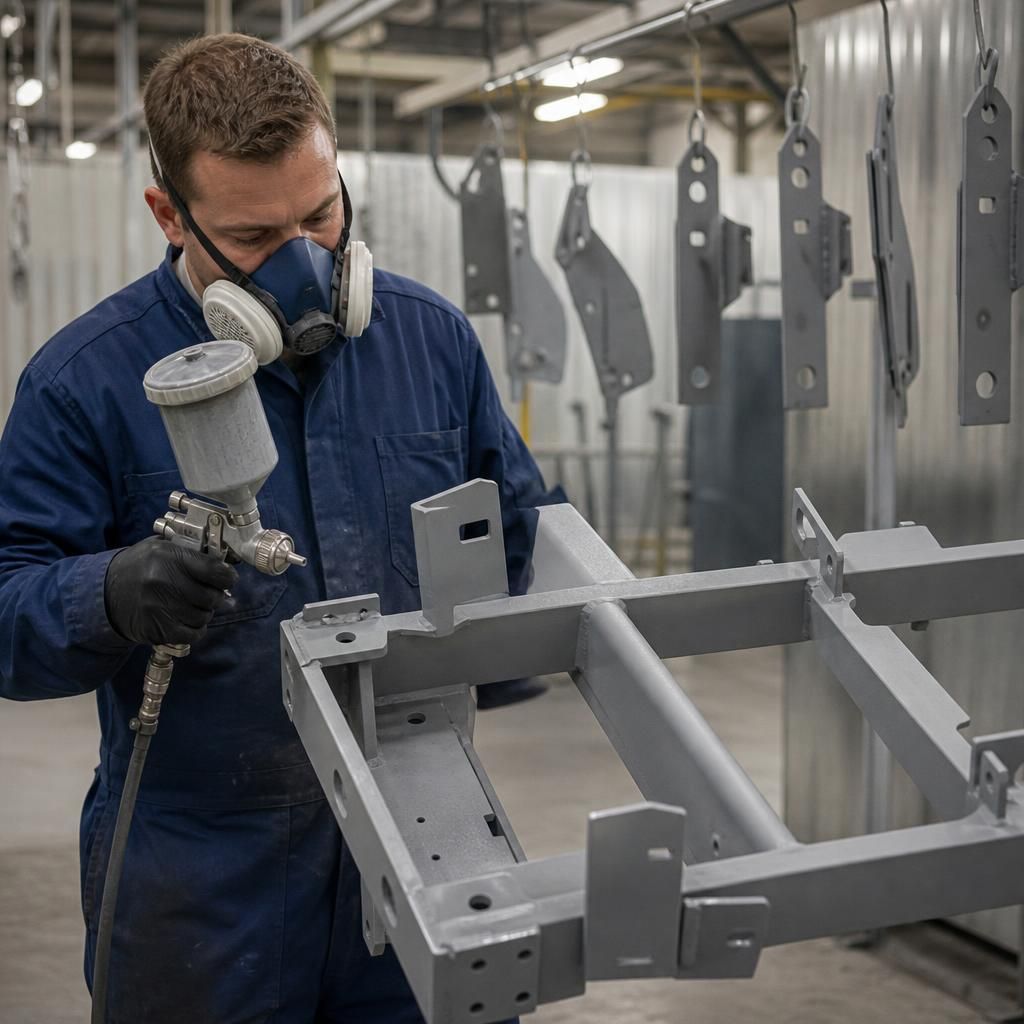
The protective value of an epoxy primer and zinc preparation depends on treating them as one defined coating system. For repeat production, the specification should record the substrate, preparation method, primer identity, target film build, powder finish and curing requirements. This gives the coater a consistent reference when components vary in size, shape or fabrication method.
Batch control is particularly useful where parts include mixed section thicknesses, welded areas or enclosed features. Comparing process records with inspection findings can help identify whether a defect relates to surface preparation, primer application, powder application or curing. That distinction supports targeted correction rather than adding unnecessary coats, which can create its own adhesion or curing problems.
Discuss epoxy primer and zinc preparation for your metal components
Discuss your metal components with the coating team to assess whether an epoxy primer and zinc preparation are suitable for the substrate, exposure conditions and intended powder finish. Sharing drawings, material details and service requirements will help establish an appropriate coating specification.