

What are the key maintenance practices required to ensure maximum efficiency and lifespan of powder coating ovens in industrial settings?
Maximise the efficiency and service life of an industrial powder coating oven through planned inspections, regular cleaning, accurate temperature checks and prompt correction of faults. Focus on airflow, heating components, insulation, door seals, controls and exhaust systems, while recording maintenance findings and following the oven manufacturer’s servicing requirements.
Effective powder coating oven maintenance combines preventive servicing, condition monitoring, safe operating procedures and controlled use of the equipment. The aim is not simply to keep the oven running, but to preserve consistent curing conditions, prevent avoidable wear and identify developing faults before they affect production or damage coated components.
Establish a maintenance plan based on actual duty
Maintenance intervals should reflect the oven’s workload, operating temperature, production environment and the type of powder being cured. An oven processing heavily contaminated parts or running multiple shifts may require more frequent attention than one used intermittently. Divide tasks into daily, weekly, monthly and periodic activities, assigning responsibility for each task and defining what constitutes a fault requiring escalation.
Keep a maintenance history for the oven, including replaced components, recurring faults, inspection results and any changes to the production process. This helps distinguish isolated failures from patterns such as repeated bearing wear, unstable burner performance or gradual deterioration of mechanical components.
Maintain the conveyor and mechanical equipment
In conveyorised systems, the transport equipment is as important as the heated chamber. Inspect chains, rollers, drive units, hangers and bearings for wear, distortion, contamination and unusual noise. Check that parts travel smoothly through the oven and that hooks or fixtures remain secure. Poor movement can cause inconsistent exposure, contact with the oven structure or interruptions that leave coated components under-cured.
Lubricate moving parts only with products suitable for the operating temperature and location. Excess lubricant can attract powder and create deposits, while unsuitable products may break down when exposed to heat or contaminate components. Any adjustment to chain tension, drive alignment or fixture spacing should be recorded and followed by a check of the complete line.
Control powder contamination and deposits
Powder accumulation can affect moving parts, sensors, burner areas and internal surfaces. Remove deposits using methods appropriate to the oven construction and the powder material. Avoid techniques that spread fine powder into bearings, electrical enclosures or combustion equipment. Where different powder chemistries or colours are processed, include suitable contamination controls in the cleaning procedure so that residue from one process does not affect the next.
Inspect transfer points, loading areas and the oven entrance and exit for build-up. These locations often collect loose powder and debris carried in from upstream equipment. Keeping surrounding areas orderly also reduces the chance of foreign material entering the oven and makes emerging leaks or mechanical defects easier to identify.
Inspect electrical, fuel and safety systems
Electrical connections, wiring, isolators and protective devices should be examined by a suitably competent person at intervals appropriate to the installation. Look for damaged insulation, loose terminals, heat discolouration and signs of moisture or powder ingress. Any unusual odour, repeated tripping or intermittent control behaviour should be investigated rather than repeatedly reset.
Where the oven uses gas or another fuel, combustion equipment and fuel-train components require inspection and servicing by appropriately qualified personnel. Safety interlocks, flame-failure protection, emergency stops and access-door switches must be tested as part of the planned regime. These devices should never be bypassed to maintain production. A failed safeguard requires the equipment to be isolated until the cause has been corrected.
Use condition monitoring to find faults early
In addition to scheduled servicing, operators should note changes in noise, vibration, smell, cycle behaviour, energy use and coating appearance. A new vibration from a fan or conveyor drive, for example, may indicate imbalance, bearing deterioration or misalignment before a breakdown occurs. Trends are more useful than isolated observations, so record findings in a consistent format and compare them with the oven’s normal operating condition.
Consider periodic checks of vibration, electrical current, combustion performance and component condition where the oven’s scale and duty justify them. These checks can support planned replacement of wearing parts instead of relying solely on failure-based repairs. Replacement parts should be suitable for the oven and installed in accordance with the equipment documentation.
Review loading and operating practices
Incorrect loading can increase mechanical and thermal stress even when the oven itself is well maintained. Keep parts within the intended clearance and loading arrangement, prevent components from touching one another where this affects heat exposure, and avoid obstructing designed circulation paths. Excessive loading can extend the time required for parts to reach the required cure condition and place additional demand on the equipment.
Fixtures should be checked for accumulated powder, distortion and loss of contact where electrical grounding is required upstream of the oven. Damaged or unsuitable fixtures can cause parts to swing, fall or pass through the oven in an inconsistent orientation. Replacing defective fixtures is often more effective than trying to compensate for their effect elsewhere in the process.
Manage repairs and planned shutdowns safely
Before maintenance begins, isolate the relevant energy sources and allow hot surfaces and internal components to reach a safe condition. Apply the site’s lockout and isolation procedure, particularly where electrical, gas, pneumatic or mechanical energy is present. Maintenance access should be controlled, and guards or protective covers must be refitted before the oven returns to service.
After a repair, carry out a documented recommissioning check rather than immediately resuming normal production. Confirm that moving components operate correctly, safety devices function, access points are secure and the oven reaches stable operating conditions. If a major component, control setting, airflow arrangement or production load has changed, verify the curing process again before accepting routine output.
Train operators to support maintenance
Operators are usually best placed to identify early changes, provided they know what normal operation looks and sounds like. Training should cover safe start-up and shutdown, loading limits, fault reporting, contamination control and the actions required when an alarm or interlock operates. Operators should not be expected to carry out specialist repairs, but they should understand which conditions require the oven to be stopped and reported.
The most effective maintenance system therefore combines a written schedule, competent servicing, clean and suitable operating practices, mechanical checks, safety testing and accurate records. Reviewing maintenance findings alongside coating defects and production interruptions allows the schedule to be refined and helps keep the oven efficient and dependable over its service life.
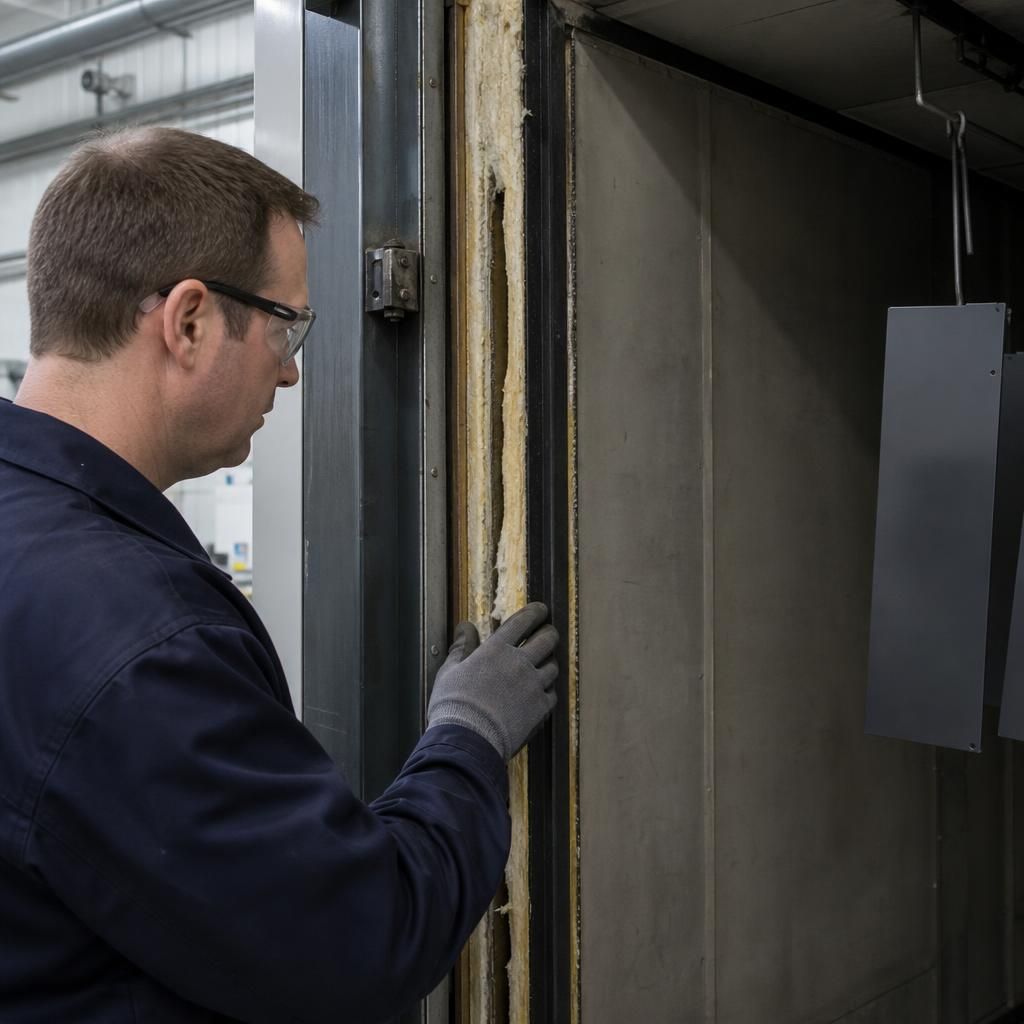
Inspect the oven’s insulation and door seals for gaps, compression, cracking or heat damage. Deteriorated insulation allows heat to escape through the chamber walls, while worn seals can create local temperature differences and make the heating system work harder to maintain the required curing conditions.
Check sealing surfaces during planned maintenance and replace damaged sections with materials suitable for the oven’s operating temperature. After repairs, confirm that doors close evenly and that the oven reaches a stable temperature without abnormal heat loss. Any hot spots on external panels or around access doors should be investigated rather than treated as normal operating behaviour.