

What role do substrate materials play in determining the appropriate powder coating colour and finish for my project?
The substrate material affects powder coating colour and finish because its surface chemistry, texture and heat tolerance influence adhesion, curing and the final appearance. Steel, aluminium and galvanised components may therefore require different preparation, coating systems or finish choices to achieve a consistent, durable result.
The substrate material influences the appropriate powder coating colour and finish by affecting how the coating reflects light, how evenly it can be applied and how it behaves during curing. The same powder can therefore produce a different visual result on mild steel, aluminium or galvanised metal, even when the nominal colour and application settings are unchanged.
Colour selection should be assessed alongside the condition and natural appearance of the base metal. A smooth, uniform substrate generally gives a more even colour, while scratches, grinding marks, welds, casting texture and variations in surface profile can remain visible beneath a smooth coating. A textured or fine-textured finish may help reduce the visual prominence of minor surface irregularities, although it does not replace suitable preparation or repair of significant defects.
Steel commonly provides a stable foundation for a broad range of powder coating colours and appearances. Its surface condition is particularly important: mill scale, rust, oil, weld residues and embedded contaminants can affect the uniformity of the finished coating. Where the steel includes welded or repaired areas, the selected gloss level and texture should be reviewed against the required appearance, as higher-gloss smooth finishes tend to show variations more clearly than lower-gloss or textured alternatives.
Aluminium has a different surface character from steel and is often selected where weight, corrosion resistance or a particular appearance is important. Its natural colour and reflectivity can influence the perceived depth and brightness of certain colours, particularly lighter, metallic or translucent-looking finishes. Consistent preparation is important where several aluminium components are being coated together, because variations between extruded, machined and cast sections can remain visible after coating. The design should also account for areas that need to remain uncoated, including electrical contact points, threads and close-fitting interfaces.
Galvanised and zinc-coated steel require particular attention because the zinc layer can react during the coating process and may affect the surface appearance. The condition of the galvanised layer, its age, passivation and any storage contamination all influence the preparation required. If the coating system is not suited to the surface, defects such as pinholing, bubbling or uneven appearance may become visible. These risks should be considered before committing to a highly uniform gloss or visually demanding colour.
Cast metals and fabricated components can also present local differences in porosity, density and surface texture. Porous areas may release trapped air or moisture during curing, while cast surfaces can produce a more variable reflection than rolled or machined metal. For these parts, a textured finish may be more forgiving visually, but the coating specification still needs to account for the component’s intended use, dimensions and areas requiring close tolerances.
The substrate affects the choice of finish in several practical ways:
- Gloss level: Smooth high-gloss finishes give strong colour clarity but can emphasise surface defects, waviness and preparation marks. Satin or matt finishes generally give a softer appearance and may be more suitable where a less reflective surface is required.
- Texture: Fine or heavier textures can change how light is scattered across the part, so the colour may appear less intense or different from the same colour in a smooth finish. Texture can also help disguise minor visual variation, but it may be unsuitable for components that need easy cleaning or close-fitting assembly.
- Metallic and special effects: These finishes can show greater variation between batches, viewing angles and component orientations. The material, surface profile and application method should be assessed together when visual consistency is important.
- Clear or lightly tinted coatings: These allow more of the underlying metal character to influence the final appearance. Differences in substrate tone and preparation may therefore be more noticeable than beneath an opaque colour.
Component design is another consideration. Sharp edges, recesses, holes, threaded sections and overlapping joints can affect how powder reaches the surface and how the finished colour appears in different areas. Masking may be needed to preserve contact faces or functional surfaces. If the item combines different metals, each material should be considered separately because a shared colour specification does not remove the need for compatible preparation and coating requirements.
For a reliable specification, provide details of the base metal, whether it is bare, previously coated, galvanised or anodised, the required appearance, any exposed or functional areas, and the conditions in which the finished component will be used. It is also sensible to assess a representative sample where the project includes mixed substrates, prominent welds, castings, metallic effects or close colour-matching requirements. The sample should be viewed under the lighting in which the finished parts will normally be assessed, as gloss, texture and reflectivity can change the perceived colour.
In practice, the substrate should be treated as part of the colour specification rather than as a separate preparation issue. Defining the material, preparation standard, coating system, colour, gloss or texture and masking requirements together gives a more predictable result than selecting a colour in isolation.
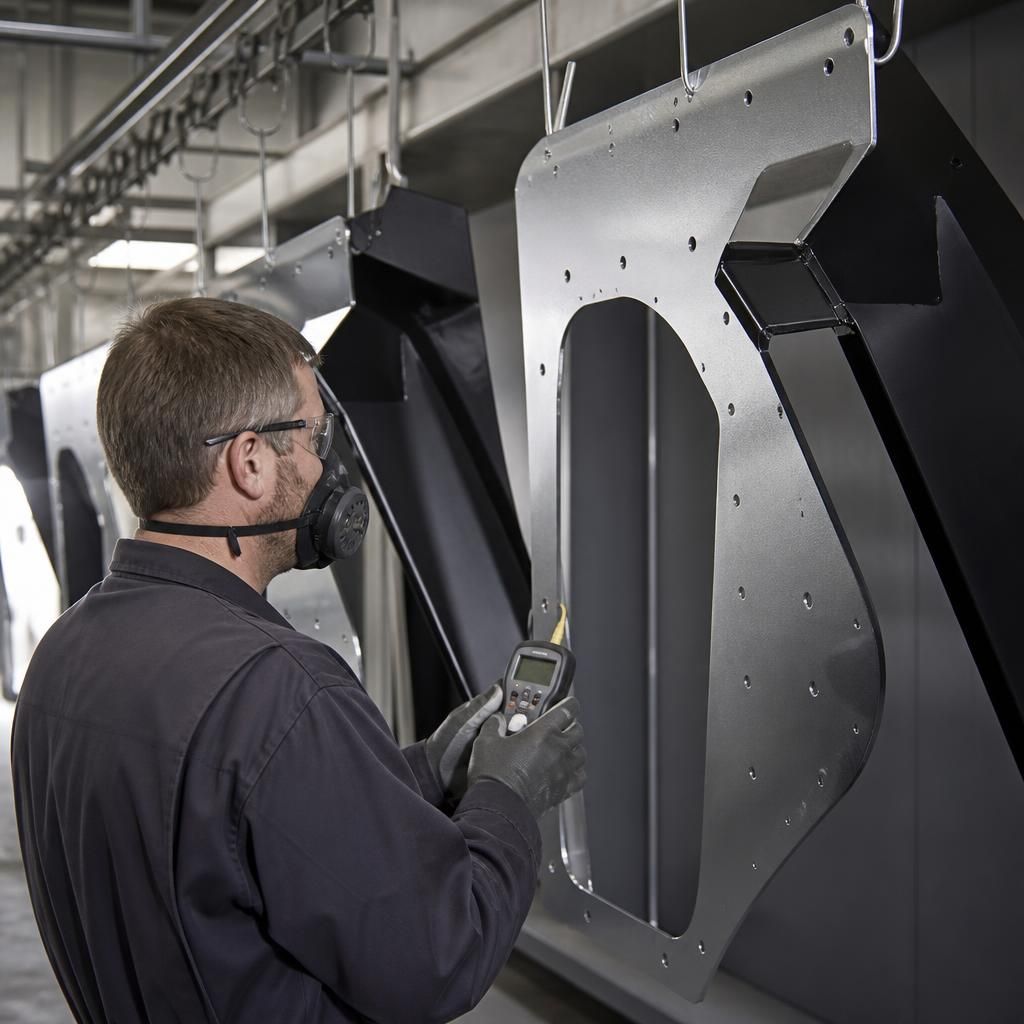
Substrate thickness and thermal mass can affect how consistently a powder coating develops its final colour and finish. Thin aluminium sections heat quickly, while heavy steel components may take longer to reach the required metal temperature. If parts are coated together without accounting for this difference, gloss and colour development may vary across the batch.
For mixed or unusually heavy components, the curing schedule should therefore be assessed against the temperature of the metal rather than oven-air temperature alone. Representative parts can help confirm that the chosen powder system develops the intended appearance throughout the component, including thicker sections and areas with different heat exposure.
Discuss your substrate and powder coating requirements
Discuss your substrate, component design and required colour or finish with the powder-coating team before finalising the specification. Providing these details allows the preparation, coating system and masking requirements to be considered together for your project.