

How essential is metal preparation before powder coating in preventing coating defects and ensuring even application?
Metal preparation is essential before powder coating because it removes oil, grease, rust, mill scale and other contaminants that can cause poor adhesion, pinholing, blistering and uneven coverage. A clean, correctly treated surface gives the powder a consistent foundation, helping the finished coating cure evenly and provide reliable protection.
Metal preparation is the control stage that determines whether powder coating can form a continuous, well-bonded and uniform film. It is not simply a cleaning operation: preparation must make the substrate chemically suitable, physically consistent and free from features that could interfere with spraying or curing.
Assessment comes first. The metal should be checked for its substrate type, existing corrosion, mill scale, welds, sharp edges, recesses, drilled holes and previous coatings. Steel, galvanised steel, aluminium and other metals can require different preparation methods. The condition of the component also affects the level of treatment needed. Light surface contamination may be removed through washing, while oxidation, scale or an incompatible coating may require mechanical or abrasive treatment.
Surface profiling is important for adhesion. Abrasive blasting or suitable mechanical preparation can remove firmly attached surface material and create a controlled key for the powder film. The profile must be appropriate to the component and coating system. If it is too shallow, the coating may have limited mechanical grip; if it is too aggressive, the surface can become uneven or retain abrasive media in difficult areas. Edges, corners and weld zones need particular attention because they often receive a different film build from broad, flat faces.
Degreasing and rinsing must be properly controlled. Oils from fabrication, handling and machining can remain in pores, seams and folds even when a component appears visually clean. A suitable cleaning stage breaks down these residues, followed by rinsing where required to remove cleaning chemicals and loosened material. Inadequate rinsing can leave residues that affect coating appearance or adhesion, while poor drying can introduce moisture into the application process.
Chemical pretreatment can provide an additional conversion layer. Treatments such as phosphate systems alter the surface so that it is more receptive to coating and can improve protection at the metal-to-coating interface. The selected treatment depends on the substrate, the intended service conditions and the powder system. Process control matters: concentration, contact time, temperature, rinsing and drying all influence the result. A chemical treatment is not a substitute for removing heavy corrosion, scale or fabrication contamination first.
Fabrication details can create local defects if they are overlooked. Weld spatter, sharp burrs, tightly closed seams, unsealed overlaps and poorly prepared welds may affect coverage or provide routes for moisture. Sharp edges can produce reduced film thickness because powder tends to pull away during curing. Where the design permits, edges should be softened and welds made continuous and clean. Enclosed sections may also need venting or drainage provisions, particularly where trapped air, moisture or process residue could later affect the coating.
Outgassing should be considered for porous or complex components. Castings, certain fabricated assemblies and contaminated or porous substrates can release gas when heated. This may produce pinholes, bubbles or small craters in the cured film. Appropriate preheating, a suitable powder system or a controlled preparation route may reduce the risk, but the correct solution depends on the metal, its history and the component design. Trial work can be useful where the substrate is known to be porous or has previously caused coating defects.
Masking and racking are part of preparation as well. Threads, bearing seats, earth points, tight mating faces and other areas that must remain free from powder should be identified before coating. Components also need to be supported at suitable contact points so that all required faces are accessible and the electrical earth used during application is reliable. Poor positioning can cause shadowing, uneven deposition or uncoated areas, even when the metal itself has been cleaned correctly.
After preparation, the surface should be inspected for cleanliness, dryness, remaining scale, abrasive residue and visible damage. The interval between preparation and powder application should be controlled because prepared steel can begin to oxidise again if exposed to moisture or contamination. Handling should therefore avoid placing fingerprints, oil or workshop debris back onto the surface.
For industrial batches, consistency is as important as the treatment selected. Components should be grouped by material, condition and geometry where practical, with preparation parameters monitored and recorded. This helps identify whether a defect originates from the substrate, pretreatment, powder application or curing stage rather than treating every problem as a coating failure.
Professional powder coating work therefore starts well before the powder is sprayed. Accurate assessment, suitable cleaning, controlled surface preparation, appropriate chemical treatment, careful masking and inspection collectively reduce variation between parts. For manufacturers, fabricators, construction firms and automotive businesses, discussing the material, previous use, fabrication method and required finish with the coating specialist helps establish a preparation route suited to the component rather than applying the same treatment to every job.
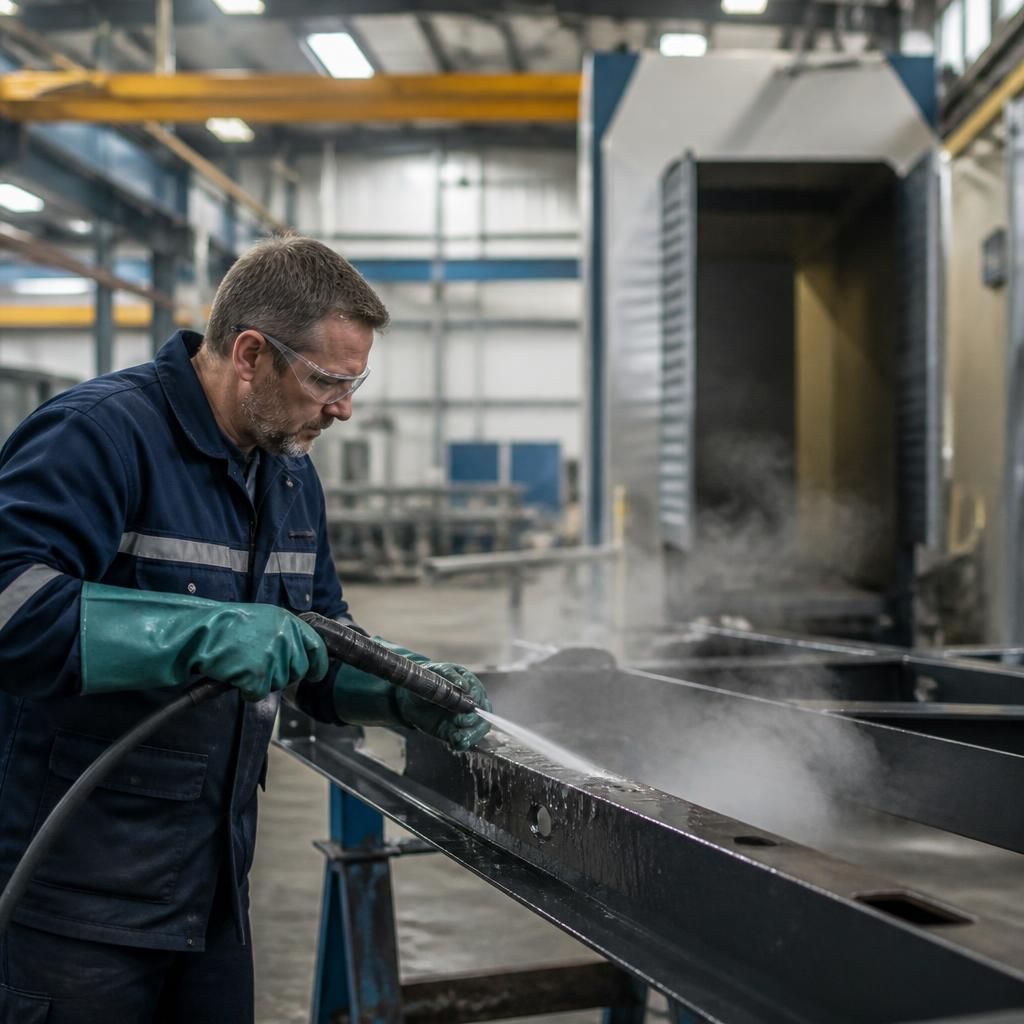
Metal preparation affects powder application as well as adhesion. The powder is applied electrostatically, so contamination, moisture or inconsistent surface condition can alter how particles are attracted to the component. This may contribute to uneven deposition, thin areas, missed sections or excessive build in recesses, even when the spray equipment is set correctly.
A prepared surface therefore needs to be chemically clean and consistent across the whole component, not merely free from obvious dirt. Removing residues and controlling the condition of edges, recesses and contact areas helps create a more predictable powder layer before curing. This is why preparation quality should be assessed as part of the coating process rather than treated as a separate preliminary task.
Discuss the right preparation route for your metal components
Discuss your component’s substrate, geometry, previous coating and service conditions with Powder-coatings.co.uk to identify a suitable preparation route before powder coating. Contact the team about your batch or specialist coating requirements.