

How do nylon and protective coatings contribute to meeting industry compliance and regulatory standards for metal components?
Nylon and protective coatings can support compliance by providing specified resistance to corrosion, chemicals, abrasion and environmental exposure, helping metal components meet the performance requirements set by an applicable industry standard or product specification. Compliance depends on the complete coating process—including material selection, surface preparation, controlled application, curing, inspection and documented traceability—rather than the coating type alone.
Nylon and protective coatings contribute to compliance by helping a metal component achieve the functional, safety and environmental requirements defined by its intended use. They do not make a component compliant automatically: the relevant legislation, standard, customer drawing or product specification must first be identified, then supported by suitable coating materials, controlled production records and objective inspection evidence.
Compliance starts with the requirement, not the coating name. A specification may require resistance to corrosion, salt exposure, chemicals, abrasion, impact, moisture, heat or electrical conditions. It may also define appearance, coating adhesion, coverage, thickness, surface preparation, curing or permissible defects. Nylon is often selected where a tough, insulating or chemically resistant layer is required, while other protective systems may be more appropriate for particular corrosion, temperature or wear conditions. The correct choice depends on the component’s service environment and the acceptance criteria set by the customer or applicable standard.
For manufacturers and fabricators, the relevant requirements commonly come from several sources:
- UK legislation and retained product-safety or environmental requirements applicable to the finished component;
- industry or sector standards governing performance, testing or quality control;
- the end customer’s technical drawing, purchase order or approved coating specification;
- site, project or engineering requirements for components used in construction, transport, plant or machinery; and
- material-control requirements covering substances, waste, worker protection and environmental handling.
These sources should be reviewed together. A coating can pass a corrosion test yet remain unsuitable if it fails a dimensional tolerance, lacks the required electrical properties, contains a restricted substance or is not approved for the component’s intended contact or operating environment.
Material and substance control are important parts of regulatory assessment. The coating specification should identify the product or coating system, its intended use and any relevant safety or technical information. Depending on the application, the purchaser may need evidence concerning UK REACH obligations, restricted substances, hazardous-substance controls or environmental disposal requirements. RoHS or food-contact requirements should not be assumed to apply merely because a component is metal; they are relevant only where the finished product and supply chain fall within the applicable scope. A coating provider can supply process or material information, but responsibility for declaring conformity of the complete product normally remains with the manufacturer or organisation placing it on the market.
Evidence should be proportionate to the risk and the specification. Useful records may include the approved coating material and batch details, technical data sheets, safety data sheets, operator or equipment records, process parameters, inspection results, non-conformance reports and release documentation. Test certificates or laboratory reports may also be required where a customer specification calls for defined corrosion, adhesion, abrasion, chemical-resistance or environmental performance. A general statement that a coating is “protective” is not equivalent to evidence that a particular component meets a defined standard.
Traceability links the evidence to the actual production batch. This may involve recording the incoming metal or component identification, coating material batch, production date, inspection results and any approved rework. Clear identification helps the manufacturer demonstrate which parts were processed under the relevant conditions and supports investigation if a defect or field issue is later reported. The exact records required depend on the customer’s quality system and the criticality of the component.
Inspection should reflect the characteristics that affect compliance. Visual examination can identify incomplete coverage, contamination, runs, pinholes or other surface defects, but it cannot establish every performance property. Depending on the specification, checks may include coating thickness, adhesion, continuity, cure or resistance to a defined test environment. Measuring equipment should be suitable for the task and maintained or calibrated where the quality system requires it. Results should be assessed against agreed acceptance limits rather than against an informal visual judgement.
Dimensional control is particularly relevant where coating is applied to mating faces, threads, holes, bearing locations or close-tolerance parts. A coating that performs well chemically may still cause an assembly or safety problem if it changes a critical dimension. Drawings should therefore identify masking, exclusion zones, permitted build-up and post-coating inspection points where these affect fit or function.
Regulatory compliance also depends on what happens after coating. Parts may be damaged during transport, assembly or installation, exposing the substrate or creating a route for corrosion. The handover information should state any relevant handling restrictions, repair method, storage conditions or inspection requirements. If the coating is cut, drilled, welded or repaired after application, the original evidence may no longer cover the modified area and the responsible manufacturer should determine whether additional assessment is needed.
For a B2B coating project, the purchaser should provide the applicator with the component material, operating environment, drawing revision, required finish, critical dimensions, test requirements and any restricted-substance or customer-approval conditions. The applicator should then confirm whether the proposed system and process can be assessed against those requirements. Where the specification is unclear, obtaining written clarification before production is safer than selecting a coating solely by colour, nominal thickness or previous use.
In practice, nylon and protective coatings support compliance through a documented chain: a defined requirement, a suitable coating system, controlled production, relevant inspection and retained evidence. The coating is one part of the conformity assessment for the metal component, not a substitute for the manufacturer’s legal responsibilities, product testing or declaration of conformity. Powder-coating specialists serving manufacturers, fabricators, construction firms and automotive businesses can help produce the process and inspection information needed for the coating stage, while the customer remains responsible for confirming the requirements applicable to the finished product.
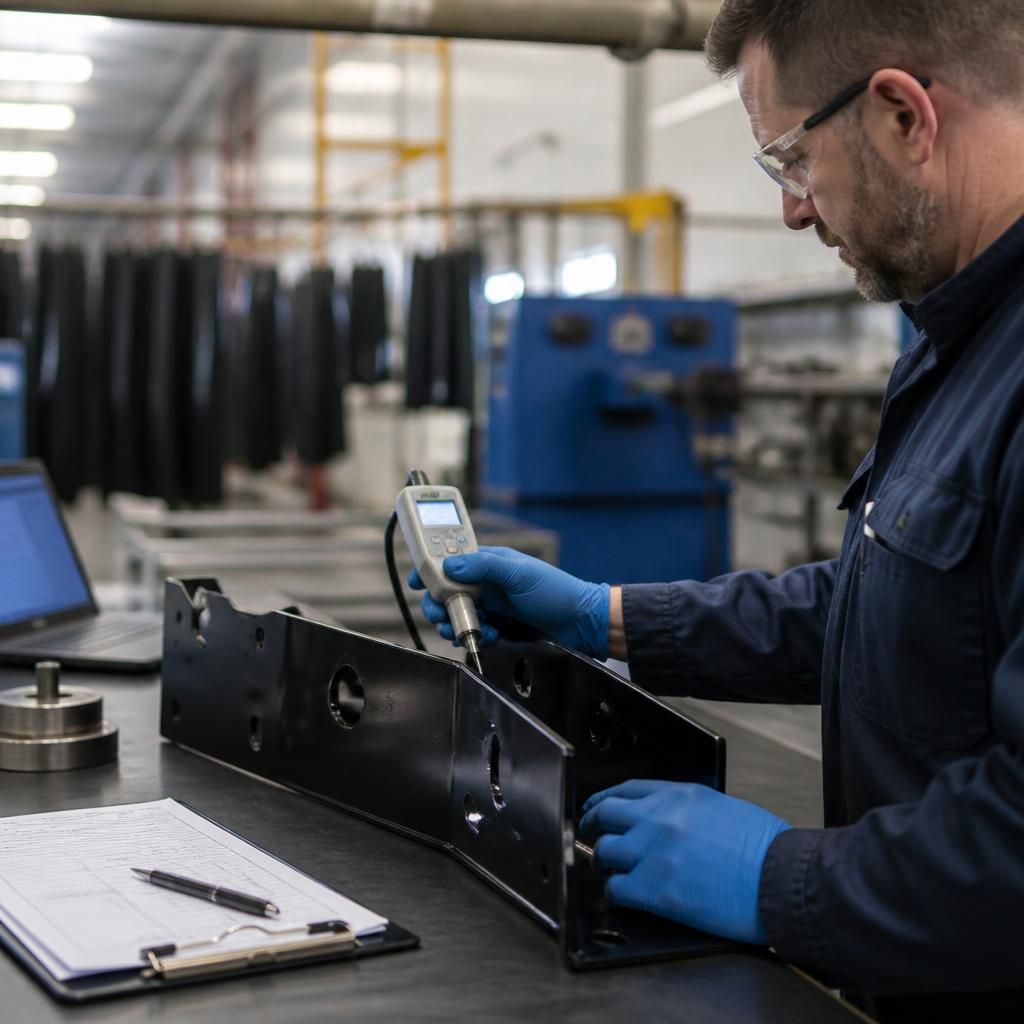
Nylon and protective coatings support compliance only when their tested performance represents the coating system used on the finished component. Results from a different substrate, pretreatment, coating thickness or curing condition may not demonstrate that the production parts meet the same requirement.
This is particularly important where a standard specifies a test method rather than a general claim of protection. Corrosion, adhesion, abrasion, chemical exposure and insulation tests should be selected according to the component’s intended service and carried out under the conditions defined by the relevant specification. Matching the test evidence to the actual material, preparation and application process gives manufacturers a more reliable basis for assessing conformity.