

What are the key safety considerations during the blast cleaning process for powder coating?
Key safety considerations during blast cleaning for powder coating include a task-specific risk assessment, suitable respiratory and eye protection, protective clothing, effective ventilation, and controlled access to the blasting area. Operators should also inspect the blast equipment and hoses, manage abrasive dust and waste safely, and follow established procedures for equipment operation and maintenance.
Safe blast cleaning for powder coating depends on controlling the hazards created by pressurised air, abrasive impact, noise, moving equipment, metal components and airborne contaminants. The process should be planned around competent operators, correctly maintained plant, secure workpieces, safe energy isolation and clear emergency arrangements, so that surface preparation does not introduce avoidable risks before coating begins.
Use trained and competent operators. Blast equipment should only be used by people who understand the operating instructions, the characteristics of the abrasive media and the hazards associated with the metal being cleaned. Training should cover starting and stopping the equipment, identifying abnormal operation, dealing with blockages, changing media and responding to loss of pressure or other faults. Operators should not improvise repairs or alter pressure settings without authorisation.
Control compressed-air energy. Compressed air can cause serious injury if a hose, coupling or nozzle fails, or if stored pressure is released unexpectedly. Hoses should be routed to avoid crushing, sharp edges, vehicle movements and trip hazards, while couplings should be secured against accidental separation. Before clearing a blockage, changing a nozzle or carrying out maintenance, the system should be isolated, depressurised and protected against reconnection. Compressed air must never be directed at a person or used to clean clothing or skin.
Manage noise and vibration. Abrasive blasting can generate noise capable of damaging hearing and making verbal communication difficult. A noise assessment should identify whether engineering controls, restricted exposure periods or hearing protection are required. Agreed hand signals or other communication methods are useful where operators cannot hear one another. Prolonged vibration from hand-held equipment can also contribute to hand-arm vibration risks, so equipment selection, operating technique and exposure records should be considered.
Secure the component before blasting. Metal parts must be stable and supported so that the abrasive stream cannot move, overturn or rotate them unexpectedly. Large or irregular items may need suitable fixtures, lifting equipment or additional restraint. Lifting points and load-bearing arrangements should be suitable for the component, and people should remain clear while items are positioned or repositioned. Sharp edges, burrs and hot surfaces should be identified before handling, particularly where blasting exposes previously concealed damage.
Consider the material being removed. Existing coatings, corrosion products and residues may contain hazardous substances that are not apparent from the component’s appearance. The history of the part should be established where possible, especially for previously painted, plated or chemically treated metal. If the coating composition is uncertain, it should be assessed before work starts rather than assuming that the dust is harmless. Contaminated media, residues and used filters may require separate handling and disposal arrangements.
Prevent ignition and electrical incidents. Abrasive impact and the movement of dry media can generate static electricity. Equipment should be correctly earthed and bonded where required, with electrical installations and portable equipment suitable for the working environment. Flammable liquids, combustible residues and ignition sources should be kept away from the blasting operation. Any hot work, solvent use or other activity that could create an ignition source should be controlled separately and coordinated with the blasting work.
Keep the work area orderly. Spilled abrasive can create slip and trip hazards, while discarded nozzles, hoses and tools can obstruct access. Clean-up should use a method that does not unnecessarily disperse contaminated dust. Walkways, emergency exits, isolation points and access to fire-fighting equipment must remain unobstructed. Good housekeeping is particularly important after blasting, when media may collect around the workpiece, inside the enclosure or beneath equipment.
Provide effective emergency arrangements. Operators should know how to stop the blast stream quickly, isolate the air supply and raise an alarm. The workplace should have a suitable first-aid arrangement for likely injuries, including eye contamination, cuts, impact injuries and hearing-related incidents. Emergency procedures should explain what to do after a hose failure, loss of containment, suspected exposure to a hazardous coating or injury involving moving equipment. Incidents and near misses should be recorded and reviewed so that controls can be improved.
Check the work after blasting. Once cleaning is complete, the component and surrounding equipment should be checked for trapped abrasive, loosened fragments, sharp projections or damage revealed during preparation. Parts should be handled and transferred in a way that prevents recontamination and protects people from newly exposed edges. Any delay before powder coating should be managed so that the prepared metal is not exposed unnecessarily to moisture or contaminants, as this can create both a quality issue and additional handling risks.
These precautions should form part of the site’s documented safe system of work and be reviewed whenever the abrasive, component, equipment, coating history or process layout changes. The level of control should reflect the actual task rather than relying on a generic blasting procedure.
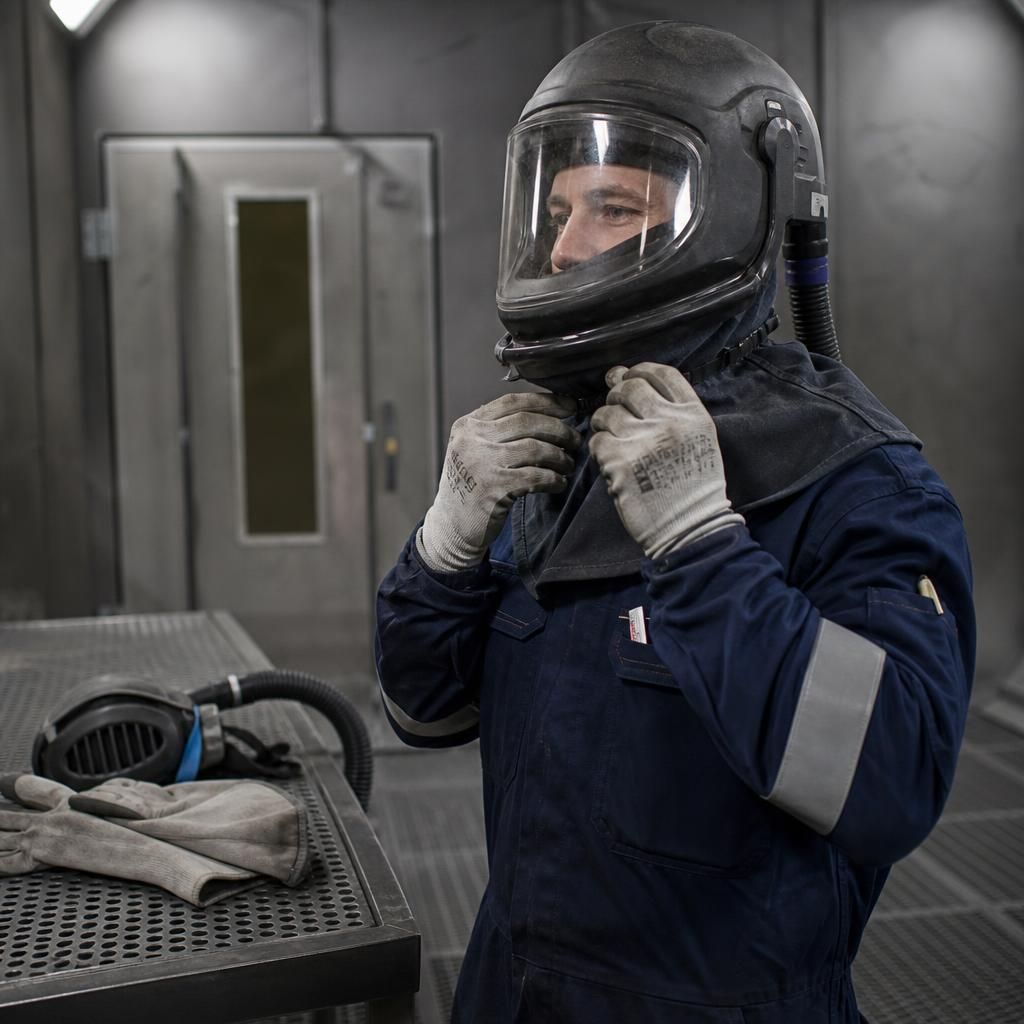
Respiratory protection for blast cleaning must be selected for the abrasive, the coating residues being removed and the level of airborne dust produced. A basic disposable dust mask may not provide adequate protection for abrasive blasting. Where the risk assessment requires respiratory protective equipment, this may include a suitable blasting helmet or supplied-air respirator, with the breathing-air supply and filters maintained according to the equipment instructions.
Tight-fitting equipment must form a reliable seal, so it should be correctly sized, fit-tested where applicable and not worn with facial hair or other items that interfere with the seal. Operators should check the equipment before use, keep contaminated components out of clean areas and replace filters or other parts when required. Respiratory protection supplements, rather than replaces, dust containment, extraction and effective ventilation.
Discuss Your Blast Cleaning Safety Requirements
If you are planning blast cleaning before powder coating, discuss the component material, dimensions, existing coating and project requirements with the powder-coatings.co.uk team. They can help identify the preparation approach and safety controls appropriate for the work.