

What techniques can be used to troubleshoot and resolve issues with powder flow during the gun feed setup for aluminium coatings?
Troubleshoot powder flow by checking for damp or compacted powder, inspecting the feed hose and pickup tube for blockages, and confirming that compressed air is clean, dry and set correctly for the powder type. Then adjust conveying air, powder feed rate and hose position in small steps, checking the spray pattern after each change to distinguish an inconsistent feed from a gun, nozzle or powder-supply fault.
Powder-flow problems during an aluminium coating gun feed setup are best resolved through controlled fault isolation: identify whether the disturbance starts in the powder container, the pump and feed circuit, or the gun itself, then correct one variable at a time. A steady supply should produce an even cloud and a repeatable coating pattern; pulsing, spitting, starvation or an unexpectedly heavy deposit indicate that the feed path or its settings needs further investigation.
Start by identifying the type of flow fault. Intermittent powder usually points to an unstable pickup or conveying condition, whereas a consistently weak output can indicate restricted transfer, insufficient suction or a pump problem. A heavy, irregular output may result from excessive powder delivery, poor separation of powder and air, or a setting that is unsuitable for the powder formulation. If the spray pattern changes when the gun is moved, inspect the gun and nozzle separately from the feed system. If the pattern remains unstable while the gun is held still, concentrate on the supply and delivery circuit.
Separate the powder and air functions. Powder transport and powder output are related but are not the same adjustment. Conveying air moves powder through the line, while feed or dosing control determines how much powder enters that airflow. Increasing both together can conceal the original fault and create an overly turbulent stream. Make a small change to one control, allow the system to settle, and observe the output before changing another. Record the setting and result so that the setup can be returned to a known condition.
Check the powder container and fluidisation system. Powder should be distributed evenly around the pickup point rather than forming a hollow space or a compacted mass beneath it. Uneven fluidisation can cause the pickup tube to draw powder intermittently, particularly as the container level changes. Check that the fluidising plate or membrane is seated correctly and that its surface is not contaminated. An incorrectly fitted, damaged or saturated fluidising component can create localised air channels, leaving other areas of powder insufficiently mobile.
Where the equipment permits, compare the feed behaviour with a small quantity of fresh powder from the same approved formulation. If the fresh material feeds consistently but the working supply does not, investigate powder storage, handling, reclaim content and mixing practice. Variations in particle size, excessive fines or an unsuitable blend can alter the way the powder responds to air. Reclaim powder may also have different flow characteristics from virgin powder, so it should be introduced according to the coating process specification rather than assumed to behave identically.
Inspect the pump and pickup arrangement. Check that the pickup tube is correctly positioned, secure and free from damage. It should not be pressed tightly against the container base or placed where powder cannot circulate properly around it. Examine pump inserts, venturi components, seals and connection points for wear. A worn insert can reduce transfer efficiency, while a poor seal can allow the system to draw air without carrying the intended quantity of powder. Replace worn components with the correct specification rather than compensating by continually increasing air settings.
Review the feed hose route as part of the setup, not only its internal condition. Sharp bends, unsupported loops and excessive vertical rises can allow powder to settle and then release in slugs. Keep the route as direct as the equipment permits and avoid unnecessary changes in elevation. The hose should be properly secured without being crushed by clamps or fittings. If the fault appears only when the gun is moved to a particular position, the hose route or its minimum bend radius is a likely cause.
Use a staged isolation test. With the system made safe according to the equipment instructions, inspect each connection from the powder source towards the gun. Test the pump output independently where the equipment design allows this, then test the hose and gun separately. A consistent pump output followed by an inconsistent gun output directs attention to the hose end, inlet connection, nozzle or internal passages. An unstable pump output means the fault is upstream of the gun. This method prevents unnecessary replacement of the gun when the actual issue is in the powder supply.
Assess the gun and nozzle for flow restriction. Powder can collect around the inlet, electrode area or nozzle where cleaning has been incomplete or where the component is worn. Remove and inspect these parts using the approved cleaning method; avoid tools or actions that can score the surface or alter the nozzle profile. Check that the nozzle is correctly seated and that its geometry matches the intended spray pattern. A damaged or unsuitable nozzle can make a stable feed appear inconsistent because the powder cloud is being disrupted at the final outlet.
Also examine the electrode and its support for powder build-up. Contamination at the front of the gun can disturb the cloud and may cause back-ionisation or uneven deposition on aluminium components. If powder flow is stable but the finish remains patchy, distinguish a delivery fault from an electrostatic or application fault before changing feed settings. Gun-to-part distance, part orientation, grounding and electrostatic settings can affect how the powder deposits even when the feed rate itself is correct.
Confirm that the powder is suitable for the equipment and process. Different formulations and particle distributions do not necessarily convey in the same way. If a problem began after a powder change, compare the technical requirements of the new material with the gun, pump and hose arrangement. Check whether the powder requires a particular fluidisation approach or feed configuration. Do not mix materials in the feed circuit, as residue from a previous coating can alter the flow behaviour and contaminate the aluminium finish.
Use the spray pattern as a diagnostic tool. Observe the cloud against a suitable test surface while keeping the gun position consistent. A narrow, weak cloud suggests restricted delivery or inadequate atomisation; a cloud that surges between heavy and light output suggests unstable pickup, poor powder separation or a fluctuating supply. An uneven cloud from one side of the nozzle may indicate a damaged component or localised build-up. Once the pattern is stable, confirm the result on a representative aluminium component rather than relying only on a visual test in free air.
After resolving the fault, establish a repeatable setup record covering the powder type, pump configuration, hose arrangement, nozzle and control settings. Note any component replaced and the symptoms that led to the correction. This makes future diagnosis faster and helps operators distinguish a genuine flow fault from normal differences between powder formulations. If the feed remains unstable after the supply, pump, hose and gun have been isolated, stop compensating with progressively higher settings and refer the equipment to a qualified technician for inspection of the control valves, regulator, pump body or internal gun components.
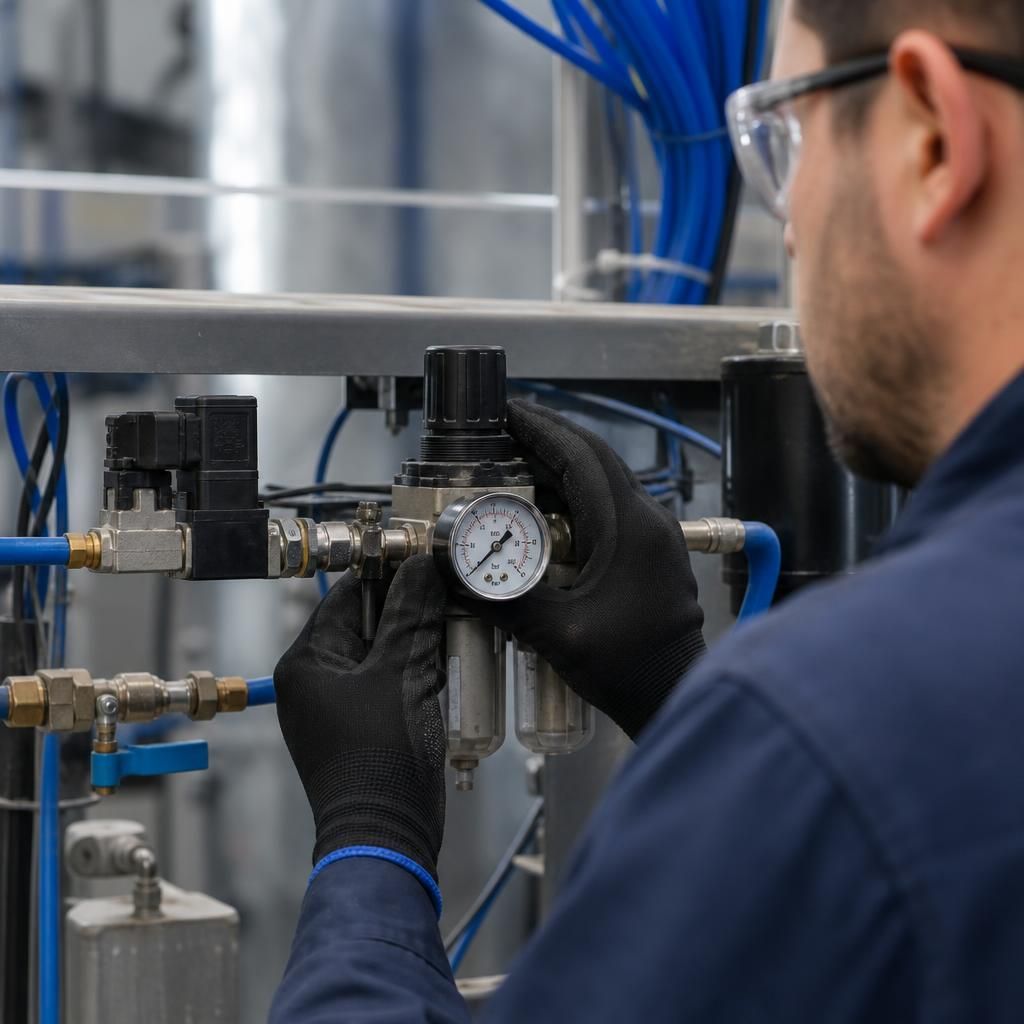
A pressure reading taken while the gun is idle does not confirm that the air supply remains stable during spraying. Observe the regulator while the gun is operating and check for a drop or fluctuation when powder demand increases. A restricted filter, undersized line, leaking connection or regulator fault can reduce conveying performance even when the static gauge reading appears correct.
Check the air circuit in sequence, starting at the supply and moving towards the pump. Compare the pressure before and after filters and regulators, and inspect fittings for leaks using the approved method. If the pressure remains stable but powder delivery still pulses, the fault is more likely to be in the powder circuit than in the compressed-air supply. Record the operating pressure alongside the powder and equipment settings so that later changes can be assessed against a reliable baseline.