

How can I ensure the powder coating equipment package includes the latest technology and innovations to maintain cutting-edge efficiency?
Ensure the package specifies current-generation application controls, curing technology, energy management and process monitoring rather than relying on broad claims about being “advanced”. Ask for documented performance data, software update arrangements, compatibility with your existing line and a clear upgrade path so the equipment can maintain consistent quality while adapting to future production requirements.
To ensure a powder coating equipment package uses genuinely current technology, assess specific functions, measurable operating benefits and long-term maintainability rather than accepting a general claim that the system is “state of the art”. The package should identify which features are included as standard, which are optional, how they affect your process and how their performance will be verified before acceptance.
Start by separating useful innovation from novelty. A recently released feature is not automatically suitable for every coating line. Consider whether the technology is proven in comparable industrial applications, supported by replacement parts and understood by the people who will operate and maintain it. A mature system with well-supported components may deliver greater practical efficiency than an experimental feature that is difficult to service or integrate into established procedures.
- Powder recovery: Look for efficient reclaim arrangements that limit contamination, maintain consistent powder quality and reduce avoidable waste. Features such as improved separation, controlled transfer and simpler cleaning can be particularly valuable where several colours or coating materials are processed.
- Colour-change capability: Modern package designs may include reduced-residue booth interiors, accessible powder paths and automated cleaning sequences. Assess the full changeover process, including the gun, hoses, pumps, filters, booth and recovery equipment, rather than evaluating the booth alone.
- Application consistency: Examine whether the equipment can maintain repeatable deposition across different component shapes, sizes and batch conditions. Useful innovations should reduce variation caused by operator technique or changing powder characteristics without making the system unnecessarily complex.
- Inspection and traceability: Consider equipment that records relevant batch information and supports consistent quality checks. The useful question is not simply whether data is collected, but whether operators can identify a recurring defect, relate it to a production batch and retain an auditable record.
- Connectivity: If the package will exchange information with production planning, quality or maintenance systems, establish which communication standards and data formats are supported. Open, clearly documented interfaces are generally more practical than a closed arrangement that makes future information access dependent on one proprietary platform.
Ask the supplier to describe the technology at system level. For example, an advanced powder recovery unit may have little value if its filters, ducting or cleaning arrangements create restrictions elsewhere in the line. Similarly, a sophisticated application system should be considered alongside gun positioning, component presentation, powder preparation and operator workflow. Efficiency comes from how the package works as a complete process, not from the specification of one prominent component.
Use a structured evaluation rather than relying solely on a demonstration. Prepare representative parts and powders, then define the conditions under which the equipment will be assessed. Relevant criteria may include coating uniformity, powder usage, first-pass quality, changeover effort, reclaim suitability, cleaning requirements, data traceability and the ease of correcting a process fault. Testing should include the less favourable parts of the planned production mix, such as complex geometries, different substrate sizes or products requiring specialist protective finishes.
The purchase specification should also cover the technology’s practical operating requirements. Confirm the required utilities, extraction arrangements, environmental conditions, calibration needs and maintenance access. Ask how faults are diagnosed, which components are consumable, how critical spares are identified and whether technicians can obtain meaningful diagnostic information without relying on unexplained error codes. A technically advanced package that is difficult to inspect or repair can reduce effective efficiency over its working life.
Digital features deserve a separate review. Establish who owns production data, how it is exported, how user permissions are managed and how records are protected from unauthorised alteration. Where equipment is connected to a wider business network, clarify the approach to user authentication, backups and cybersecurity responsibilities. These points help prevent a modern package becoming difficult to govern once it is embedded in normal production.
Ask for a clear distinction between available functions, paid options and future developments. Any claimed innovation should be linked to a defined operating benefit, a suitable application and a method of verification. Useful questions include:
- Which features are included in the quoted package and which require additional hardware or licences?
- What production conditions were used to validate the claimed improvement?
- Can the feature be tested using representative components and the powders used in our process?
- What training, calibration or process changes does it require?
- How are diagnostics, data export and user permissions handled?
- What happens if a digital or automated feature becomes unavailable?
- Are replacement components and technical documentation expected to remain available throughout the equipment’s working life?
Finally, record the agreed technical requirements in the quotation, specification and acceptance documentation. This should include the functions to be supplied, the conditions for testing, the quality criteria to be met and the information that will be handed over to the operating team. That approach provides a more reliable way to secure genuinely current technology than selecting equipment because it carries the newest label or the longest feature list.
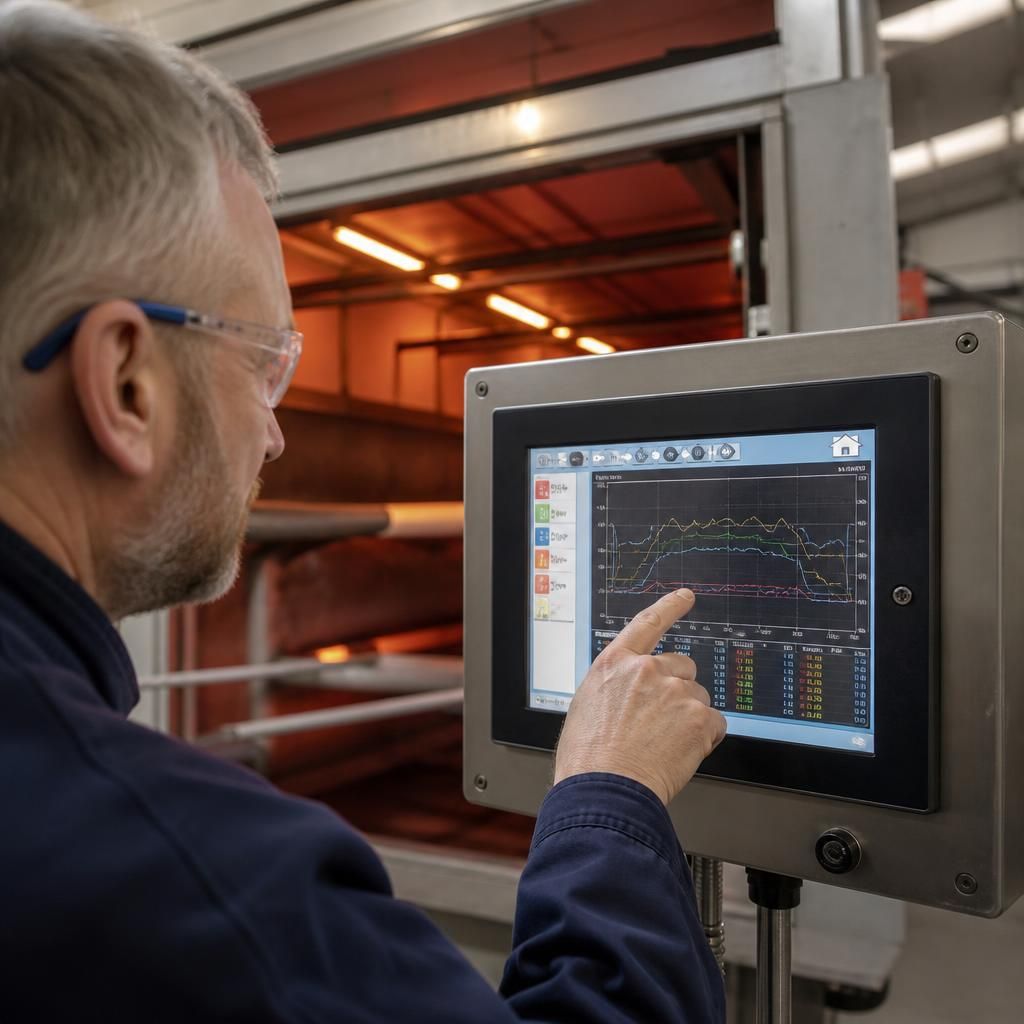
Evaluate curing technology by how accurately it controls the temperature reached by the component, not simply by the oven’s set-point. Current-generation systems may provide zonal control, recipe-based settings and thermal profiling, allowing the coating process to be checked against the powder manufacturer’s curing requirements. This helps identify cold spots, excessive heat and unnecessary energy use before they affect batch quality.
Ask the supplier to demonstrate how temperature data is collected, reviewed and retained for different component sizes and loading patterns. The specification should state the available sensors, control functions, alarm arrangements and profiling method, so the claimed innovation can be verified under representative production conditions rather than accepted as a feature-list description.