

How does Perfect-It Powder Coating optimise its process for precise applications in diverse industrial environments?
Perfect-It Powder Coating optimises precise applications by matching surface preparation, powder selection, application settings and curing requirements to each component’s material, geometry and operating environment. This specification-led approach supports consistent, durable finishes across varied industrial parts, batch sizes and coating requirements.
Perfect-It Powder Coating optimises precise applications by treating each component as a controlled production job rather than applying one standard coating method to every part. The process links the job specification, component preparation, masking, rack design, powder application, curing, inspection and handling so that the finished coating supports the part’s intended use without compromising critical dimensions or functional surfaces.
Turning the component into a clear specification. Precision begins with understanding what the coating must achieve. Relevant information includes the base metal, component dimensions, areas requiring coverage, surfaces that must remain uncoated, the required appearance, expected service conditions and any dimensional tolerances. Drawings, samples or written instructions can identify threaded holes, bearing faces, mating surfaces, drain points and other details that affect how the part should be prepared and coated. Recording these requirements reduces the risk of treating a visually similar component in the same way when its functional requirements are different.
Planning preparation around the component. Contamination, scale, oil, weld residues and corrosion products can interfere with coating adhesion and appearance. Preparation therefore needs to account for the condition of the metal and the way the component is manufactured. Welded assemblies may require particular attention around joints, sharp edges and trapped residues, while fabricated parts may need suitable access to recessed areas. The objective is not simply to clean the surface, but to provide a suitable foundation across the complete coating area while avoiding unnecessary alteration of edges, holes or finished interfaces.
Controlling coverage on complex shapes. Component geometry affects how powder reaches the surface. Recesses, returns, internal corners, perforations and closely spaced sections can be more difficult to coat evenly than open, flat faces. Racking and part orientation can be planned to improve access, reduce contact marks and allow excess powder to clear from the component. Electrical grounding and gun movement also matter, particularly around corners and recessed areas where electrostatic effects can influence deposition. This type of planning is important for fabricated frames, brackets, enclosures, automotive parts and other assemblies with mixed geometries.
Protecting functional surfaces. Powder build is useful for protection, but it must not obstruct threads, bores, drain holes, locating faces or close-fitting joints. Masking is selected around the areas that need to remain clear, with attention to the temperature involved during curing and the shape of the component. Defining these areas before coating helps preserve assembly interfaces and makes the finished part more suitable for its next manufacturing stage. Where a coating is required only on specified faces, the masking plan also helps maintain a clean boundary between coated and uncoated surfaces.
Using controlled application practices. Application is adjusted to the part rather than judged solely by its overall size. Large flat areas, narrow sections and difficult corners can require different handling during spraying to achieve an even film. Gun position, movement, overlap, powder delivery and grounding all influence deposition. Avoiding excessive build is as important as achieving adequate coverage: too much material can affect fit, edge definition and appearance, while insufficient coverage can leave vulnerable areas exposed. A controlled approach is particularly valuable where one order contains several component shapes that need to share a consistent finish.
Managing heat through the complete component. Cure performance depends on the temperature reached by the metal and the time it remains at the required condition, not simply on the oven setting. Components with different wall thicknesses, mass or construction can absorb heat at different rates. Loading arrangements and part spacing therefore need to support an appropriate heat profile. This is relevant when a batch includes both lightweight fabrications and heavier sections, or when assemblies contain areas that could retain heat differently. Controlled curing helps the coating develop its intended mechanical properties and appearance without exposing the substrate or component to unsuitable treatment.
Checking the result against the job requirements. Inspection should consider more than colour. Depending on the specification, checks may cover coverage, visible defects, masking boundaries, surface condition, finish uniformity, coating build and the condition of functional interfaces. Parts can also be reviewed for handling damage before they leave the coating process. For repeat work, documenting the approved requirements and any component-specific handling points provides a useful reference for subsequent batches. This supports repeatability without assuming that every part in a product range can be processed identically.
Maintaining control across batches and supply arrangements. Large or mixed orders benefit from clear identification, organised loading and careful separation of finished parts. Suitable packaging and handling reduce the chance of contact damage after inspection, while coordinated collection and delivery options can help businesses integrate coated components into their own production schedules. For Midlands manufacturers, fabricators, construction firms and automotive businesses, this process-led approach makes precise coating practical across different component types and operating requirements.
The result is a specification-led workflow in which component geometry, functional interfaces, batch variation and handling requirements are considered before production begins. That is how Perfect-It Powder Coating adapts its method for precise industrial applications while maintaining control across diverse metal parts and environments.
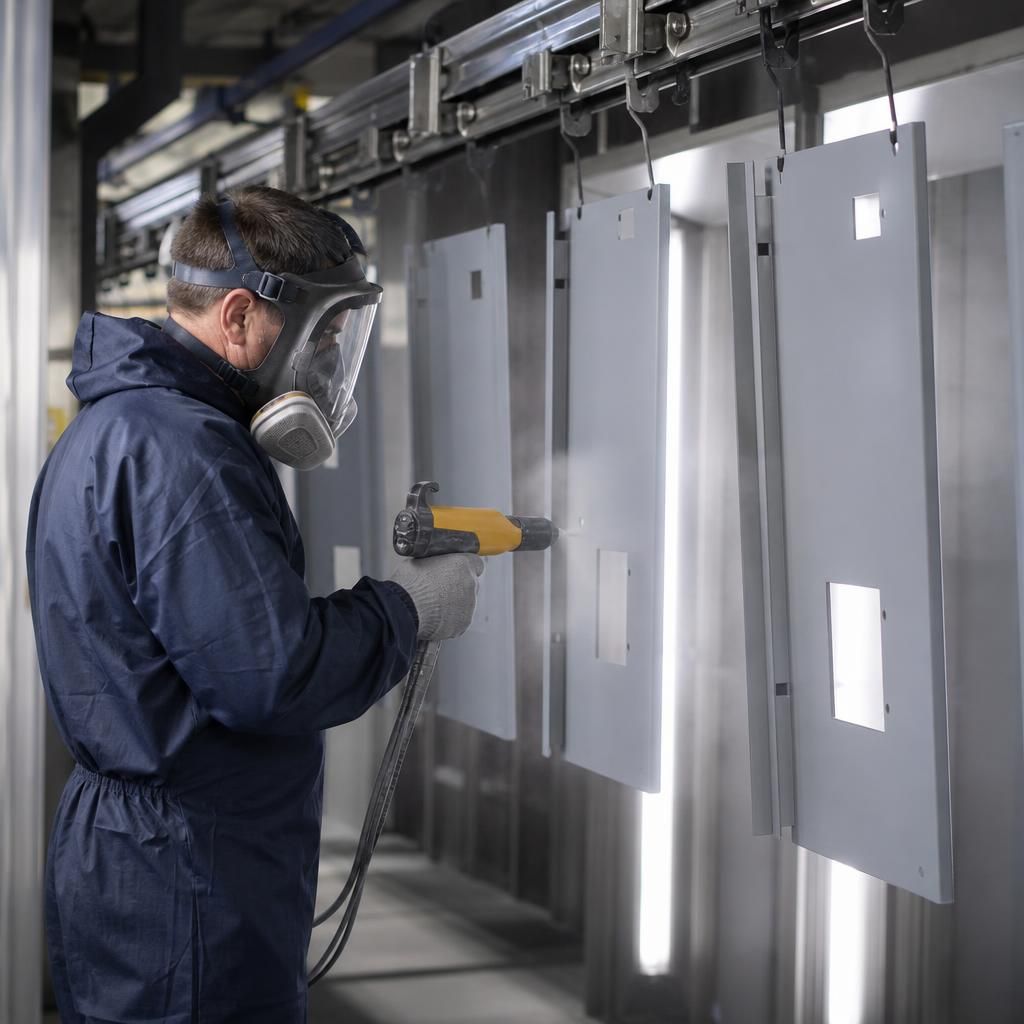
Precision is also maintained between coating jobs, particularly when different colours, finishes or powder types are processed. Perfect-It Powder Coating can optimise production planning by grouping compatible work, controlling changeovers and cleaning application equipment where required. This helps reduce the risk of residual powder affecting the next component’s colour, texture or surface appearance.
A first-part assessment after a changeover provides an opportunity to confirm the selected application settings before the remainder of the batch is processed. Reviewing the initial result for coverage, finish and defined uncoated areas helps identify adjustments at the appropriate stage, rather than allowing a process variation to extend across an entire order. This changeover discipline is valuable when manufacturers and fabricators require several precise finishes within the same production schedule.
Discuss your precise industrial coating requirements
Discuss your precise industrial coating requirements with Perfect-It Powder Coating, including component drawings, functional surfaces, finish specifications and batch details. This enables the appropriate preparation and application approach to be considered for your metal parts.