

What specific maintenance procedures are recommended to ensure the longevity and performance of thermoplastic powder coated surfaces?
Maintain thermoplastic powder coated surfaces through routine inspection, gentle cleaning with mild detergent and water, and prompt repair of chips, scratches or areas of delamination. Avoid abrasive tools, harsh solvents and prolonged exposure to chemicals, and check joints, edges and high-wear areas regularly for early signs of damage.
Thermoplastic powder coated surfaces last longest when maintenance combines planned condition checks, control of operating conditions, protection from unnecessary mechanical and thermal stress, and repairs carried out with a compatible coating system. The maintenance schedule should reflect the component’s environment, including outdoor exposure, chemical contact, temperature changes, abrasion, impact and the consequences of coating failure.
Establish a maintenance baseline
Record the coating type, colour, application date where known, substrate, service environment and any areas subject to higher loading or exposure. This information provides a reference for judging later changes in appearance or performance. For safety-critical, corrosion-sensitive or electrically insulating components, define acceptance criteria before the parts enter service. These may include limits for coating adhesion, visible substrate exposure, dimensional change, surface continuity or electrical resistance, depending on the component’s function.
Keep records of examinations, operating conditions, abnormal events and remedial work. A history is particularly useful where coated parts are exposed to road salt, industrial dust, oils, process chemicals, ultraviolet radiation or repeated temperature cycling. It can show whether deterioration is isolated or associated with a wider issue such as unsuitable chemical exposure, incorrect storage or movement of the substrate.
Control heat and temperature cycling
Thermoplastic coatings can soften when exposed to temperatures above the product’s service range. Do not place hot materials against the coated surface or use uncontrolled flames, heat guns or other concentrated heat sources near it. Where a component operates close to its thermal limit, check the coating specification against the actual temperature, duration and frequency of exposure rather than relying only on the nominal process temperature used during manufacture.
Repeated heating and cooling can also stress the coating and the underlying metal because the materials expand and contract at different rates. Pay particular attention to areas around bends, welds, apertures and firmly fixed attachments. If a component is repeatedly exposed to thermal cycling, include those locations in the condition assessment and investigate any lifting, cracking or loss of adhesion before the problem spreads.
Reduce mechanical loading
Prevent coated parts from being dragged across racks, floors or other metalwork. Use suitable separators during storage and transport, and protect contact points where components rest against supports. Repeated impact, vibration and concentrated pressure can damage a coating even when a single event leaves no obvious mark.
Check that clamps, brackets, hinges and moving parts are correctly aligned. Excessive tightening can create local stress, while movement between dissimilar surfaces can wear through the coating. Where fasteners pass through the finish, ensure that the joint design does not trap moisture or create a sharp edge that becomes a starting point for damage. Any modification, drilling or welding after coating should be treated as a new exposed area requiring suitable preparation and protection.
Manage moisture and corrosion risk
Coating maintenance should include the condition of the component’s design and installation, not just the visible face. Clear blocked drainage paths and prevent water from remaining in crevices, overlaps, hollow sections or horizontal ledges. Persistent moisture at an edge, fixing or damaged area can allow corrosion to develop beneath an apparently intact coating.
Where the coated item forms part of an assembly, examine seals, gaskets and interfaces for movement or deterioration. Materials in contact with the finish should be chemically compatible and should not retain contaminants against the surface. If corrosion, blistering or lifting appears, identify the source of moisture and address it before applying any repair coating.
Consider ultraviolet and environmental exposure
Outdoor thermoplastic coatings should be assessed for changes such as fading, gloss loss, chalking or surface embrittlement. A change in appearance does not always indicate immediate loss of protective performance, but it should be compared with the coating’s stated weathering characteristics and the component’s required function. Areas receiving less sunlight can provide a useful comparison, although colour variation may also result from contamination or batch differences.
Storage conditions matter before installation and between periods of use. Keep coated components separated, dry and protected from direct contact with incompatible materials. Avoid placing heavy items on finished faces or storing parts where condensation repeatedly forms. Packaging should prevent rubbing without trapping moisture against the surface.
Use an appropriate repair method
Repairs should begin with an assessment of the cause, extent and depth of the defect. A small surface mark may require a different treatment from exposed metal, under-film corrosion, loss of adhesion or damage extending around an edge. Remove unstable material and prepare the affected substrate in accordance with the repair product and the original coating specification.
Do not assume that any paint or powder is suitable for a thermoplastic finish. Select a repair material that is compatible with the substrate, service environment, appearance requirements and expected temperature. On components requiring a continuous protective or insulating surface, confirm that the repair restores the relevant performance rather than merely covering the visible defect. Significant damage or uncertain adhesion should be assessed by a qualified coating specialist, particularly where the part is safety-critical or difficult to remove from service.
Review the maintenance plan
Adjust the frequency and depth of maintenance when the operating environment changes, a component is relocated, the duty cycle increases or new chemicals and cleaning agents are introduced. A risk-based plan is more effective than applying the same procedure to every coated item. Parts exposed to impact, heat, moisture or aggressive industrial atmospheres generally require closer monitoring than protected indoor components.
Use the coating supplier’s technical data and the applicator’s recommendations when setting inspection methods, repair materials and service limits. If the coating’s purpose includes corrosion protection, wear resistance, hygiene, electrical insulation or chemical resistance, maintenance should verify that specific function as well as appearance.
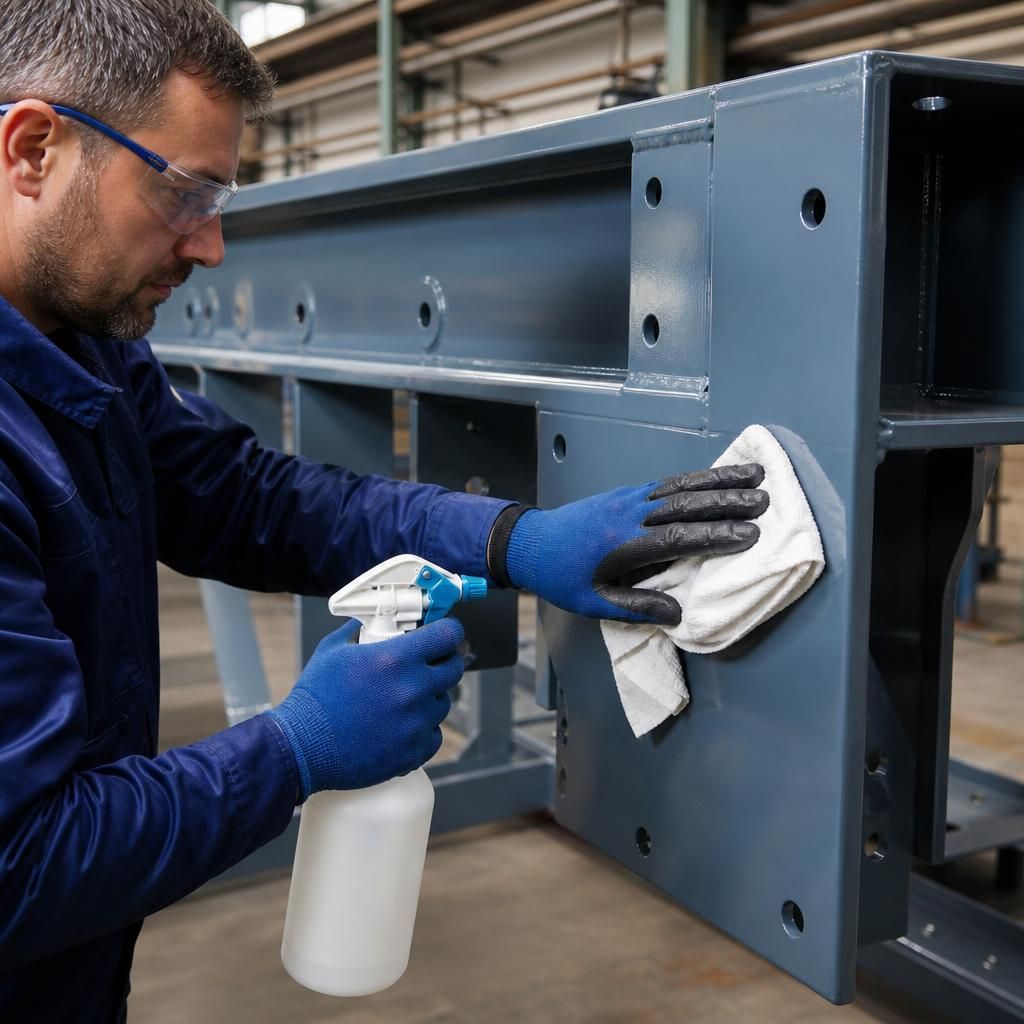
Cleaning should be carried out as a controlled maintenance procedure rather than as an abrasive attempt to restore appearance. Allow the coated component to cool, remove loose dust with clean water, then wash using a mild, pH-neutral detergent and a soft, non-metallic cloth or sponge. Rinse thoroughly to remove detergent residue and dry the surface, particularly around joints, edges and drainage points where retained moisture can cause problems.
Test any unfamiliar cleaning product on a small, inconspicuous area before wider use. Avoid scouring pads, wire brushes, strong acids, caustic alkalis, concentrated solvents and unregulated high-pressure cleaning, as these can mark, soften or undermine the thermoplastic layer. If oil, process residue or chemical deposits cannot be removed with the approved cleaning method, identify the contaminant and confirm a compatible cleaner with the coating supplier before proceeding.
Discuss Your Thermoplastic Powder Coating Maintenance Requirements
Discuss your thermoplastic powder coating maintenance requirements with our specialist team, providing details of the component, operating environment and any observed coating issues so that suitable inspection or remedial options can be considered.