

Which specific safety protocols should be implemented during the degreasing process to protect both the work environment and personnel?
Implement a documented risk assessment, suitable ventilation and local exhaust, chemical-specific training, and access to current safety data sheets before degreasing begins. Personnel should use the specified PPE, including chemical-resistant gloves and eye or face protection, while the area should control ignition sources, provide spill and eyewash provisions, keep chemicals in labelled containers, and segregate waste for safe disposal.
Safe degreasing requires controlled procedures for chemical use, equipment operation, access, hygiene, emergency response and ongoing supervision. The process should be managed under the Control of Substances Hazardous to Health (COSHH) requirements, with controls matched to the degreasing agent, application method and metal components being processed.
Control access to the work area. Only authorised personnel who have been assessed as competent should operate the degreasing equipment. Keep visitors and other workers away from open tanks, spray zones and recently treated components. Use clear floor markings or physical barriers where splash, vapour or moving equipment could present a hazard. Do not allow eating, drinking, smoking or the storage of personal items in the process area.
Use a written operating procedure. The procedure should cover chemical preparation, loading and unloading, operating limits, maintenance isolation, abnormal conditions and shutdown. It should specify the correct sequence for opening containers, adding or diluting chemicals, positioning components and removing parts from the process. Operators should never mix products unless the chemical supplier’s instructions expressly permit it, as incompatible substances can react, generate heat or release hazardous vapours.
Prevent uncontrolled contact and splashing. Use suitable baskets, hooks, trolleys or lifting aids to move components rather than carrying unstable or heavily contaminated parts by hand. Keep components below the safe loading capacity of tanks, washers and racks, and allow liquids to drain back into the process equipment before transferring parts. Splash guards, closed covers and drip trays should be used where appropriate. Never lean over an open tank or place hands into a bath or spray zone while equipment is operating.
Secure mechanical and process equipment. Guards should remain fitted to pumps, conveyors, rotating parts and other moving machinery. Interlocks and emergency-stop controls should be tested as part of planned maintenance, and faults should be reported rather than bypassed. Before cleaning, clearing blockages or servicing equipment, isolate all relevant electrical, pneumatic, hydraulic and thermal energy sources and prevent unexpected restart.
Manage heat and pressure safely. Heated degreasing systems and pressure washers introduce additional burn, spray and vapour hazards. Operators should follow the equipment’s specified temperature and pressure limits, allow hot liquid and components to cool where necessary, and open covers or access points in a controlled manner. Pressure must be released before disconnecting hoses, filters or fittings. Hoses should be inspected for wear, secure connections and signs of chemical damage.
Maintain good personal hygiene. Workers should wash their hands and exposed skin after the task and before entering welfare areas. Contaminated work clothing should be removed from the work area and laundered or disposed of according to the applicable procedure; it should not be taken home. Do not use solvents or degreasers to clean skin. Any suspected exposure, irritation or breathing difficulty should be reported promptly and dealt with using the site’s occupational health and first-aid arrangements.
Prepare for incidents beyond a routine spill. The site should have a simple, visible response plan for splash exposure, accidental mixing, fire, equipment failure and loss of containment. It should state who raises the alarm, how the area is isolated, when evacuation is required and how emergency services are contacted. Incident and near-miss reports should record the substance, task, equipment condition and circumstances so that controls can be reviewed rather than treating the event as operator error alone.
Inspect and maintain the process regularly. Check tanks, lids, seals, hoses, pumps, racks, drainage points and control systems for corrosion, leaks or deterioration. Keep inspection and maintenance records, including defects and corrective actions. Process residues and accumulated sludge should be removed using an approved method, with the equipment isolated before internal cleaning. A clean, maintained system reduces the likelihood of unexpected releases and prevents contaminated deposits from creating additional handling hazards.
Review the controls when the process changes. Reassess the arrangements if the business introduces a different degreaser, changes concentration or temperature, increases batch size, alters the application method or processes a new type of component. Consult the operators who carry out the work, investigate recurring problems and update the procedure when inspections, incidents or health information indicate that existing controls are insufficient. These measures make degreasing safer while preserving the consistent surface preparation needed before powder coating.
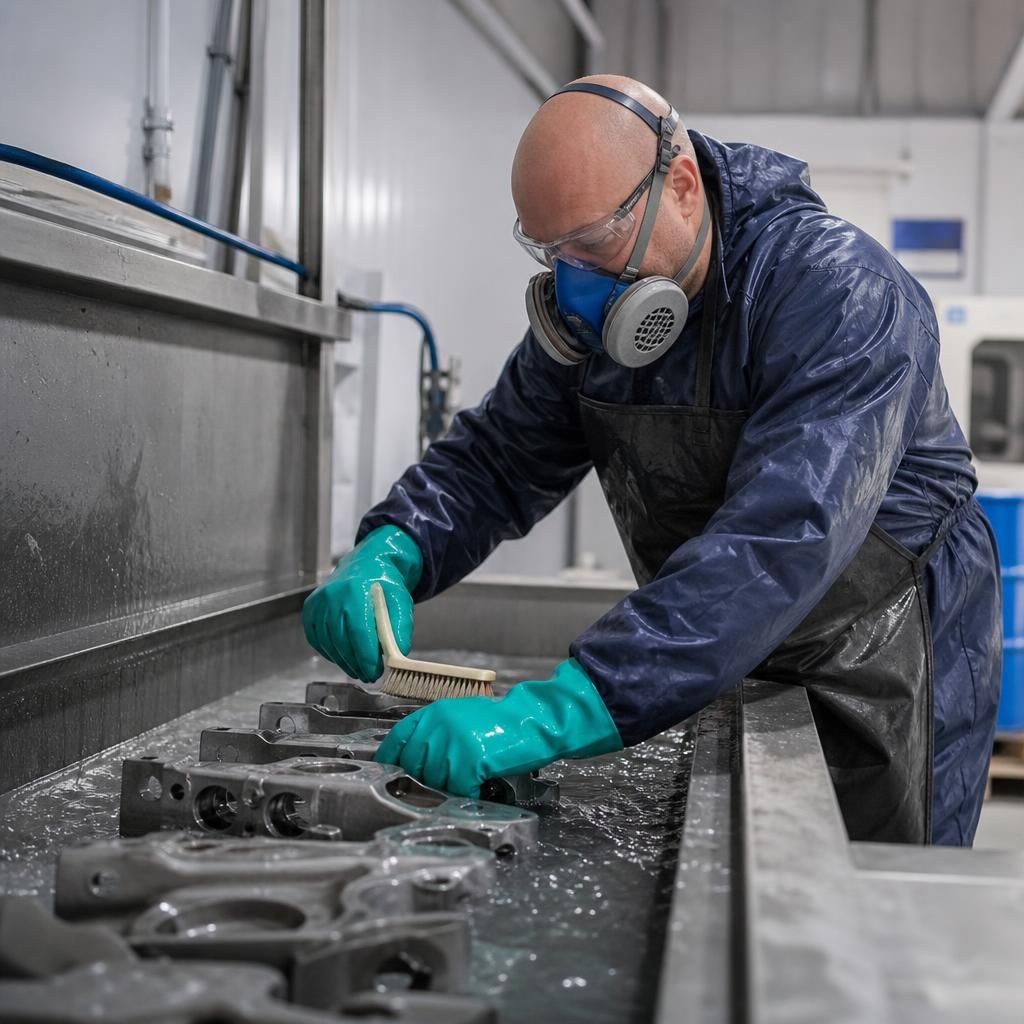
PPE must be selected for the specific degreasing chemical and task, rather than treated as a standard kit. Check the safety data sheet and chemical-resistance information before choosing gloves, eye or face protection, protective clothing and footwear. Inspect PPE before use, replace items that are damaged or contaminated, and remove them without transferring residue to skin or clean clothing. Where a risk assessment identifies possible inhalation exposure, respiratory protective equipment should be selected, fitted and maintained through a documented programme; it should not be used as a substitute for effective process controls.
Discuss Your Degreasing Safety Requirements
Contact Powder-coatings.co.uk to discuss the degreasing controls, component requirements and preparation procedures relevant to your powder coating project. Providing details of the metal parts and current process will help establish the appropriate safety requirements before work begins.