

What unique pre-treatment processes do you offer to enhance the longevity and resilience of powder-coated surfaces?
We tailor pre-treatment to the metal substrate and specified coating, including preparation suited to specialist nylon and protective powder coatings. This helps create a clean, compatible surface for powder application and supports stronger adhesion, wear resistance and long-term surface protection.
Our unique approach to pre-treatment is to match the preparation sequence to the substrate, the condition of the component and the intended use of the finished part. Rather than applying one standard process to every item, we select the combination of cleaning, surface conditioning and protective treatment that gives the powder system a suitable foundation.
Degreasing and contaminant removal are used to remove oils, grease, handling residue, dirt and other substances that can interfere with the subsequent treatment. This is particularly important where components have been fabricated, machined or stored before coating. Residues that are not removed can remain beneath the powder film and contribute to adhesion problems, blistering or uneven coverage.
Abrasive preparation can be used where the metal requires mechanical conditioning or where corrosion, mill scale, old coating and surface irregularities need to be removed. The abrasive process is selected carefully so that it improves the surface profile without unnecessarily damaging edges, threads, machined faces or other functional areas. It can also provide a consistent key for the coating on suitable steel components.
Chemical surface conditioning may be appropriate when the substrate needs additional protection before powder application. Treatments such as conversion coatings can help stabilise the prepared metal and provide an intermediate layer between the substrate and the powder film. The correct chemistry depends on whether the component is steel, galvanised material, aluminium or another compatible metal, as different substrates react differently during preparation.
For components with existing corrosion or mixed surface conditions, preparation may combine more than one method. Mechanical work can remove the heavier contamination, followed by cleaning and conditioning to deal with finer residues. This staged approach helps avoid simply covering defects with powder, which can leave the finished surface vulnerable to premature deterioration.
Specialist coating requirements also influence the preparation. Nylon powder coatings and protective coatings can have different requirements from standard decorative systems, including the condition and cleanliness of the surface presented to the powder. We take the specified coating system into account when determining how the metal is prepared, rather than treating specialist coatings as an afterthought.
Controlled rinsing and drying are important parts of the process because treatment residues, trapped moisture and water marks can affect the final coating. Components are therefore prepared so that they reach the powder application stage free from loose contamination and unsuitable residue. Recesses, joints, holes and folded sections receive particular consideration because they can retain moisture or cleaning solution.
Pre-treatment can also include identifying areas that should not be coated, such as bearing faces, threads, earth points or close-tolerance surfaces. These areas may need suitable masking or protection before the coating operation. Addressing them during preparation helps preserve the component’s fit and function while allowing the remaining surfaces to receive the required protection.
The result is a preparation specification based on the actual component rather than a generic production assumption. Factors considered include the metal type, previous finish, level of contamination, geometry, handling requirements and the environment in which the coated part will be used. This is especially relevant for batch work and industrial components, where consistent preparation across every item is essential to a reliable finish.
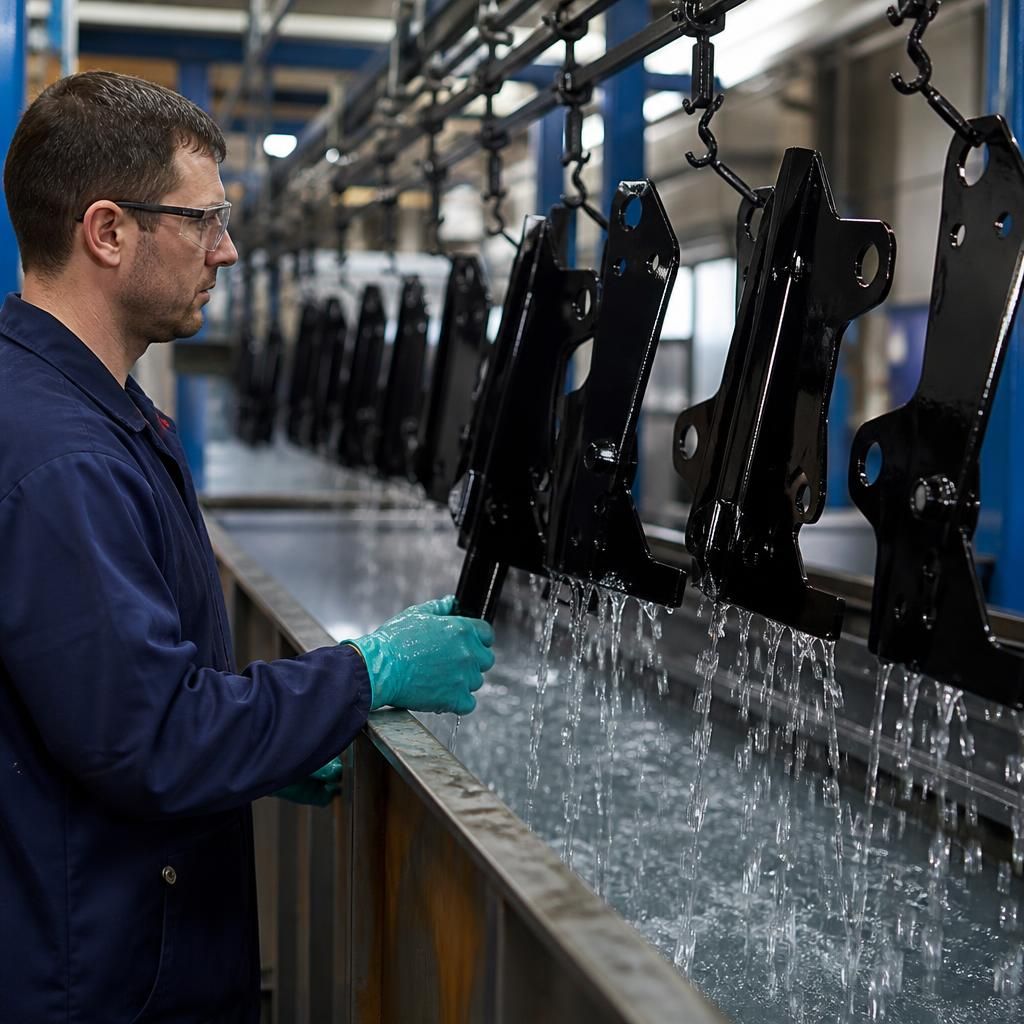
A key feature of specialist pre-treatment is its compatibility with the complete coating system, rather than the appearance of the bare metal alone. The prepared surface must provide a stable interface for the selected powder, so treatment choices are reviewed alongside the coating’s intended protective function and the component’s service conditions.
This is particularly important for industrial parts exposed to handling, abrasion or corrosive surroundings. A preparation method that suits a standard decorative finish may not provide the right foundation for a specialist nylon or protective coating. Matching the pre-treatment to the specified system helps the powder form a more dependable protective barrier, supporting the resilience and service life of the finished component.
Discuss your powder coating pre-treatment requirements
Discuss your component’s substrate, existing condition and intended coating system with our team to identify suitable pre-treatment requirements. Providing drawings, specifications or sample parts can help establish a preparation approach for your powder coating project.