

What logistical considerations should be taken into account when selecting a supplier for powder coated steel tubes, and how do these impact overall project timelines and costs?
When selecting a supplier for powder coated steel tubes, assess transport arrangements, tube dimensions, batch quantities, packaging requirements, handling limitations and lead-time coordination alongside coating capability. Accurate information and well-planned collection or delivery across the Midlands can reduce handling, prevent damage and rework, and help control the project’s overall schedule and transport costs.
Choosing a supplier for powder coated steel tubes involves more than comparing the coating price. The supplier’s information requirements, production planning, quality-control process, order administration and ability to coordinate with your installation or manufacturing schedule can all affect the completion date and the total project cost.
Confirm the specification before placing the order. A clear technical brief should identify the steel grade, tube configuration, coating system, colour reference, required finish, pre-treatment expectations and any areas that must remain uncoated. It should also state whether the tubes will be welded, drilled, cut or assembled before coating. Changes made after processing has been planned can require revised preparation, additional masking or rework, so agreeing the specification at the quotation stage reduces avoidable delay.
Drawings and production information should be issued in a form that the coater can use accurately. Revision-controlled drawings are particularly important where several related tube assemblies are involved. Each item should be identifiable, with any orientation, masking or inspection requirements recorded. This reduces the risk of parts being processed to an outdated drawing or returned without the information needed for assembly.
Consider how the coating process fits the wider production sequence. Powder coating is normally a later-stage operation, so the steel tubes need to arrive after fabrication and any work that could damage the finish has been completed. If drilling, welding, grinding or other fabrication is required after coating, the affected areas may need repair and the finished components may no longer provide the intended level of protection. A suitable supplier should therefore discuss the point at which the tubes enter the coating process and how that stage aligns with your manufacturing programme.
Project planning should also allow for activities that sit around the coating itself. These may include pre-treatment, masking, curing, cooling, inspection, release documentation and preparation for onward use. If the tubes are required for a site installation or a production line, agree which items are needed first and whether they can be released in a planned sequence. This can be more useful than treating the entire order as one delivery, provided the additional administration and transport are included in the cost assessment.
Ask how changes, approvals and queries are managed. A coating supplier may need clarification about an unclear drawing, a finish that is unsuitable for the service environment or an access point that cannot be coated consistently. Establish who approves technical changes and how revised instructions are recorded. Uncontrolled changes create a risk of duplicated work, rejected components and programme disruption, particularly where the coated tubes form part of a larger fabricated assembly.
It is also sensible to agree the acceptance criteria before production begins. These can cover colour, gloss, visual appearance, coverage, adhesion, coating thickness and the treatment of permitted rack or contact marks. The appropriate criteria depend on the application and the agreed coating specification. Defining them in advance makes inspection more objective and helps prevent a disagreement after completion from delaying release.
Review traceability and documentation requirements. For industrial projects, records may be needed to link the finished tubes to the purchase order, drawing revision, coating material and inspection results. If your quality system requires certificates, batch information, photographs or a formal inspection report, include these requirements in the enquiry rather than requesting them after the work is complete. Documentation can involve additional administration, but missing records can create greater costs if components cannot be accepted or their use cannot be verified.
Packaging and handling remain important after coating, but the assessment should focus on how the supplier protects the finish through each stage of the agreed process. Discuss separation between coated surfaces, protection from abrasion, identification of separate assemblies and the method used to confirm that the items are ready for onward handling. Damage discovered at this stage may lead to touch-up work, repeat coating or an additional movement of the goods, all of which can affect the project schedule.
Compare quotations on total delivered project cost, not coating price alone. Relevant cost elements can include preparation, masking, special inspection, documentation, storage, loading and unloading arrangements, transport, remedial work and any additional processing caused by a late design change. A lower initial price may not be the lower-cost option if it excludes requirements that your project needs. Requesting an itemised quotation makes it easier to compare suppliers on the same scope.
Storage and site coordination should be agreed where the coated tubes cannot be used immediately. Finished steel should be kept in conditions that avoid moisture retention, contamination and unnecessary contact damage. If the supplier is expected to hold completed items, establish the release procedure, identification system and any storage charges in writing. This prevents uncertainty between production completion and final use.
For a Midlands manufacturing, fabrication, construction or automotive project, the most useful supplier comparison is therefore a review of the complete process: technical information, approval points, production sequence, inspection evidence, protection of the finished coating, documentation, storage and the commercial treatment of changes. These logistical controls help reduce rework and unplanned handling while giving the project team a more reliable basis for planning both the schedule and the final cost.
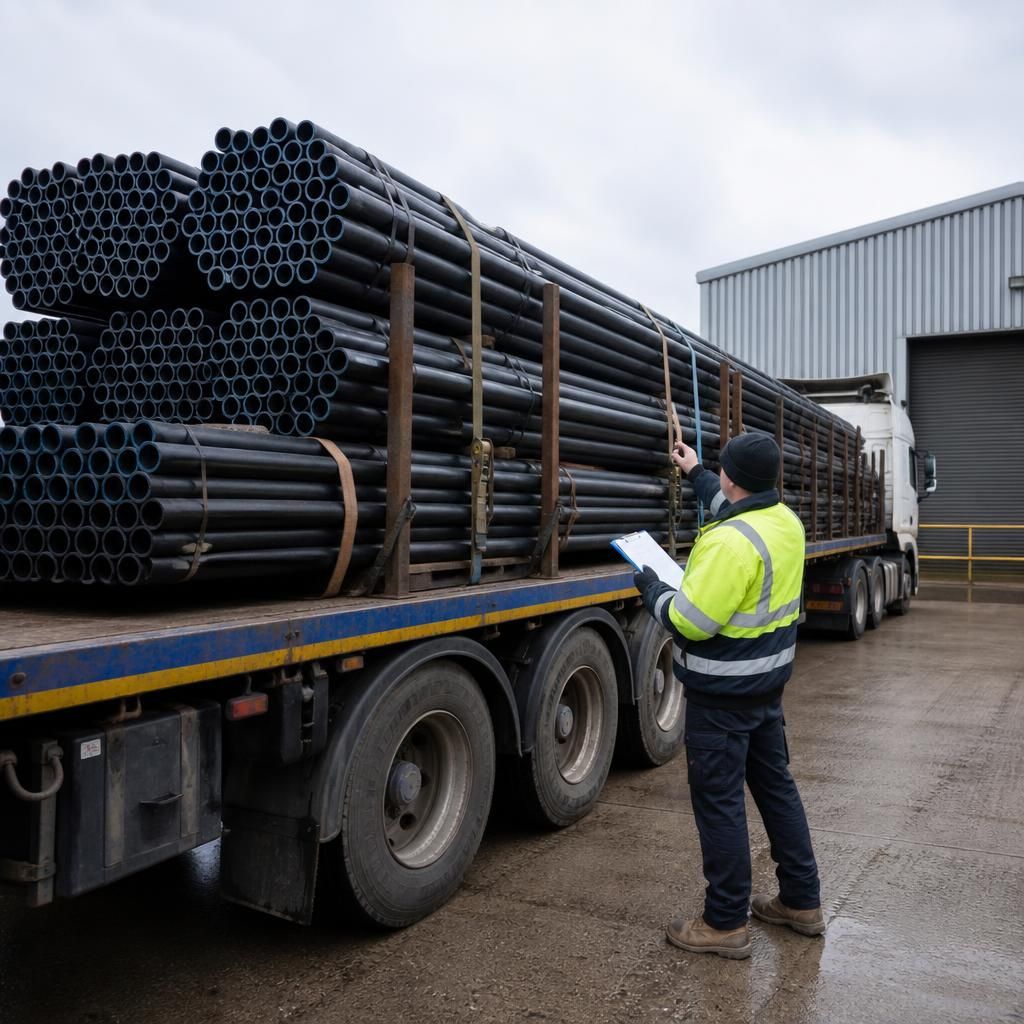
Transport planning for powder coated steel tubes must account for their length, weight, bundle size and unloading method, not simply the number of items ordered. These factors determine how the tubes can be loaded, secured and handled without bending the steel or marking the cured coating.
Provide the supplier with the longest tube dimensions, estimated bundle weights and any limits on lifting or stacking. Long sections may require additional support during loading and unloading, while mixed-size batches can take longer to identify and arrange safely. The delivery plan should also reflect site access, available unloading equipment and whether the tubes need to be placed in a particular sequence for fabrication or installation.
These details affect more than transport charges. An unsuitable vehicle, inaccessible unloading area or poorly planned bundle arrangement can create waiting, rehandling, temporary storage or a second movement of the goods. Agreeing the load configuration and unloading responsibilities before production allows the supplier and receiving site to plan the movement of the coated tubes as part of the project programme rather than treating it as an afterthought.