

What specialised equipment or technology does your pretreatment process employ to ensure the highest standards of coating quality and efficiency?
Our pretreatment process uses purpose-selected cleaning, rinsing and surface-conversion equipment to remove contaminants and prepare metal components for powder coating. Process controls and inspection checks help maintain consistent surface preparation, coating adhesion and finish quality across batch and specialist work.
The pretreatment setup employs purpose-selected process equipment matched to the component material, geometry, contamination level and required coating system. Rather than treating every part identically, the process uses controlled stages for chemical application, rinsing, drainage and drying, supported by monitoring and inspection at the points that most affect powder-coating performance.
Key equipment and technologies can include:
- Controlled chemical application: Cleaning and conversion stages are delivered using equipment suited to the size and shape of the work. This helps ensure that recessed areas, edges, apertures and larger faces receive appropriate treatment rather than relying on manual coverage alone.
- Managed solution circulation: Pumps, spray delivery systems or immersion arrangements may be selected according to the component and treatment chemistry. Effective circulation helps keep the working solution in contact with the metal and reduces areas of incomplete preparation.
- Rinse-stage control: Dedicated rinsing equipment removes residues from earlier stages before the component moves forward. The number and arrangement of rinse stages can be adjusted to suit the material, process sequence and finish requirements.
- Fluid and chemical monitoring: Process checks may cover factors such as solution condition, concentration, temperature, pH and contamination. Monitoring these variables helps identify drift before it affects surface consistency or the ability of the powder coating to bond correctly.
- Filtration and solution management: Where appropriate, filtration and controlled replenishment help limit the build-up of oils, particulates and other contaminants in process fluids. This supports more stable operation across repeated batches.
- Racking and handling equipment: Components are positioned to expose relevant surfaces while allowing drainage between stages. Suitable handling also reduces contact with treated areas and helps prevent fresh contamination before coating.
- Drying technology: Drying equipment removes retained moisture from joints, folds, cavities and surface features before powder application. This is particularly important where water could remain trapped and interfere with the subsequent coating process.
Efficiency comes from controlling the sequence as well as the equipment itself. Parts can be grouped by compatible material, size or preparation requirement, reducing unnecessary changes between treatments while maintaining the appropriate process route. Racking, drainage and transfer arrangements also help minimise handling and prevent prepared surfaces from being compromised between stages.
Inspection technology provides a further control point. Visual checks can identify residues, missed areas, staining, flash rust or moisture, while process records help link the condition of the work to the treatment route used. If a component has complex geometry or an unusual substrate, the preparation method and inspection criteria can be adapted rather than applying a standard cycle without assessment.
For B2B powder-coating work, the most useful measure of pretreatment equipment is not how complex it appears, but whether it produces a repeatable, verifiable surface for the specified coating. Purpose-selected equipment, controlled process conditions and inspection at transfer to coating together help maintain adhesion, appearance and corrosion-protection performance across batch and specialist components.
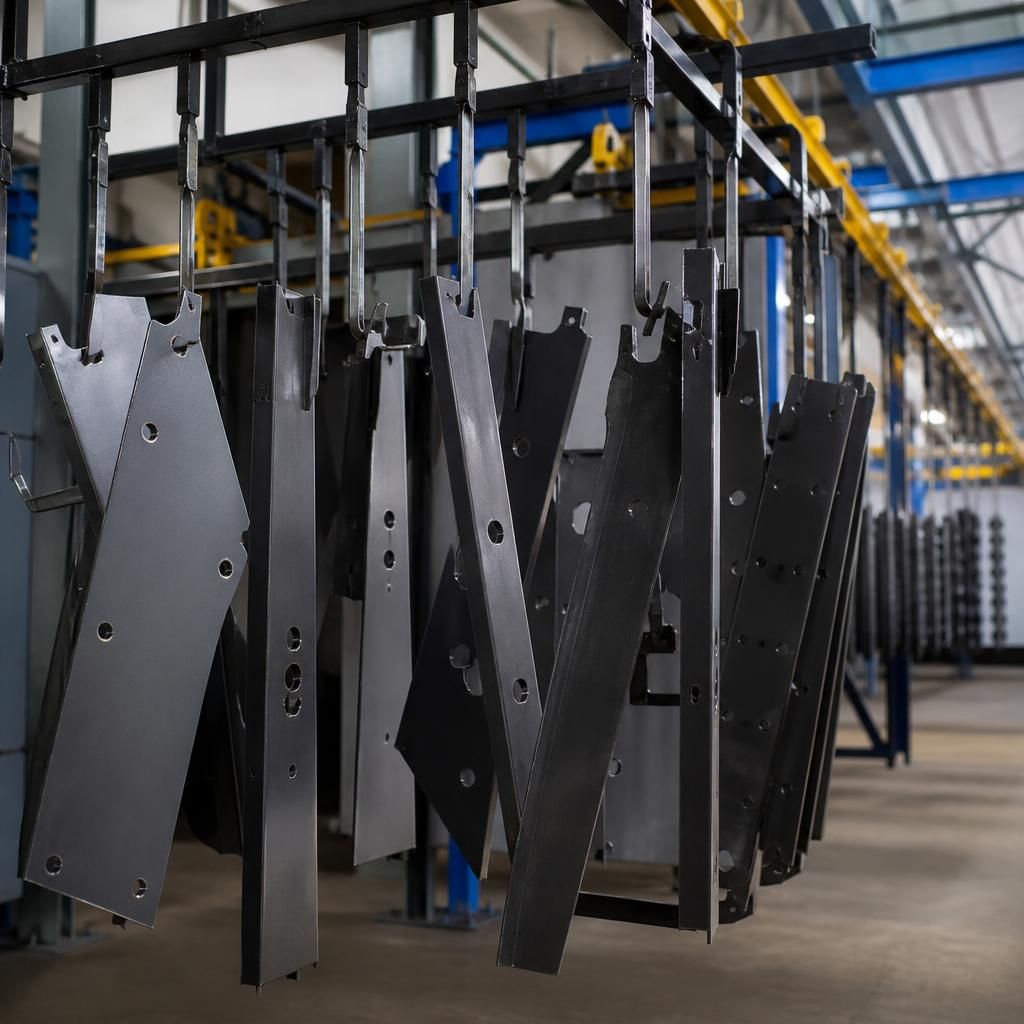
For complex components, pretreatment quality also depends on how parts are presented to the process equipment. Purpose-designed hooks, frames and contact points can keep critical surfaces exposed while reducing areas shielded from cleaning or conversion solutions. This is especially relevant for fabrications with overlapping sections, narrow channels or concealed faces, where poor orientation can leave residues or untreated metal.
Part presentation must also support safe electrical continuity during powder coating without damaging the prepared surface. Contact points are therefore selected with the component geometry and coating requirements in mind, and may be positioned in less critical areas where practical. This helps preserve access to the surfaces that require the most consistent finish while making the transition from pretreatment to coating more controlled.