

What are the specific advantages of using a dedicated pre treatment plant for large-scale powder coating projects?
A dedicated pre-treatment plant gives large-scale powder coating projects controlled, repeatable cleaning and surface preparation across substantial batches of metal components. This supports more consistent coating adhesion, improved corrosion protection and efficient handling of production volumes than less structured preparation methods.
A dedicated pre-treatment plant benefits large-scale powder coating projects by providing a purpose-designed sequence of washing, rinsing, conditioning and drying stages for metal components before coating. Its main advantages are better control of the complete preparation cycle, more suitable handling of varied component sizes and shapes, improved process traceability, and a more practical way to manage substantial production batches than ad hoc preparation methods.
Purpose-built process stages
A dedicated plant normally separates the main pre-treatment operations into defined stages. Depending on the metal and the required finish, these may include degreasing, rinsing, chemical conditioning, conversion treatment and drying. Separating these functions helps prevent one stage from undermining another. For example, a rinse stage can remove residues from cleaning chemicals before a conversion coating is applied, while a controlled drying stage removes moisture from seams, recesses and internal surfaces.
This arrangement is particularly useful on large projects because each batch can pass through the same planned sequence rather than relying on individual operators to reproduce a preparation method manually. The plant can also be configured around the substrate, such as mild steel, galvanised steel or aluminium, and around the level of preparation required for the intended service environment.
More effective treatment of complex components
Industrial parts rarely have a completely flat, accessible surface. Brackets, frames, fabricated assemblies and formed sections may contain corners, holes, joints and enclosed areas where oils, fabrication residues or moisture can remain. A dedicated plant provides the space, equipment and process stages needed to expose these areas to the relevant cleaning and rinsing actions.
Parts can also be arranged on suitable racks or conveyance systems so that contact points are limited and important surfaces remain accessible. Correct loading is a practical advantage in high-volume work: it reduces unnecessary handling, supports safe movement through the plant and helps ensure that components are presented consistently for subsequent powder application.
Greater control over chemical treatment
Pre-treatment chemistry must be appropriate to the base metal and the coating specification. A dedicated installation makes it easier to control factors such as bath condition, concentration, temperature, contact time and rinse quality. These controls matter because an under-treated surface may retain contamination, while excessive or poorly controlled treatment can leave residues that interfere with later processing.
Plant-based treatment also allows checks to be carried out at defined points in the process. Where project requirements call for it, records can be associated with the relevant batch, treatment route or substrate. This gives manufacturers and fabricators a clearer technical record than a preparation method with no controlled stages or documented checks.
Improved production planning for substantial batches
Large projects often involve repeat parts, mixed component types or several delivery stages. A dedicated plant can accommodate an agreed process route for each group, allowing similar items to be prepared together and reducing the need to set up separate manual operations for every individual component. This makes it easier to plan the sequence of work around rack capacity, component dimensions and the required treatment system.
The benefit is not simply speed. A structured plant helps avoid avoidable interruptions caused by unsuitable loading, incomplete cleaning or parts arriving at the coating stage with residual moisture. It also supports clearer separation between prepared and unprepared components, which is important when a project contains several batches or coating specifications.
Better management of quality risks
Surface preparation is affected by the condition of incoming metal. Fabrication oils, welding residues, scale, corrosion, storage contamination and marks from handling can all influence the treatment required. A dedicated plant does not remove the need to inspect components before processing, but it provides a controlled route for dealing with identified conditions and for escalating items that need additional preparation.
This is valuable on large-scale work because a defect in the preparation route can affect many parts if it is not identified promptly. Defined plant stages, operating checks and batch records make it easier to investigate an issue, isolate affected components and adjust the process where necessary.
More suitable environmental and operational control
A dedicated pre-treatment installation is designed to contain process chemicals, rinse water, residues and extracted moisture within appropriate equipment. This provides a more controlled working environment than improvised washing or preparation arrangements. Chemical handling, replenishment, waste management and maintenance can be organised around the plant rather than dealt with separately for each batch.
For a project involving a high volume of metalwork, this organised approach can simplify coordination between preparation, powder application, curing and inspection. It also gives the coater a more reliable basis for assessing whether components are ready to receive powder, which is essential when the finished parts must meet a defined industrial specification.
In practical terms, the strongest advantage of a dedicated pre-treatment plant is process control at scale. It combines suitable equipment, controlled chemistry, planned component handling and documented operating stages, making it better suited to substantial industrial powder coating programmes than inconsistent or highly manual preparation methods.
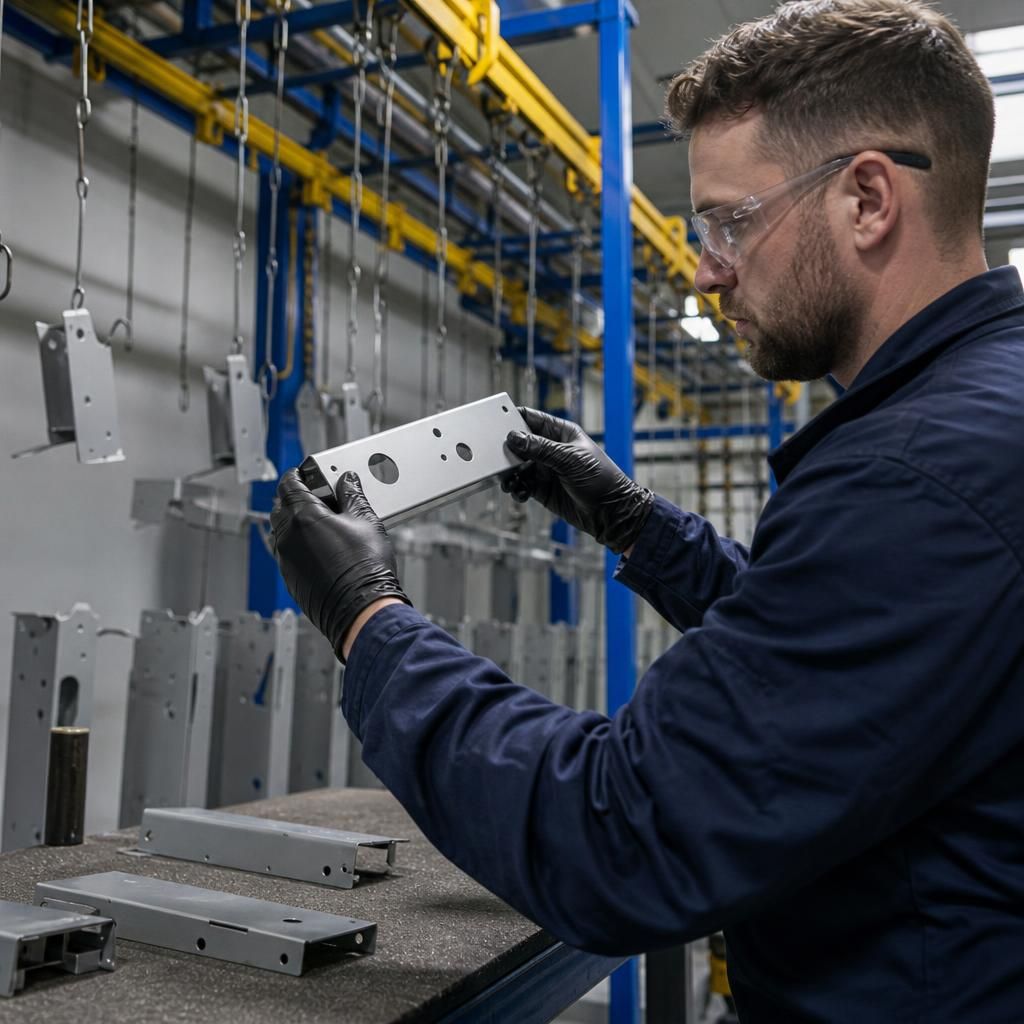
A dedicated pre-treatment plant also makes first-off checks and production approval more meaningful. When components follow a defined treatment route, the surface condition of an approved sample is more representative of the wider batch than it would be where preparation varies from part to part.
This gives manufacturers and fabricators a clearer basis for checking coating adhesion, appearance and coverage before releasing a substantial quantity for powder application. If a result needs investigation, the agreed treatment route can be reviewed alongside the component material, preparation requirements and batch details, helping distinguish a surface-preparation issue from a powder application or curing issue.