

What maintenance practices should be followed to ensure optimal performance of components treated with chromate powder coating pretreatment?
Maintain components treated with chromate powder coating pretreatment by keeping surfaces clean and dry, using non-abrasive methods and compatible detergents, and avoiding harsh chemicals or mechanical damage. Inspect regularly for chips, scratches, corrosion or coating separation, and address any defects promptly in accordance with the original coating and repair specification.
Optimal performance depends on maintaining the complete coating system, not the chromate pretreatment in isolation. Once the pretreated component has been powder coated, maintenance should protect the finished film from service-related damage, prevent water or contaminants from remaining at vulnerable interfaces, and ensure that any repair follows the original coating specification.
Control handling and installation damage. Use suitable lifting points, padded supports and clean separators when components are moved or stored. Avoid dragging parts across racks, benches or other metal surfaces. During installation, prevent tools, clamps and fasteners from chipping the powder coating. If drilling, cutting or welding is unavoidable after coating, the affected area should be treated as a coating-system repair rather than left as bare or disturbed metal.
Protect joints, edges and contact points. Coating damage is more likely at sharp edges, apertures, threaded areas, folded sections and locations where two components rub together. Check that mating parts do not trap moisture or abrade the finish during movement. Where the design permits, maintain effective drainage and avoid configurations that create persistent water traps, particularly in outdoor, washdown or chemically exposed applications.
Manage the operating environment. Keep the component within the chemical, temperature and exposure limits established for the specified powder coating system. Review the likely effect of process fluids, salts, solvents, alkaline residues, acidic vapours and airborne deposits rather than assuming that a coating suitable for one environment will perform identically in another. Where exposure conditions change, reassess the coating specification with the coater or materials specialist before continued use.
Check interfaces and associated hardware. Maintenance should include areas that are not fully protected by the powder coating, such as cut-outs, threads, drainage paths, fastener interfaces and masked contact points. Look for loosened fittings, damaged seals, trapped debris or signs that dissimilar metals are remaining wet against one another. Correcting the source of the problem is important; applying material over a contaminated, wet or unstable interface will not provide a reliable repair.
Use a controlled repair procedure. If the coating system has been breached, isolate the component where necessary and record the location, likely cause and extent of the damage. The repair specification should identify preparation, compatible primer or pretreatment requirements, powder or liquid repair material, curing conditions and final acceptance criteria. Repairs should be approved by the responsible coating or quality specialist, especially where the component is safety-critical, exposed to corrosive service or subject to a formal customer specification.
Do not dry-sand or otherwise disturb suspected chromate-containing residues without first following the relevant risk assessment, control measures and waste-handling requirements. Repair work should prevent unnecessary release of coating or pretreatment residues and should use appropriately trained personnel and suitable protective measures.
Keep maintenance records. Record the component identification, service environment, installation date, coating specification, repair materials, preparation method and any recurring damage pattern. This information helps distinguish isolated handling damage from a wider issue involving design, drainage, chemical exposure, curing, adhesion or installation. Recurring defects should trigger a technical review rather than repeated cosmetic repairs.
For assemblies used in demanding industrial applications, combine the coating maintenance plan with the wider equipment inspection schedule. Maintenance intervals should reflect exposure, loading, movement, temperature cycling and the consequences of coating failure. The most reliable approach is to follow the original applicator’s specification and document any change to the component’s use, environment or repair method.
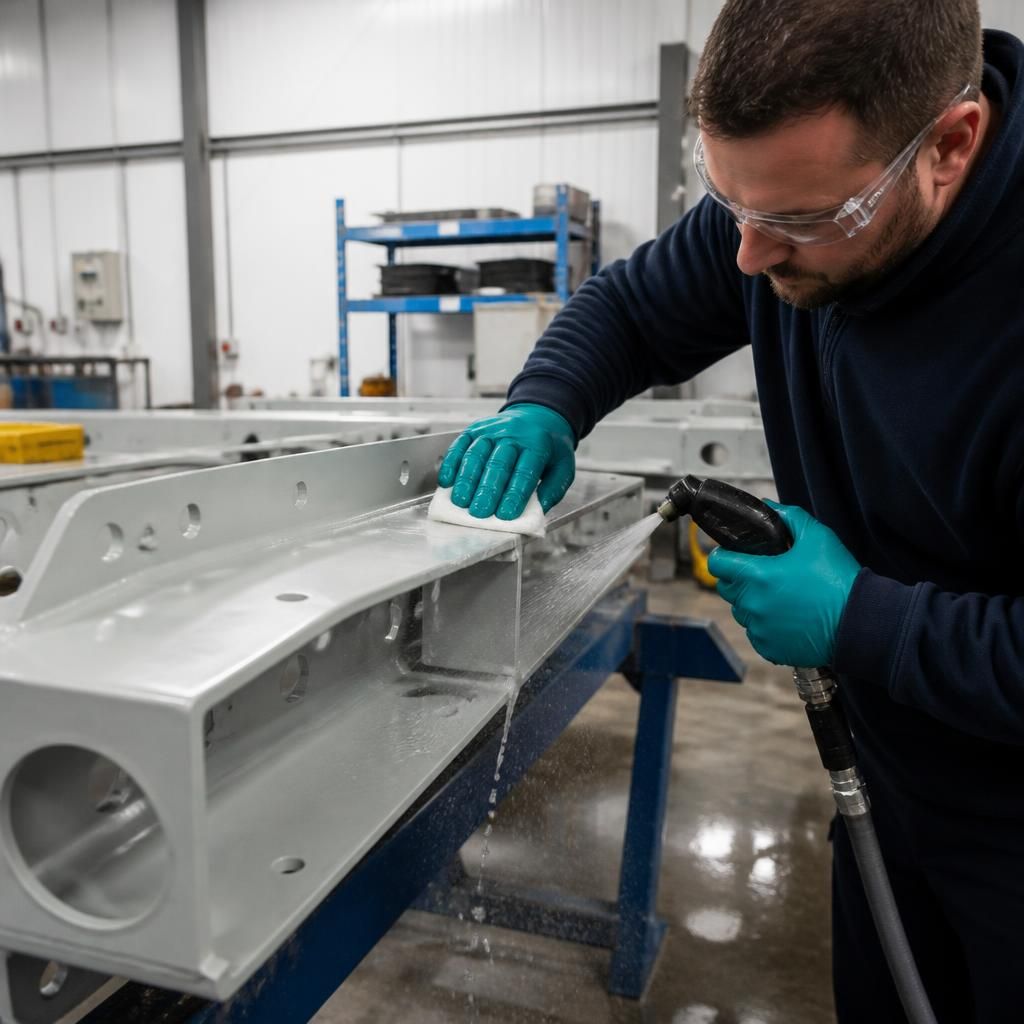
Cleaning should remove deposits without driving contamination into seams, joints or drainage points. Use a clean, soft application method, work from less soiled areas towards more heavily soiled areas, and rinse away detergent residues rather than allowing them to dry on the coating. Pay particular attention to concealed faces and recesses, where retained process residues can remain in contact with the finished coating.
After cleaning, allow the component to dry fully before assessing its condition. This makes it easier to distinguish surface contamination from genuine coating defects and prevents moisture from being sealed into interfaces during reassembly. Any unusual staining, residue retention or repeated soiling pattern should be considered as evidence that the component’s drainage, surrounding process or installation arrangement may need technical review.