

What factors should be considered when selecting zinc phosphate spray pretreatment for different types of metal components?
Select zinc phosphate spray pretreatment by assessing the component’s metal type, surface condition, size and geometry, together with the required corrosion resistance and powder-coated finish. Also consider the intended environment, production volume, process compatibility and total treatment cost, as these factors determine whether the coating system is suitable for the component and its end use.
Zinc phosphate spray pretreatment should be selected as part of a complete surface-treatment system, rather than as a standalone chemical choice. The correct system must produce a consistent, adherent conversion layer on the component and remain compatible with subsequent rinsing, drying, powder application and curing. Selection therefore depends on how the treatment interacts with the substrate, the required coating specification and the way the components move through the processing equipment.
Substrate compatibility is more detailed than simply identifying the base metal. Steel, galvanised steel and zinc-coated parts can respond differently to the same phosphate chemistry because their surfaces may contain different oxides, residues and levels of reactivity. Components made from mixed metals require particular care: a treatment suitable for exposed steel may not give the same result on zinc, aluminium or plated areas. Where a part includes welds, machined sections, cast surfaces or different surface finishes, the pretreatment should be assessed against each exposed area rather than judged from the nominal material specification alone.
The required phosphate coating characteristics should also be defined. A fine, uniform conversion layer is generally preferred beneath powder coating because it provides a stable key without creating unnecessary surface build-up. The target is not simply the heaviest possible deposit. Excessive or uneven phosphate can retain moisture, affect dimensional tolerances or contribute to powder defects, while insufficient conversion may leave areas vulnerable beneath the applied coating. The selected process should therefore be capable of delivering the required coverage across both broad faces and less accessible areas.
Component design affects whether spray pretreatment is appropriate and how it should be configured. Hollow sections, boxed fabrications, overlapping joints, recesses and close-fitting interfaces can trap cleaner, phosphate solution or rinse water. Drainage holes, component orientation, spray reach and the order in which surfaces enter and leave each stage all influence the result. Parts with complex geometry may need process trials to confirm that the spray pattern reaches critical surfaces and that liquids do not remain in pockets after treatment.
Existing surface residues must be considered before choosing the phosphate stage. Oils, drawing compounds, forming lubricants, weld scale, rust, mill scale, adhesive residue and handling contamination can interfere with conversion coating. A formulation that performs well on a clean, lightly contaminated surface may be unsuitable where heavier residues are present. The pretreatment sequence may need an appropriate cleaning stage, mechanical preparation or a modified operating window before zinc phosphate can form consistently. Pretreatment should not be used to conceal inadequate removal of scale or corrosion.
Rinsing and drying requirements are part of the selection decision. Poor rinsing can leave soluble residues that affect powder adhesion, appearance or corrosion performance. Inadequate drying can cause flash rusting on susceptible steel or introduce moisture into subsequent coating stages. The system should be considered alongside water quality, rinse control, drainage and oven conditions. Components that retain water require particular attention to orientation and drying, even when the phosphate chemistry itself is suitable.
The intended powder-coating specification determines how closely the pretreatment must be controlled. Parts exposed to moisture, road contamination, industrial atmospheres or outdoor service normally require more demanding control than components used in a dry indoor environment. Appearance-critical work may also require tighter control of staining, colour variation, surface texture and powder-flow behaviour. Where a customer or project specification defines salt-spray performance, adhesion, visual standards or coating thickness, the phosphate system should be selected and validated against those requirements before production.
Process control and repeatability should be assessed before approval. Important checks include:
- chemical concentration and operating temperature;
- spray pressure, coverage and contact time;
- cleaner and rinse condition;
- surface condition after phosphating and drying;
- powder adhesion and cured-film appearance; and
- corrosion or other performance testing required by the coating specification.
These checks help distinguish a formulation problem from an equipment, contamination or handling problem. Trial panels or representative components are useful where the parts combine several substrates, include difficult welds or have a demanding appearance requirement. Testing should use the actual component materials and the intended powder system wherever possible.
Production and environmental controls can influence the practical choice. The treatment should fit the available spray stages, tank or booth arrangement, drainage provisions, wastewater controls and maintenance procedures. Chemical replenishment, sludge management and rinse-water handling affect the total process burden, not just the purchase price of the treatment product. A system that appears economical per component may be unsuitable if it requires extensive changes to equipment or creates avoidable disposal and rework issues.
For that reason, the most reliable selection method is to review the component drawing, substrate details, contamination history, coating specification and processing route together. A specialist powder-coating operation can use this information to identify compatibility risks, establish suitable pretreatment controls and confirm the finished system on representative parts before wider production.
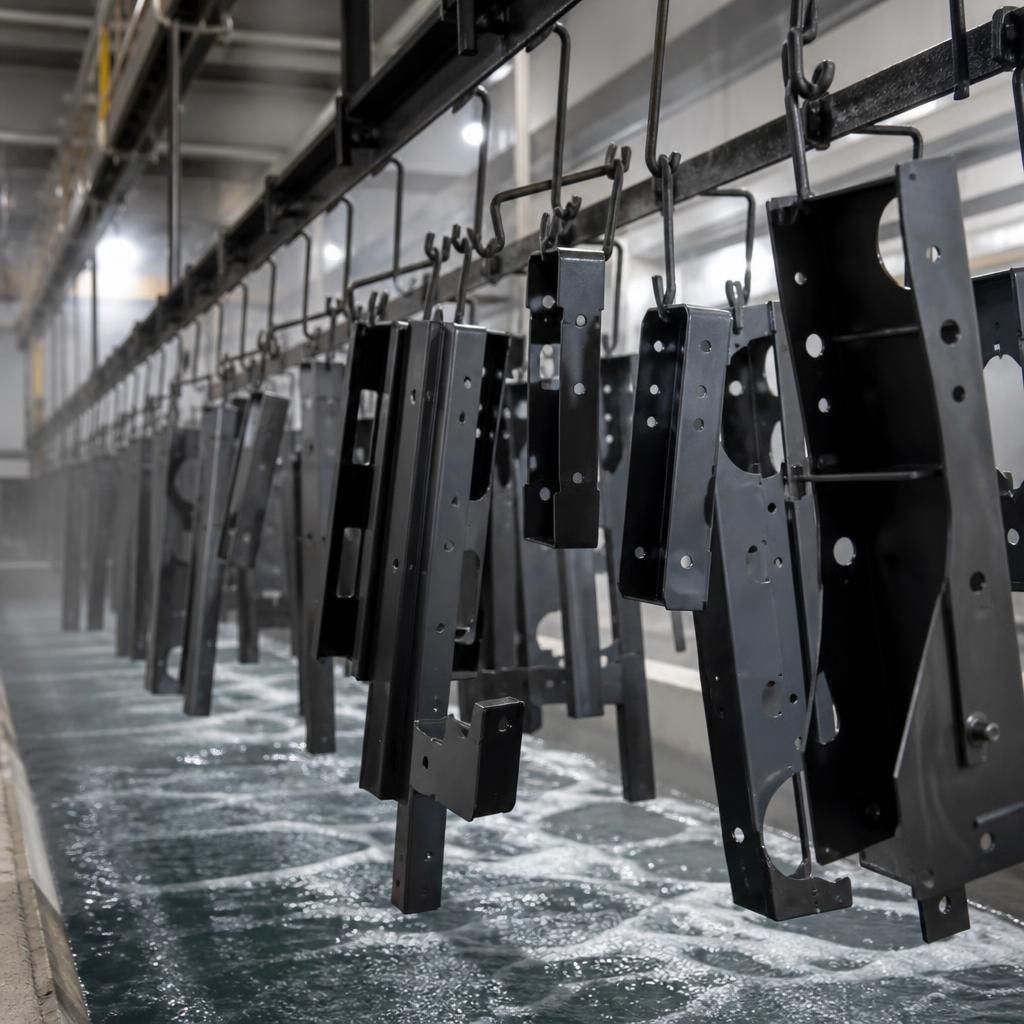
Racking and handling are important selection factors. A zinc phosphate spray pretreatment can only form consistently where the treatment solution reaches the metal surface, so the way a component is suspended should be assessed alongside its design. Contact points may leave small untreated areas or marks, while poorly positioned parts can shield faces from the spray and allow liquid to collect.
For components with visible or corrosion-critical surfaces, define suitable rack locations before approving the process. The chosen arrangement should expose the required faces, allow treated parts to drain, and minimise contact with surfaces that will later be inspected or coated. Handling between pretreatment and powder application should also avoid scuffing or contaminating the conversion layer. This consideration is particularly useful when comparing pretreatment suitability for small repeat parts against larger fabricated components that require different hanging arrangements.