

How do your powder coating facilities manage the environmental impact of the blasting process?
Our blasting process is managed to limit dust, airborne abrasive and waste through contained work areas, effective extraction and careful handling of used blasting media. Media and residue are separated where practical, with waste managed responsibly so surface preparation supports durable powder coating without unnecessary environmental impact.
Environmental control during blasting depends on reducing unnecessary abrasive use, containing contaminants and managing the energy, materials and residues associated with surface preparation. Our approach combines process planning with enclosed blasting, effective extraction and responsible handling of spent media, so the surface is prepared without creating avoidable waste or pollution.
Before blasting, the component and its existing finish are considered. Removing loose contamination or unsuitable coatings before the main treatment can reduce the amount of abrasive needed and prevent clean material from becoming mixed with paint, rust, grease or other residues. Where different materials or coating types are being processed, keeping waste streams separate can also make reuse, recycling or appropriate disposal more practical.
Abrasive selection has an environmental role as well as a technical one. The medium must be suitable for the substrate and the required surface profile; an unsuitable abrasive may need replacing sooner, produce excessive breakdown or create a finish that requires reworking. Using the correct grade and applying it consistently helps avoid unnecessary passes and limits consumption. Spent abrasive is assessed rather than treated as a uniform waste, because its condition and contamination determine whether it can be recovered or must be removed through an appropriate waste route.
- Material efficiency: controlled blasting parameters help avoid excessive media use and reduce the likelihood of reworking.
- Contamination control: residues from the original component are kept from spreading into clean areas or becoming mixed with otherwise recoverable material.
- Equipment condition: maintained blasting and extraction equipment supports consistent operation and helps prevent inefficient use of compressed air or abrasive.
- Waste segregation: used media, removed coatings and other residues are identified and handled according to their composition and contamination.
Energy use is another consideration. Blasting relies on compressed air, extraction and associated plant, so efficient operating settings and sound equipment maintenance are important. Excessive pressure or prolonged blasting does not necessarily improve the result; it can increase energy consumption, accelerate abrasive breakdown and damage the substrate. The aim is to achieve the required cleanliness and profile with the least intrusive process that remains suitable for the subsequent powder coating.
The nature of the removed coating must also be considered. Existing paint systems, corrosion products and process oils can introduce contaminants into the waste stream. These materials should not be treated as ordinary clean metal or dispersed beyond the blasting area. Identifying the residue supports correct storage, documentation and disposal, particularly where the original coating may contain substances requiring controlled waste handling.
Environmental management continues after blasting. Components are checked for remaining contamination and the prepared surface is protected from conditions that could cause flash rusting or recontamination before powder coating. This is environmentally relevant because a failed or repeated preparation step consumes further abrasive, energy and coating materials. Good process control therefore reduces impact by preventing avoidable repeat work, not simply by managing waste after it has been produced.
For businesses assessing a blasting facility, useful questions include how abrasive media are selected, whether used media and removed coatings are segregated, how waste is documented, and how the operator prevents rework. These points provide a more meaningful indication of environmental practice than a general claim that blasting is low impact. The most responsible process is one that controls emissions and residues at source while using only the preparation necessary for a sound, durable powder-coated finish.
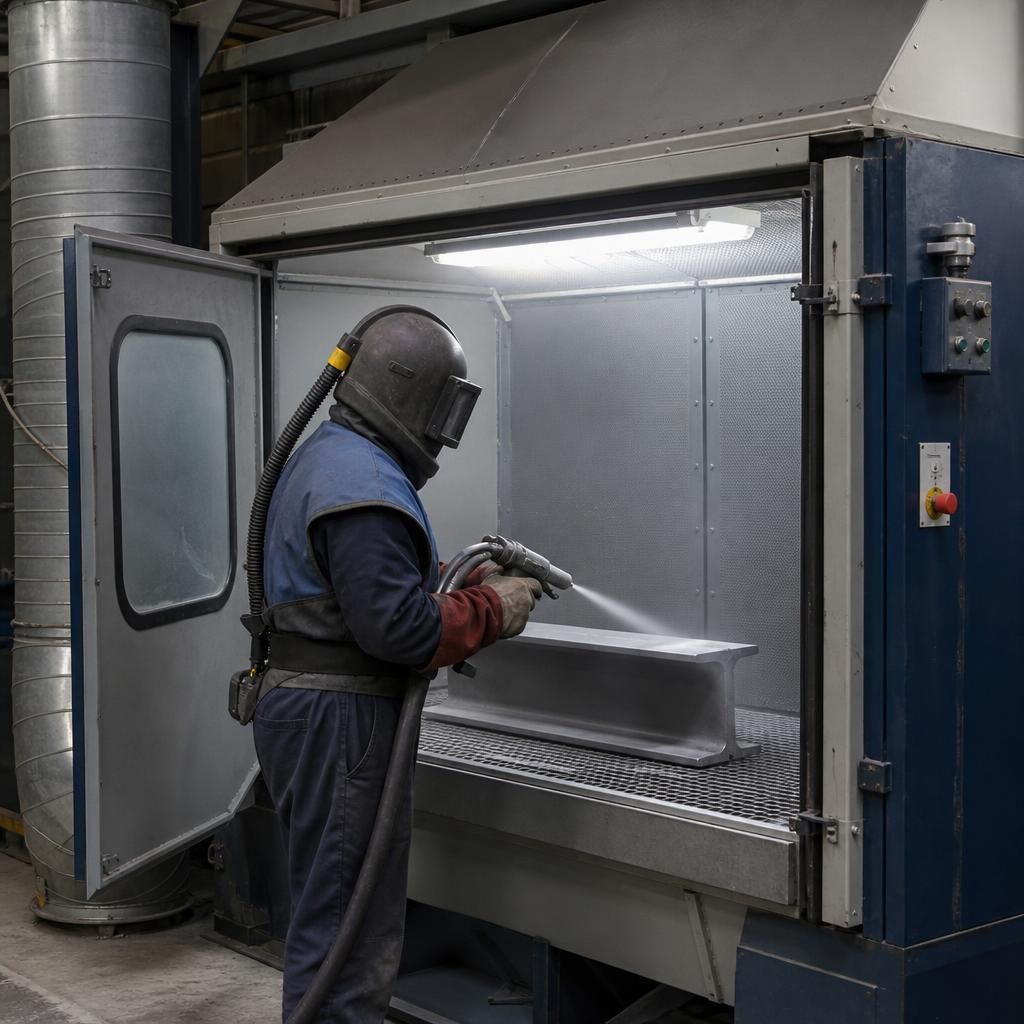
Noise is an additional environmental consideration in abrasive blasting, particularly where compressed air, impact energy and extraction equipment operate together. Powder coating facilities can reduce unnecessary noise by using enclosed blasting areas, keeping equipment correctly maintained and selecting operating pressures appropriate to the component rather than using excessive force.
Controlling noise at its source also supports more consistent blasting. Worn nozzles, damaged seals or poorly adjusted equipment can increase sound without improving surface preparation. Routine inspection helps identify these inefficiencies, while keeping blasting within a contained work area limits the spread of both noise and airborne disturbance beyond the process zone.
Discuss Your Blasting and Environmental Requirements
Discuss your component materials, existing coatings and environmental requirements with our team to identify suitable blasting controls and waste-handling considerations. This will help establish a surface preparation approach aligned with the needs of your powder coating project.