

What logistical considerations should be factored in when choosing a powder coating provider in the Midlands?
When choosing a powder coating provider in the Midlands, assess collection and delivery arrangements, transport requirements, batch capacity, handling of large or delicate components, packaging, and the provider’s ability to coordinate coating with your production schedule. Confirm how parts should be prepared, labelled and presented, and establish clear arrangements for quantities, specifications, delivery points and inspection before work begins.
The key logistical considerations are how metal parts will move through the coating process, how technical information will be controlled, and how the finished work will be released back into production. A suitable provider should be able to align handling, process sequencing, documentation and quality checks with the way your business manufactures and installs its products.
- Access, dimensions and lifting requirements: Confirm the maximum length, width, height and weight the provider can handle, together with any unusual shapes, projections or fragile features. Discuss loading access, lifting points and how parts will be supported during preparation, coating and curing. This is particularly important for fabricated frames, long sections, assemblies and components that cannot be safely handled manually.
- Part configuration: Explain whether items arrive as individual components, welded fabrications or partially assembled products. Some designs may need to be separated to allow proper coverage, while others need controlled masking so that threads, bearing faces, electrical contact areas or mating surfaces remain usable. Agree these requirements before the job is booked into the process.
- Coating specification control: Provide a clear specification for the required coating type, colour, gloss level, texture, film thickness and performance requirements. The provider should also understand which surfaces must remain uncoated and whether the finish is primarily decorative, corrosion-protective, wear-resistant or intended for another operating condition. Ambiguous specifications can lead to approval delays or rework.
- Compatibility with existing production work: If the same components are supplied in more than one finish, organise them by clearly defined job references and revisions. Separate identification of colours, finishes and coating systems reduces the risk of mixed batches, especially where visually similar parts are being processed at the same time.
- Process sequencing: Establish the order of preparation, masking, coating, curing and inspection, including any shot blasting or other pre-treatment required. Components may need to be processed in a particular sequence where masking depends on assembly position or where different parts must be matched visually. Changes made after preparation can affect the planned workflow, so design and specification changes should be communicated through an agreed revision process.
- Information supplied with the job: A useful job pack can include drawings, revision numbers, coating specifications, masked-area details, photographs, quantities and acceptance criteria. For repeat work, retain the approved specification and identify any changes rather than relying on informal instructions. This creates a reliable reference when the same product is coated again.
- Traceability: Ask how the provider identifies incoming parts, work in progress and completed batches. Job numbers, component references and inspection records help link the finished coating to the correct drawings and production order. Traceability is especially valuable where coated parts form part of a regulated, safety-critical or multi-stage manufacturing process.
- Quality release arrangements: Decide what checks are needed before the parts return to your site. Depending on the application, this may include visual inspection, coating thickness checks, coverage of difficult areas, masking accuracy and confirmation that parts have not been damaged during handling. Also agree who approves deviations and how non-conforming items are segregated, recorded and dealt with.
- Production dependencies: Consider whether the coating operation is linked to assembly, installation, customer delivery or another subcontract process. Build sensible hold points into the programme for drawing approval, sample acceptance or inspection where these are required. A provider that understands these dependencies can plan the work around defined production milestones rather than treating coating as an isolated operation.
- Change and contingency procedures: Clarify what happens if quantities change, a drawing is revised, additional components are identified or parts arrive with unexpected surface conditions. The practical issues include whether work can be paused safely, how affected parts are identified and how any additional preparation or processing is authorised. Agreeing this in advance avoids uncertainty when a production order changes.
- Commercial and administrative details: Ensure the quotation or order records the agreed scope, coating system, quantities, exclusions and any chargeable preparation or remedial work. Confirm the required purchase-order details and invoicing references, particularly when several departments or sites are involved. Clear administration supports accurate job allocation and reduces disputes over what was included.
- Communication and accountability: Nominate a contact on each side who can answer technical, production and quality queries. Define how instructions, approvals and changes are recorded so that important decisions are not lost in informal conversations. For repeat contracts, periodic reviews of defects, handling issues and programme performance can help refine the process.
Before selecting a provider, compare its answers against the actual demands of your components and production system rather than considering coating price alone. The most suitable arrangement will have a documented route for handling the parts, controlling the specification, recording progress, approving quality and managing exceptions from order through to receipt.
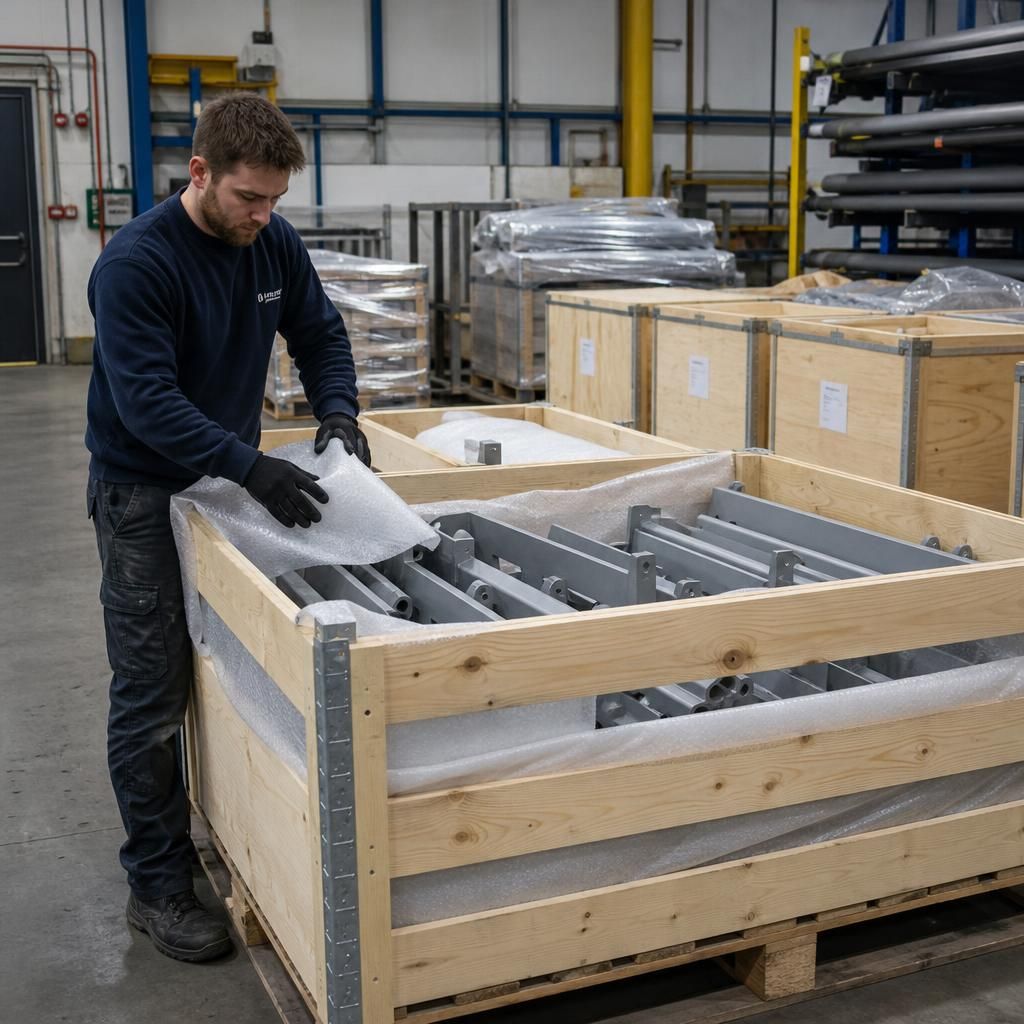
Packaging is a logistical consideration because a correctly coated component can still be damaged while it is stored or transported. Agree how parts will be protected against impact, abrasion, moisture and contact between finished surfaces, particularly where items have exposed edges, delicate projections or large coated areas.
The transport plan should also define whether the customer or provider supplies pallets, stillages, separators or other suitable supports, and whether packaging is retained for the return journey. Parts should be arranged so that they can be safely unloaded and checked without unnecessary handling. For repeat orders, using a consistent packing method makes quantities easier to verify and reduces uncertainty when coated components move between the coater, manufacturing site and installation location.