

How do I choose the right pretreatment process for different types of metal substrates in powder coating?
Choose the pretreatment process according to the substrate’s chemistry, surface condition, corrosion risk and intended service environment. Steel commonly requires thorough cleaning and conversion treatment, while aluminium, galvanised steel and other zinc-coated metals need substrate-specific chemistry to promote adhesion without attacking the protective surface.
The correct pretreatment process is the one that removes the particular contaminants and surface defects present on the substrate while leaving a chemically suitable surface for powder adhesion. Selection should therefore be based on the metal grade, existing finish, level of corrosion, component geometry, handling history and service environment rather than applying one treatment to every part.
Start by confirming what the component is made from. A visual inspection is not always enough, particularly where steel, aluminium and zinc-coated materials look similar after fabrication. The material specification, supplier information or a controlled identification check should be used where the substrate is uncertain. Mixed-metal assemblies require additional care because a process that is suitable for one metal may stain, etch or attack another.
- Mild and carbon steel: normally needs effective removal of oil, grease, shop dirt, mill scale and corrosion products. Alkaline cleaning is often followed by rinsing and, where necessary, abrasive preparation or an acidic stage to remove oxide. A phosphate or alternative conversion treatment can then create a more receptive surface and support corrosion protection beneath the powder film.
- High-strength or highly stressed steel: requires particular control of acidic treatments and processing conditions. Excessive pickling or poorly controlled exposure can introduce risks such as hydrogen embrittlement. The steel grade, tensile properties and component design should be considered before an acid-based route is selected.
- Cast iron: may contain graphite, moulding residues, embedded sand and oil held within pores. Cleaning and abrasive preparation may need to be more thorough than for a smooth fabricated steel part. Heating during the coating cycle can also release trapped contaminants, so porous castings should be assessed for outgassing and cleaned, dried and handled accordingly.
- Aluminium: develops a tenacious oxide layer and can be damaged by excessively aggressive alkaline chemistry. A suitable process may include cleaning, controlled etching, deoxidising or desmutting, followed by a conversion treatment compatible with the powder system. Particular attention is needed around welds, heat-affected areas and regions containing silicone or other fabrication residues.
- Galvanised and other zinc-coated steel: should be cleaned without unnecessarily stripping the zinc layer. Fresh galvanising, storage stains and white corrosion products need to be distinguished from the coating itself. A controlled chemical treatment or light mechanical preparation may be appropriate, while heavy abrasion or strong acid can reduce the protective zinc coating and create an uneven basis for powder application.
- Stainless steel: has a stable passive oxide surface and is not treated in exactly the same way as carbon steel. Oils must be removed, and the surface may need a suitable mechanical key or specialist conversion treatment to improve adhesion. Abrasive tools and media previously used on ordinary steel should be avoided because embedded iron contamination can lead to staining and corrosion.
- Zinc die castings: can contain porosity and may react adversely to aggressive cleaning chemistry. A controlled clean, mild surface conditioning and a compatible conversion process are generally more appropriate than harsh etching. The possibility of trapped gases or lubricants should be considered before coating.
- Copper, brass and other non-ferrous alloys: need treatment that removes tarnish and fabrication residues without causing excessive discolouration or surface attack. Alloy composition matters because different copper-based materials can respond differently to acids and alkaline cleaners.
Next, assess the condition of the surface rather than relying on its material name. New sheet, laser-cut sections, welded fabrications, previously painted parts and weathered items can all require different preparation even when they are made from the same alloy. Welding can leave heat scale, spatter, flux, anti-spatter products and embedded contamination. Edges may retain burrs, while folded sections and boxed fabrications can hold moisture or process chemicals. These areas should be identified before the treatment sequence is chosen.
Previous coatings also affect the decision. Powder or paint that is sound and compatible with recoating may sometimes be removed by an approved stripping method, but loose, poorly bonded or chemically incompatible material should not simply be covered. Galvanised surfaces with localised corrosion, aluminium with heavy oxidation and steel with deep rust may need additional mechanical preparation before entering a chemical pretreatment line.
Match the conversion stage to the required level of protection. Iron phosphate, zinc phosphate, zirconium-based and other conversion systems do not provide identical results on every substrate. The choice depends on the metal combination, the powder system, the intended indoor or outdoor exposure and the required corrosion performance. Where a component will face moisture, salts, chemicals or frequent handling, the complete pretreatment and coating specification should be considered together rather than selecting a cleaner in isolation.
Rinsing and drying are as important as the treatment chemicals. Residual cleaner, salts or conversion solution can interfere with adhesion and may cause blistering or underfilm corrosion. Water quality, rinse control, drainage and drying of recesses should be checked, particularly on parts with overlapping joints, deep channels or hollow sections. A process that works on an open bracket may be unsuitable for a complex welded frame if liquid cannot drain completely.
Use the component’s design and intended use to refine the process. Consider the following before approving a pretreatment route:
- Whether the part is exposed to condensation, road salt, industrial chemicals, abrasion or regular washing.
- Whether different metals are joined in one assembly.
- Whether threaded holes, close tolerances, drain points or masking areas could retain chemicals.
- Whether the surface will be visible and require uniform appearance as well as functional protection.
- Whether the coating specification requires a particular conversion chemistry or restricts certain treatments.
- Whether the component has been exposed to cutting fluids, drawing compounds, silicone, marking ink or storage preservatives.
A practical selection process begins with substrate identification, followed by contamination and corrosion assessment. The part can then be allocated to a compatible cleaning method, any necessary mechanical or acidic preparation, a suitable conversion stage, controlled rinsing and thorough drying. The finished surface should be examined for remaining oil, powdery residue, flash rust, staining, water retention and inconsistent appearance before powder is applied.
Where the material, contamination or service requirement is uncertain, a trial on representative components or test panels is preferable to changing the full production process without evidence. Checks can include visual inspection, a water-break assessment after cleaning, coating adhesion testing and exposure testing appropriate to the specification. Results should be reviewed alongside the actual component geometry and production conditions, because a laboratory-clean panel may not reproduce the behaviour of a welded, porous or mixed-metal assembly.
For batch or specialist work, provide the coater with the substrate grade, previous finishes, fabrication processes, expected service environment and any restrictions on chemicals or appearance. That information allows the pretreatment route to be selected for the metal actually being coated, rather than relying on a generic steel process that may compromise adhesion, corrosion resistance or the substrate itself.
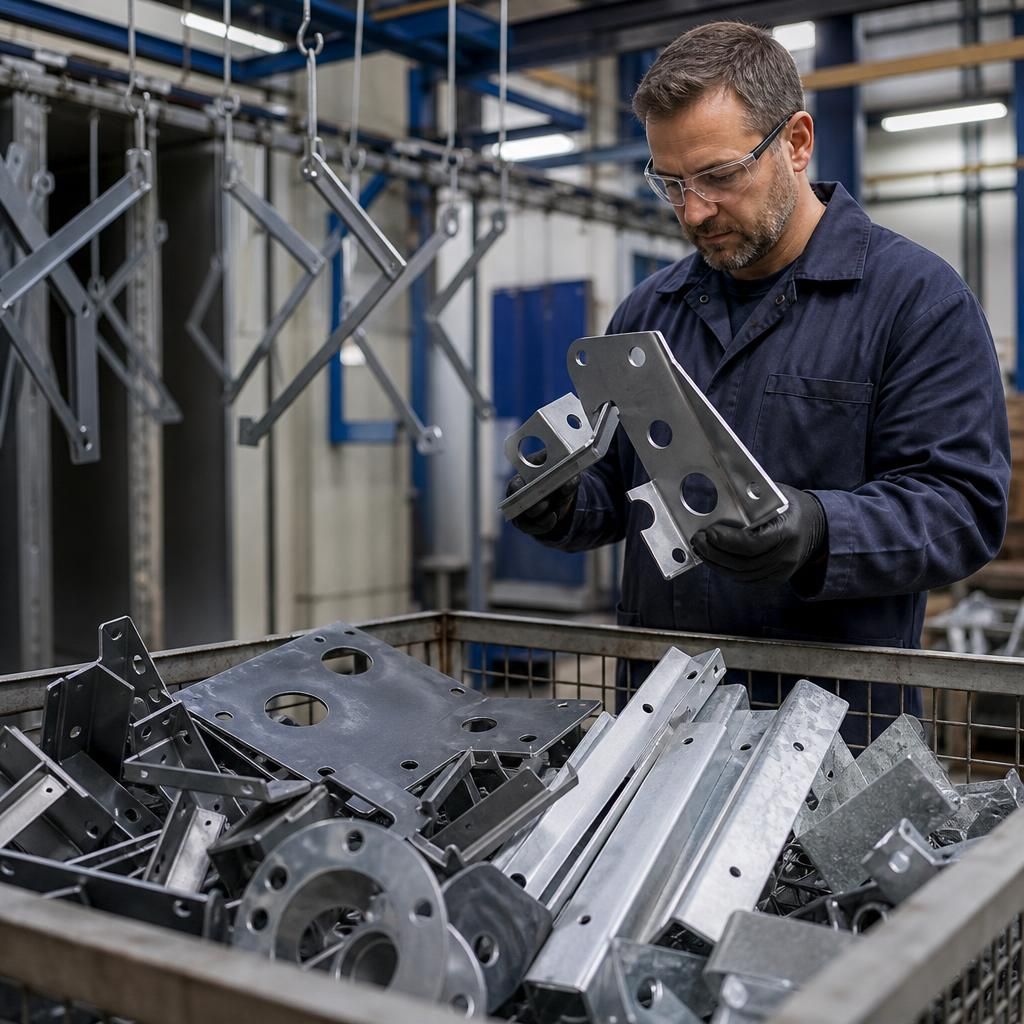
Where a production batch contains different metal substrates, the pretreatment route should be selected for the complete load rather than for the most common material. Steel, aluminium and zinc-coated parts may require different cleaning strengths and conversion chemistries, so processing them together can create an unsuitable compromise or cause chemical carryover between stages.
Where practical, group components by compatible substrate and process them under the appropriate settings. If mixed-metal processing is unavoidable, use a system specifically validated for those materials and confirm that the resulting surface supports the required powder adhesion and corrosion performance. This approach helps maintain consistent preparation across a batch without unnecessarily attacking a sensitive substrate.