

What makes Powder-coatings.co.uk's surface preparation techniques distinct from other providers in the Midlands?
Powder-coatings.co.uk distinguishes its surface preparation by matching the preparation approach to the metal component, intended finish and coating application rather than relying on a single routine. This is suited to large-scale, batch and specialist powder coating work, including nylon and protective coatings, for businesses across the Midlands.
Powder-coatings.co.uk’s surface preparation is distinct because it treats preparation as a controlled part of the coating specification, not simply as a cleaning stage before spraying. The process is adapted to the condition of each component, the type of metal, the required finish and the demands the finished coating will face. This is particularly important for fabricated parts, production batches and specialist applications where small preparation differences can affect adhesion, appearance and service life.
A key distinction is the attention given to the condition of the incoming metal. Oil, grease, dust, mill scale, corrosion, welding residue, old coatings and handling contamination can all interfere with powder adhesion. Preparation therefore starts with assessing what is present on the component and identifying areas that need additional treatment. Welds, corners, recesses, drilled holes and folded edges often require more care than broad, accessible faces because contaminants can remain trapped in these areas.
The preparation method is then selected to remove contamination without unnecessarily altering the component. Cleaning removes surface residues, while mechanical preparation can deal with corrosion, scale, previous finishes and other firmly bonded material. Abrasion also creates a suitable surface profile where appropriate, giving the powder coating a more effective key. The level of abrasion must be controlled: too little may leave weakly bonded material behind, while too much can damage edges, alter dimensions or produce an unsuitable texture.
- Contamination control: surfaces are prepared with the effect of oils, grease, dust and residues in mind, rather than assuming that visible cleanliness means the surface is ready.
- Detail preparation: welds, joints, recesses and edges receive attention because these locations commonly retain contaminants or expose weaknesses in an incomplete preparation.
- Profile control: abrasion is used purposefully to support adhesion and finish quality, with the treatment suited to the component rather than applied indiscriminately.
- Substrate awareness: the preparation approach takes account of how the underlying metal may react to cleaning, abrasion, moisture and heat during the coating process.
- Finish-led preparation: the required appearance and performance help determine how much preparation is appropriate, including where a specialist nylon or protective coating is specified.
Another important difference is the treatment of fabricated components as complete parts rather than as flat areas alone. Cut-outs, threaded sections, sharp corners and interfaces between different pieces can influence how the coating settles and how well it remains bonded. Preparing these features carefully helps reduce defects such as uneven coverage, visible inclusions, poor edge coverage and premature failure around welds or joints.
Preparation also has to support consistency across batches. If one component is heavily abraded, another is only lightly cleaned and a third retains residues, the resulting coating may vary in texture, adhesion or appearance even when the same powder is used. A defined preparation approach provides a more repeatable starting surface for production work and makes it easier to identify whether a problem comes from the substrate, preparation or coating stage.
For specialist coatings, preparation cannot be separated from the characteristics of the coating itself. Nylon and protective systems may have particular requirements relating to cleanliness, surface profile and the condition of the underlying metal. The preparation must therefore support the intended coating system without leaving residues or creating a surface condition that works against the specified finish.
Quality checking is part of the distinction as well. Before coating, prepared components should be examined for remaining contamination, loose material, excessive roughness, corrosion, missed recesses and damage to areas that need to remain functional. Attention to these points is more useful than judging preparation solely by whether the surface looks clean from a distance. For B2B customers, this approach is relevant where parts must move through a repeatable finishing process and retain their intended use after coating.
In practical terms, the distinctiveness lies in combining suitable cleaning, targeted mechanical treatment, detailed inspection and preparation decisions based on the component and coating specification. That gives manufacturers, fabricators, construction firms and automotive businesses a clearer technical basis for comparing powder coating providers: the important question is not only whether a company can apply powder, but whether it can produce a suitable, consistent surface before application.
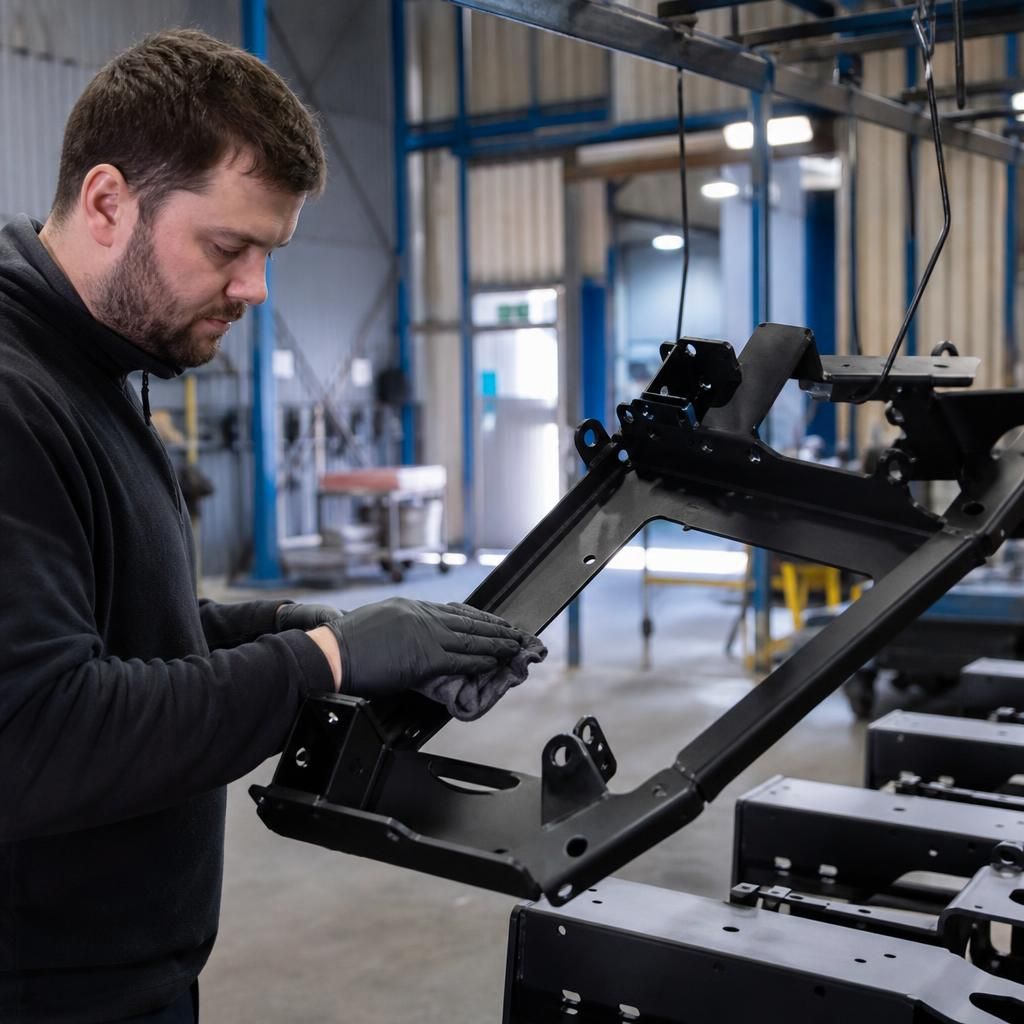
A further distinction is the control of the prepared surface between treatment and powder application. A metal component can be correctly cleaned and profiled yet still suffer from poor adhesion if it is touched with contaminated hands, exposed to dust or allowed to collect moisture before coating. Preparation therefore includes protecting the surface from recontamination during handling and transfer.
This is particularly relevant for components with recessed areas, exposed edges or complex fabricated shapes, where residue can be introduced after the main preparation has finished. Keeping handling controlled and checking the surface immediately before coating helps preserve the condition created by cleaning and abrasion. It also makes the preparation method more reliable across repeat batches, rather than treating surface quality as complete as soon as visible contamination has been removed.
Discuss your surface preparation requirements
Discuss your surface preparation requirements with Powder-coatings.co.uk, including the metal type, component condition, batch requirements and specified coating system. This helps establish a preparation approach suited to your parts and intended finish.