

How can textured black powder coating contribute to the aesthetic and functional demands in bespoke design projects across various industries?
Textured black powder coating combines a distinctive, tactile appearance with a durable finish suited to bespoke metal components. It can help designers achieve a consistent, low-reflective surface while providing resistance to everyday wear, with the coating specification selected to suit the component’s environment and intended use.
Textured black powder coating supports bespoke design by combining controlled visual character with practical performance on fabricated metal parts. The textured surface can make a component appear more substantial and tactile than a smooth coating, while black provides a neutral finish that works across architectural, industrial, commercial and automotive designs.
For bespoke work, the finish is part of the specification rather than an afterthought. A fine, medium or more pronounced texture produces different results under changing light and at different viewing distances. Fine textures give a relatively restrained appearance, whereas heavier textures create stronger shadowing and a more pronounced touch. The selected texture should therefore be assessed against the component’s size, profile, viewing distance and surrounding materials.
Textured black is particularly useful where a design needs a low-key finish that does not compete with timber, glass, stone, upholstery or polished metal. It can define frames, brackets, housings, panels, trims and supports without introducing another prominent colour. The same finish can also help bring separate metal elements into a visually coherent set, provided the parts are processed to the same agreed specification.
Its visual contribution can include:
- Adding depth to flat panels and simple fabricated forms through the way the texture catches and diffuses light.
- Giving handrails, furniture frames, display structures and architectural details a deliberate, tactile appearance.
- Creating a discreet finish for equipment housings and enclosures where logos, controls or other features need to remain visually prominent.
- Providing a modern alternative to a fully smooth black surface where reflections, fingerprints or small handling marks would be more noticeable.
In functional terms, the texture can make contact surfaces feel less slippery than a smooth finish, although it should not be treated as a substitute for a separately specified anti-slip system. It can also make minor visual variation from normal handling less conspicuous. The coating remains part of the component’s overall protection system, so the required formulation and film specification should be matched to exposure, cleaning methods, temperature and likely contact with chemicals.
Different sectors apply these characteristics in different ways. Architectural and interior fabricators may use textured black on screens, balustrade components, door furniture, lighting bodies and bespoke fixtures, where appearance and frequent handling both matter. Furniture and retail manufacturers can use it on frames, plinths, shelving systems and display fittings to provide a consistent finish across varied shapes. In manufacturing, the same approach suits machine guards, brackets, covers and equipment panels that need a defined appearance without drawing attention away from their primary function. Automotive and specialist vehicle projects may use it for selected brackets, trim elements or fabricated accessories, subject to the relevant material and environmental requirements.
Bespoke designs also require attention to practical coating details. Holes, slots, threaded areas, mating faces and close-fitting joints may need masking or a design allowance because powder coating adds a measurable layer to the surface. Drainage and venting provisions are important for hollow fabrications, while sharp edges, welds and complex joints need to be considered when assessing finish uniformity. Components should be presented in a condition suitable for coating, with contaminants and unsuitable residues removed before processing.
Where several parts form one assembly, the specification should identify the acceptable level of texture, gloss, colour appearance and coverage before production begins. A sample or retained reference panel can help designers, fabricators and coaters judge the finish consistently, particularly when parts have different geometries or are produced in separate batches. It is also sensible to confirm whether visible faces, concealed faces and areas around fixings require the same appearance.
Textured black powder coating is therefore most effective when selected alongside the component design, not simply added at the end of manufacture. A clear coating brief should cover the substrate, part dimensions, masking points, assembly tolerances, exposure conditions, cleaning regime and required visual effect. For UK manufacturers, fabricators, construction firms and automotive businesses developing one-off or repeat bespoke metalwork, a specialist powder coating service can review these factors before processing and advise whether the proposed finish is suitable for the intended application.
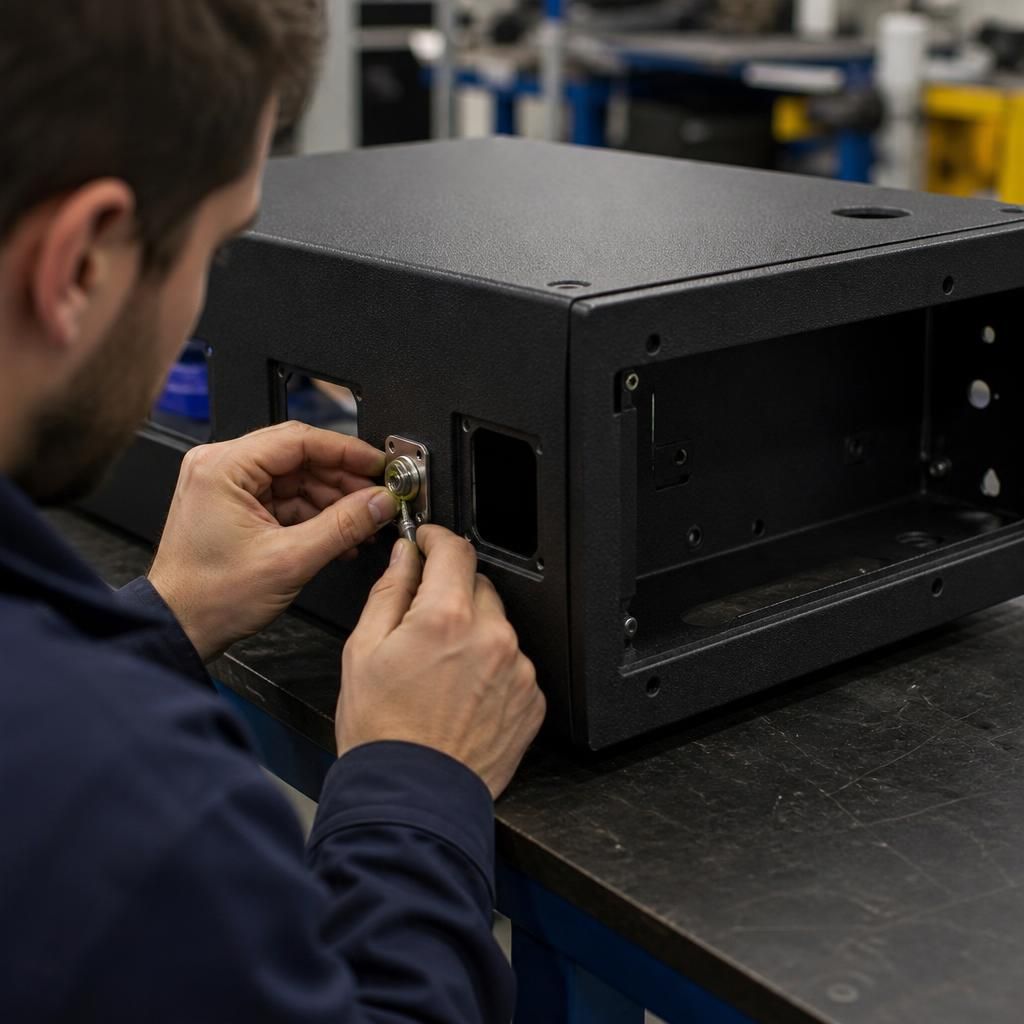
For bespoke enclosures, guards and fabricated equipment, textured black powder coating must be specified alongside any electrical or mechanical contact requirements. Once cured, the polymer coating generally acts as an insulating layer, so earthing points, bonding locations and conductive contact surfaces may need to remain free from coating or be treated as a separate post-coating operation.
The same principle applies to moving interfaces, bearing seats and precision locating points. Identifying these areas on the drawing allows suitable masking and prevents the textured finish from interfering with assembly or service access. This detail is particularly important where a visually uniform black finish must coexist with reliable electrical continuity, accurate fit and safe operation.
Discuss your bespoke textured black powder coating project
Discuss your bespoke textured black powder coating project by sharing the component drawings, substrate details and required finish with the coating team. This allows the specification, masking requirements and processing approach to be considered before production.