

What are the environmental and economic benefits of choosing powder coating over galvanised steel for industrial applications?
Powder coating can offer environmental benefits through its dry application, low solvent use and efficient use of coating material, while producing a durable finish that can reduce repainting and maintenance over a component’s service life. Economically, it may lower whole-life costs through efficient batch processing, reduced upkeep and improved appearance, although galvanising remains valuable for providing sacrificial corrosion protection and the two systems are often used together.
Powder coating can provide environmental and economic advantages over galvanising when the component, service environment and required protection suit a cured polymer finish. Its main benefits are design flexibility, controlled material use, simpler colour changes and the ability to specify a finish without relying on a zinc layer for protection. However, it is not a universal replacement: galvanised steel remains important where sacrificial corrosion protection, outdoor exposure or damage tolerance is the primary requirement.
Environmental considerations
Powder coating is applied as a dry powder and cured onto the metal surface. This avoids the liquid coating process associated with many solvent-based systems and can reduce the handling of volatile organic compounds. Overspray can often be collected within a properly controlled application system, which helps limit coating waste. The environmental outcome still depends on plant design, extraction, powder recovery, curing temperature and how unused material is managed.
Galvanising uses zinc to form a protective metallic coating. Zinc is a valuable and recyclable material, but its extraction, processing and application require energy and other resources. Powder coating does not consume zinc for the finish, which can be advantageous where a polymer barrier coating provides sufficient protection. This comparison should be based on the complete specification rather than on the coating material alone, because surface preparation, curing and eventual removal also affect the environmental footprint.
Powder coating can also support longer product use where its resistance to abrasion, weathering and routine handling is appropriate. Extending the period between refurbishment or replacement reduces the need for additional preparation, transport and raw materials. The benefit is greatest when the selected powder chemistry and film build match the exposure conditions. A decorative powder intended for a relatively mild indoor environment should not be treated as equivalent to a system designed for aggressive industrial or coastal exposure.
Economic considerations
The economic comparison should use whole-life cost rather than the initial coating price alone. Relevant factors include preparation, coating application, curing, inspection, transport, repairs, future recoating and the cost of removing components from service. Powder coating may be financially attractive for repeatable metal parts because the process can produce consistent finishes across batches and offers a broad choice of colours and textures. Standardised specifications can also simplify ordering and quality control for manufacturers and fabricators.
Powder coating may reduce indirect costs where appearance is important. A consistent finish can avoid separate painting stages after fabrication, and a specified colour or texture can make components easier to identify or integrate into an installation. These advantages depend on good design and process control: inaccessible areas, threaded interfaces, drainage holes and masking points must be considered before coating so that the finished part does not require avoidable remedial work.
Galvanising can be economically preferable where steel sections need robust protection during storage, transport and installation, or where the component is exposed to conditions in which a barrier finish alone would be unsuitable. It can also be the better choice for complex structural work where the zinc coating’s sacrificial action provides an important margin against local damage. Powder coating may then be used as an additional finish for appearance or added barrier protection, provided the galvanised surface is prepared correctly.
Important limitations in the comparison
- Powder coating is generally a barrier system. If the film is cut or heavily damaged, corrosion can begin at exposed steel unless the complete coating specification provides suitable protection.
- Galvanising and powder coating protect metal in different ways, so equal nominal coating thickness does not mean equal performance.
- Powder coating requires a clean, suitably prepared surface and controlled curing. Poor preparation can cause adhesion failure, blistering or premature corrosion.
- Large, heavy or heat-sensitive components may require different processing arrangements, and component size can affect the practical cost of powder coating.
- Edges, recesses, welds and enclosed sections need particular attention because they can receive a different film build or retain contamination.
For an industrial specification, the most defensible choice is therefore based on exposure category, expected service life, appearance, component geometry, repair requirements and end-of-life handling. Powder coating is often the efficient option for prepared steel parts that need a controlled, durable decorative or protective finish. Galvanising remains the stronger primary choice where zinc’s sacrificial protection is essential, while a duplex system combining galvanising and powder coating may offer the appropriate balance for demanding applications.
A Midlands manufacturer, fabricator, construction business or automotive supplier comparing the two routes should provide the coater with the steel grade, component dimensions, intended environment, colour or texture requirements and any existing galvanised finish. That information allows preparation, coating type and curing requirements to be assessed together rather than treating environmental or economic performance as a property of the finish in isolation.
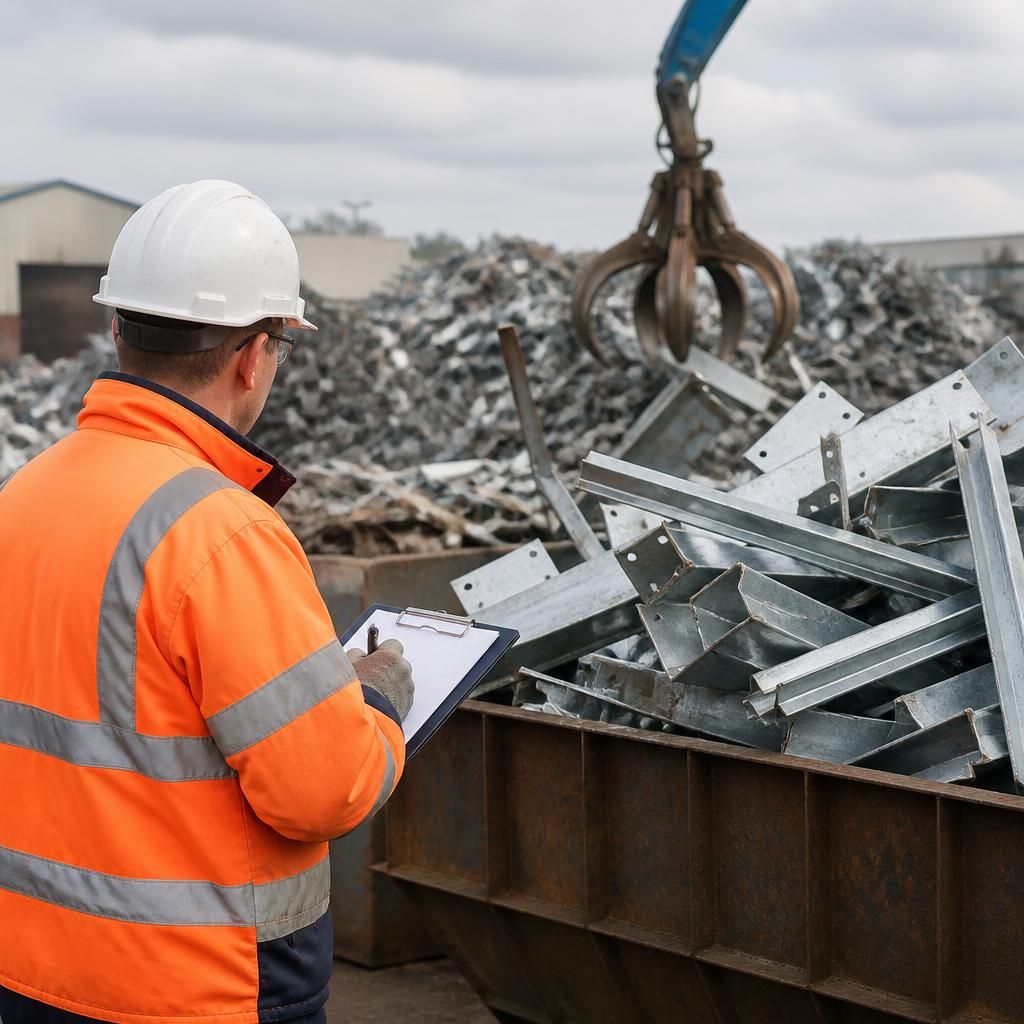
End-of-life handling is an important part of the environmental comparison. Both powder-coated and galvanised steel components can enter established steel recycling streams, but the coating system affects how the material is processed. Powder coating adds a polymer layer, while galvanising adds zinc; neither should be treated as waste simply because the component has reached the end of its working life. For large production runs, manufacturers should confirm that the chosen coating and any attached materials are compatible with their intended recycling route.
This consideration can also influence economic planning. Components designed for straightforward separation, identification and recycling are less likely to require specialist handling when they are replaced or refurbished. Recording the coating specification alongside the steel grade helps future contractors and recyclers identify the material correctly, supporting more efficient end-of-life management without relying on assumptions about the finish.
Discuss powder coating and galvanising for your application
Discuss your application with a powder-coating specialist and provide the component drawings, steel specification, operating environment and finish requirements. This information supports a practical comparison of powder coating, galvanising and duplex protection for your parts.