

What environmental considerations should businesses be aware of when using abrasive blast cleaning?
Businesses should consider dust and airborne-particle control, responsible handling of spent abrasive media and removed coatings, and the potential for hazardous residues to contaminate soil or water. Media selection, waste segregation, suitable containment and compliance with UK environmental requirements all help reduce the environmental impact of abrasive blast cleaning.
Environmental considerations in abrasive blast cleaning extend beyond dust and waste control. Businesses should also assess the energy used by compressors and extraction equipment, water consumption, noise, transport, and the wider lifecycle effect of preparing a metal component for a durable finish. Reviewing these factors before work begins helps reduce unnecessary resource use without compromising the required surface profile.
Energy consumption can be significant because blasting relies on compressed air, while extraction and recovery systems may operate alongside the blast equipment. Efficient planning can reduce this impact. Components should be prepared in suitable batches, equipment should be correctly sized for the work, and air leaks, worn nozzles and poorly maintained filters should be addressed. Maintaining the correct blast pressure also avoids using more energy than the specification requires. Where practical, businesses can ask how electricity use is monitored and whether equipment is maintained to operate efficiently.
Water use should be considered where wet blasting or water-assisted preparation is used. The process may reduce airborne dust, but it creates a water stream that requires appropriate handling. Before work starts, the operator should establish whether water will be recirculated, how often it needs replacing, and how the resulting liquid will be managed. Water should not be discharged without confirming that the discharge method is suitable for the substances present, particularly where it may contain fine metal particles, old coatings or cleaning residues.
Noise and vibration are further environmental factors, especially when blasting takes place near neighbouring businesses, residential areas or other sensitive locations. The main sources may include the blast nozzle, compressor, extraction plant and movement of components. Practical controls include enclosing noisy equipment where appropriate, keeping plant properly maintained, positioning equipment thoughtfully and scheduling particularly noisy work in accordance with site requirements. These measures help reduce disturbance and can also make the working environment more controlled for nearby operations.
Resource efficiency should be assessed at the job-planning stage. A clear specification can prevent over-cleaning, repeated passes or the unnecessary removal of sound material. Components should be inspected before processing so that unsuitable items are identified before energy, abrasive and transport resources are used. Where a part can be prepared successfully in one planned operation, this is generally preferable to avoidable rework. Any recovered abrasive should only be returned to use where its condition and performance remain suitable for the specified finish.
The environmental effect also includes the lifecycle of the finished component. Effective preparation gives a coating a clean, suitable surface on which to bond, helping the finished system perform as intended. A coating that remains serviceable for longer may reduce the need for premature stripping, reprocessing, replacement parts and associated transport. This does not mean that abrasive blasting is automatically the lowest-impact option for every component; the appropriate process depends on the substrate, existing coating, required finish and intended service conditions.
Transport and handling can be reduced through sensible job planning. Businesses may review whether components can be grouped into compatible batches, whether packaging can protect them from contamination and damage, and whether unnecessary movements between preparation and coating stages can be avoided. Reusable or appropriately durable packaging can also reduce the consumption of single-use materials, provided it protects the parts and does not introduce contamination to the prepared surface.
A practical environmental review should therefore consider:
- the electricity and compressed air required for the planned process;
- the amount of water used, where wet or water-assisted blasting is selected;
- noise and vibration at the operating location;
- the possibility of avoiding repeat processing through accurate inspection and specification;
- the potential to reuse suitable process materials and packaging responsibly;
- the number of handling and transport movements required; and
- the likely service life of the finished coating system.
Records of process settings, equipment maintenance, water use where relevant and any rework can help identify avoidable consumption over time. Environmental performance should be considered alongside surface preparation requirements: reducing resource use is only beneficial if the component still receives the correct preparation for its intended coating and operating conditions.
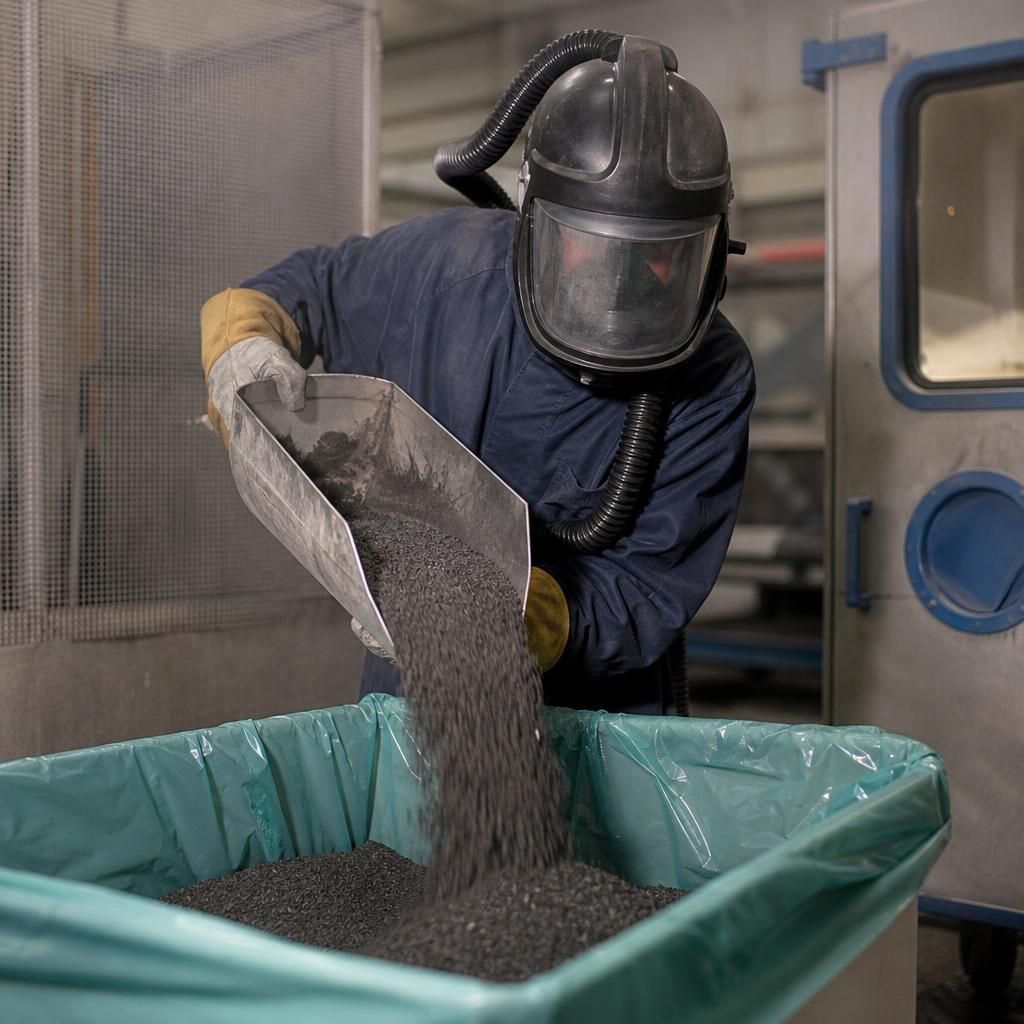
The environmental treatment of spent abrasive depends on what the blasting process removes, not just on the abrasive itself. Existing coatings, corrosion products and residues from previous use may alter the waste classification and determine how the material can be stored, transported and disposed of.
Before blasting, businesses should provide information about the component’s history and identify any known legacy coatings or contaminants. Where the composition is uncertain, suitable assessment or sampling can help establish whether the spent material requires controlled handling. Keeping material from different jobs separate can also prevent clean and potentially contaminated waste streams being mixed unnecessarily.
Waste records should document what was removed, how the spent abrasive was contained and which authorised route was used for its recovery or disposal. This gives the business a clearer audit trail and helps demonstrate that environmental risks were considered before the surface preparation work began.
Discuss your abrasive blast cleaning requirements
Discuss your abrasive blast cleaning requirements with Powder-coatings.co.uk, including the substrate, existing coating and site-specific environmental considerations. This allows the preparation approach and waste-handling requirements to be considered before work begins.