

What are the most effective surface preparation methods for powder coating rusted steel?
The most effective preparation combines thorough degreasing, removal of all loose rust and scale, and abrasive blasting to create a clean, profiled steel surface. Suitable chemical pretreatment should then be applied where required before powder coating, helping the finish bond consistently and protect the steel.
The most effective preparation method depends on the condition, construction and intended use of the steel. A robust process starts with assessing the corrosion and substrate, then selecting mechanical, abrasive and chemical treatments that remove unstable material without damaging dimensions, welds or threaded features. The prepared steel should be visibly sound, dry and suitable for immediate coating before powder is applied.
1. Assess the steel before choosing the treatment
Preparation should begin with an inspection of the whole component rather than treating visible rust alone. Areas requiring particular attention include folded edges, welds, joints, drilled holes, crevices and the underside of sections, where corrosion products can remain hidden. Deep pitting may not be removed simply by cleaning the surface; it may indicate a loss of section that needs assessing before the part is coated.
Old paint, zinc residues, sealants, oil, weld spatter and previous repair materials can also affect adhesion. The preparation method should take account of the steel grade, component geometry and whether preserving tight tolerances or a smooth machined surface is important.
2. Use mechanical preparation selectively
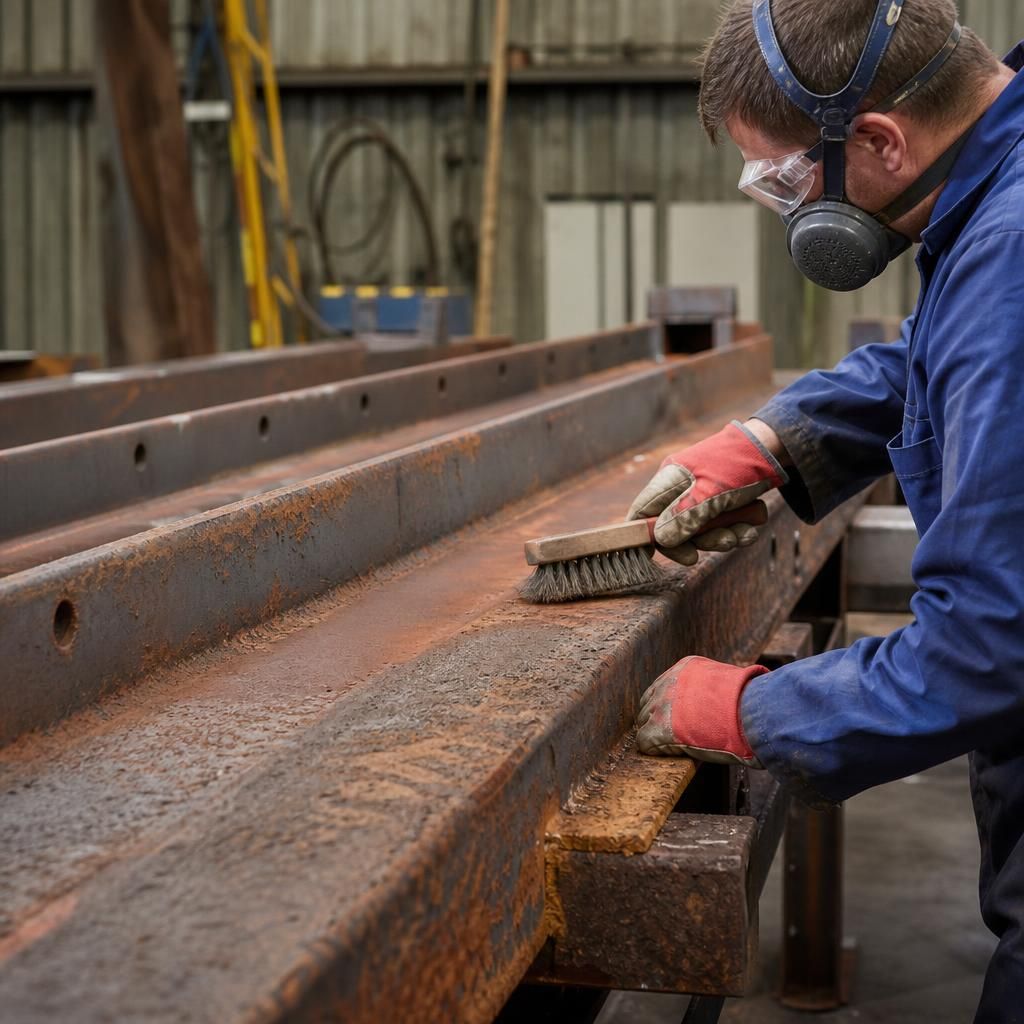
Wire brushing, scraping, needle scaling and power tooling can be useful for localised corrosion, edges and areas that cannot be reached effectively by blasting. These methods are most suitable for removing weak surface material and breaking away deposits, rather than as the sole treatment for widespread corrosion.
Care is needed with powered tools. Excessive pressure can smear softer material across the steel, leave an uneven surface or round sharp details. Abrasive discs can also alter dimensions and produce a finish that is difficult to coat consistently. Mechanical preparation is therefore often used as a supplementary stage before a more controlled overall treatment.
3. Select abrasive blasting for consistent surface conditioning
Abrasive blasting is generally the most controllable approach for steel with extensive corrosion, old coatings or irregular surface contamination. It can reach profiles, recesses and edges more consistently than hand tools, while creating a uniform texture for the powder coating to key into.
The abrasive type, pressure, nozzle distance and technique should be matched to the component. An overly aggressive treatment may distort thin sections, erode sharp features or create an unnecessarily deep profile. An unsuitable abrasive may also leave residues, so the prepared surface should be checked for embedded material and dust.
For larger or more complex components, preparation may require careful handling and rotation so that concealed faces are not missed. Blasting should continue until remaining corrosion is stable and firmly attached, or until the specified preparation standard for the coating system has been achieved. Any areas that cannot be treated properly should be identified rather than concealed beneath powder.
4. Deal with pitting and difficult corrosion
Rust pits can retain moisture, salts and fine corrosion products after the main surface appears clean. Blasting and thorough cleaning should be directed into these depressions, followed by close inspection under good lighting. Where pitting is severe, coating can follow the contours of the steel rather than producing a level surface, so a powder finish should not be expected to restore lost metal or hide structural deterioration.
Crevices and lap joints deserve particular attention because trapped contamination can continue to affect the coating from beneath. If the design permits, drainage and access should be considered before treatment. Components with sealed cavities may also need suitable venting arrangements for safe processing and reliable coating coverage.
5. Control salts, moisture and recontamination
Steel that has been exposed to outdoor conditions may carry soluble salts that are not obvious visually. These contaminants can attract moisture and contribute to under-film corrosion if they remain beneath the finish. Cleaning and inspection should therefore address more than visible dirt or rust.
After preparation, the component should be kept dry and protected from handling contamination. Bare steel can develop flash rust if exposed to moisture before coating, particularly in humid conditions. Any new discolouration or contamination should be assessed and treated rather than simply covered. Clean gloves, suitable storage and careful movement help prevent fingerprints, oil and workshop dust from reaching the prepared surface.
6. Apply pretreatment where the specification requires it
A suitable pretreatment can improve corrosion resistance and support adhesion, but its use must match the steel, powder system and operating environment. The process may involve a conversion coating or another approved chemical treatment following the preparation stage. It should be applied at the correct concentration and coverage, then rinsed or dried as required by the process specification.
Pretreatment is not a substitute for removing loose corrosion or unstable old paint. Nor should chemicals be allowed to collect in joints, holes or recesses where they may later cause staining or corrosion. The chosen system should be compatible with the powder coating and with any specialist requirements for the component.
7. Prepare welds, edges and masking points
Welds should be free from spatter, flux residues and sharp irregularities that could interfere with consistent coverage. Sharp edges may receive a thinner coating than broad flat faces, so edge condition and any required radius should be considered before coating. Porous welds or poorly sealed joints can release gases during curing, causing pinholes or surface defects.
Threaded holes, bearing surfaces, electrical contact points and close-fitting interfaces should be masked or protected according to the component’s function. Masking must be planned before preparation so that the coating does not compromise assembly or performance. Drainage holes should remain clear, and temporary plugs or fixtures should not prevent proper cleaning of surrounding areas.
8. Inspect the surface before powder application
A final inspection should confirm that the steel is free from loose corrosion, oil, dust, moisture and residues, with no untreated edges or concealed areas that could undermine the finish. The surface should also have a consistent texture appropriate to the powder system. Checks may include visual inspection, cleanliness assessment, confirmation of masking and, where specified, measurement of the surface profile or environmental conditions.
Preparation is most effective when the coating is applied without unnecessary delay after the final cleaning stage. If the component has been stored, touched, exposed to condensation or developed new corrosion, it should be re-evaluated before coating. This prevents a sound preparation process from being undermined between preparation and application.
For rusted steel components, the best practical approach is usually a condition assessment followed by controlled abrasive treatment, targeted mechanical work, appropriate chemical pretreatment and a documented inspection before coating. The exact sequence should be adapted to the component’s geometry, level of corrosion, required appearance and service environment, rather than applying one preparation method indiscriminately to every part.
Rust converters should not be treated as a substitute for proper preparation before powder coating. They can leave a chemical film or converted residue on the steel, and that layer may interfere with adhesion, curing or corrosion protection unless it has been specifically approved as part of the coating system.
Where a converter is being considered for heavily pitted or difficult-to-access steel, its compatibility with the powder, pretreatment and curing process should be confirmed first. In many cases, removing loose corrosion and exposing sound steel through controlled mechanical or abrasive preparation provides a more predictable surface for coating than sealing rust beneath an unverified treatment.
Discuss Your Rusted Steel Preparation Requirements
Discuss your rusted steel components with the powder-coating.co.uk team to identify a suitable preparation and coating specification for their condition, geometry and intended use. Share details of the parts and any collection or delivery requirements to help establish the next practical step.