

How does anti-corrosion powder coating compare to traditional paint in terms of durability and maintenance?
Anti-corrosion powder coating generally provides a tougher, more uniform and longer-lasting barrier than traditional paint, with stronger resistance to impact, abrasion, moisture and corrosion. It typically needs less routine maintenance, although thorough surface preparation and correct specification remain essential; traditional paint can be easier to repair locally when damage occurs.
Anti-corrosion powder coating usually provides the more durable finish for suitably prepared metal components, while traditional paint can be more practical where on-site application, frequent colour changes or local repair are priorities. The difference is not determined by the coating material alone. Substrate condition, pre-treatment, coating specification, film coverage, curing and the environment in which the component is used all affect service life and maintenance requirements.
How the two coating systems differ
Powder coating is applied as dry particles and then heated so the material melts, flows and cures into a continuous film. This creates a factory-applied finish with controlled thickness and consistent coverage across the accessible faces of a component. Traditional paint is applied as a liquid, usually by spraying, brushing or rolling, and forms a film as its carrier evaporates or cures.
Liquid paint technology is highly varied, so a high-specification paint system may outperform an unsuitable powder coating. Equally, a powder coating selected without regard to the service environment may fail prematurely. A meaningful comparison therefore has to consider the complete protective system rather than treating powder and paint as single, fixed products.
Durability factors in real service
- Corrosion protection: Corrosion can develop where moisture, salts or chemicals reach exposed metal. Powder coating can provide a continuous barrier, but chips, uncoated edges, threaded areas and poorly treated contamination can still become initiation points. Paint systems behave in the same way, making preparation and complete coverage central to both methods.
- Adhesion: A coating that is well bonded to a suitably prepared substrate is less likely to lift or peel. Degreasing, removal of mill scale and rust, and the correct chemical pre-treatment help establish this bond. Applying a new layer over oil, loose corrosion or incompatible residue simply conceals the problem.
- Film integrity: Powder systems are formed in one controlled curing cycle, whereas paint may require several coats, flash-off periods and drying stages. Multiple paint coats can be useful where a primer, intermediate layer and topcoat are specified, but errors between stages can introduce weak interfaces or trapped contamination.
- Edges and complex shapes: Sharp edges, recesses, welds and joints are difficult areas for any coating system. They can receive less material, retain contaminants or experience movement during service. The design of the component, racking method and application technique should therefore be reviewed alongside the selected finish.
- Heat, chemicals and sunlight: The correct resin and paint chemistry must match the exposure. Outdoor ultraviolet light, industrial chemicals, cleaning agents and elevated temperatures can alter colour or reduce performance over time. A powder coating is not automatically suitable for every environment, and a conventional paint is not automatically inferior.
Maintenance requirements
Maintenance for either finish normally begins with inspection rather than aggressive cleaning. Components should be checked for scratches, impact damage, blistering, flaking, staining, rust at joints and deterioration around fixings. Dirt and corrosive deposits should be removed using a cleaning method compatible with the coating. Abrasive pads, harsh solvents and unsuitable pressure-washing practices can damage an otherwise sound surface.
Powder-coated parts generally need maintenance when the film has been damaged or when deposits have accumulated. If the coating remains intact, routine care is mainly a matter of cleaning and checking vulnerable areas. Traditional painted parts may also remain serviceable for long periods, but maintenance can involve more frequent visual assessment and planned recoating where the film has weathered, chalked or lost adhesion.
Neither system should be allowed to deteriorate until corrosion has spread beneath the coating. Early treatment is simpler because the affected area can be isolated, the corrosion removed and the repair bonded to a sound surrounding surface.
Repair and recoating
This is one area where traditional paint is often more flexible. A damaged painted surface can usually be prepared and recoated locally, provided the existing paint is sound and the replacement material is compatible. Repairs can be carried out on large installed structures without removing the entire component or placing it in an oven.
Powder coating is normally applied in a controlled facility and cured with heat, so repairing a fitted component may require a compatible liquid repair material rather than another powder application. The repair area should be abraded, cleaned and feathered into the surrounding finish. Colour, gloss and texture may not match perfectly, particularly after the original coating has weathered. For this reason, badly damaged powder-coated parts are often assessed for complete stripping and recoating rather than repeated spot repairs.
When powder coating offers the stronger lifecycle option
Powder coating is particularly suitable for repeatable production of removable metal parts, frames, panels, brackets and fabricated components where the applicator can control preparation, application and curing. It is also well suited to situations where a consistent factory finish and reduced routine intervention are more important than simple on-site touch-up.
Traditional paint may be the better choice for large fixed structures, heat-sensitive assemblies, field repairs or components that require a defined multi-layer system. It can also be selected where the specification calls for a primer and topcoat designed around a particular chemical or atmospheric exposure.
What determines the better choice
- Identify the exposure, including outdoor weather, salt, moisture, chemicals, abrasion and operating temperature.
- Confirm the substrate and identify welds, edges, threaded features, enclosed sections and areas that may retain water.
- Specify the preparation method and any primer or pre-treatment required for the metal.
- Choose a coating chemistry and film build appropriate to the environment rather than selecting solely by colour or initial cost.
- Check how the component will be transported, installed, cleaned, inspected and repaired.
- Define acceptance requirements for coverage, cure, adhesion, appearance and damage correction.
In practical terms, powder coating is often the more durable and lower-intervention option when applied to correctly prepared components in a controlled process. Traditional paint remains a technically effective protective method where its application flexibility and repairability outweigh the benefits of a factory-cured powder finish. The most reliable result comes from matching the complete coating system to the component’s operating conditions and maintenance plan.
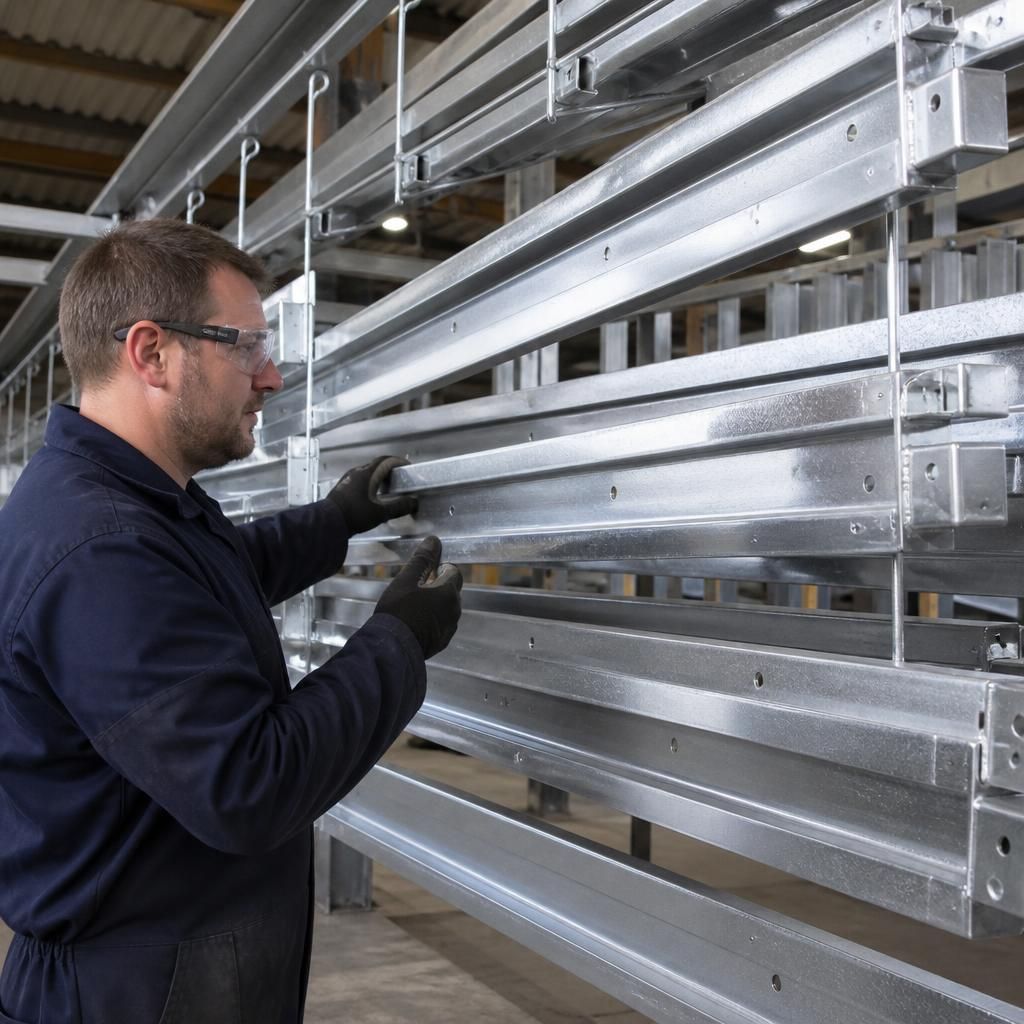
When the substrate is galvanised steel, the comparison changes because the zinc layer can provide sacrificial protection if the outer coating is locally damaged. Powder coating and traditional paint can both add a further barrier, but neither should be applied over untreated oils, oxidation or poorly prepared zinc. A suitable pre-treatment is needed to promote adhesion and reduce the risk of premature flaking.
This combined arrangement is often called a duplex system. Its maintenance needs depend on both the condition of the powder or paint film and the exposed zinc beneath it. Small coating defects should still be assessed promptly, but the underlying zinc may provide additional protection while the defect is being addressed. For components made from galvanised steel, the substrate and its existing protective layer should therefore be included in the durability comparison rather than judging powder coating and paint in isolation.