

How do Interpon D2015 and D2525 finishes enhance the aesthetic appeal of aluminium surfaces while maintaining their durability?
Interpon D2015 and D2525 enhance aluminium surfaces through controlled colour, texture and gloss options, helping designers achieve a consistent architectural appearance. Their durable powder-coated finish also provides resistance to weathering and everyday wear, so the visual quality is supported by long-term surface protection.
Interpon D2015 and D2525 enhance aluminium aesthetically by providing a controlled architectural finish in a defined colour, gloss level and surface texture, while the cured coating helps preserve that appearance in service. The visual result depends not only on the selected shade, but also on how the finish interacts with the aluminium profile, the surrounding materials and the project’s exposure conditions.
Colour selection is more consistent than with many site-applied alternatives. Powder coating is applied under controlled conditions, allowing aluminium components within the same project to be specified against a common colour reference. This is particularly important for curtain walling, window systems, doors, balustrades, trims and fabricated panels, where small differences between adjacent components can be noticeable. The selected colour should be confirmed against an approved sample, as screen displays and printed colour charts cannot reproduce the final finish precisely.
The finishes can also alter how a surface reflects light. Gloss levels influence whether aluminium appears bright and reflective or more restrained and contemporary, while textured options can reduce the visual prominence of minor handling marks and provide a more tactile appearance. Smooth finishes tend to emphasise clean lines and crisp profiles; fine textures can add visual depth to larger panels or architectural features. Metallic and special-effect appearances require particular control because changes in application, orientation and viewing angle may affect how the colour is perceived.
Durability supports the aesthetic value of the coating by helping the surface retain its intended appearance during use. The powder is cured to form a continuous film around the prepared aluminium, creating a finish that is less dependent on repeated decorative treatment after installation. D2015 and D2525 should nevertheless be selected against the project’s exposure, design life and specification requirements rather than treated as interchangeable finishes. D2525 may be considered where the project demands a higher level of long-term finish performance, subject to the applicable product specification and environmental conditions.
Good visual results also depend on the fabrication and coating process. Aluminium should be correctly cleaned and pre-treated before powder application, and components should be designed so that recesses, corners, joints and drainage features can be coated effectively. Excessively sharp edges, trapped moisture or poorly prepared surfaces can affect both the uniformity and service performance of the finish. For large or highly visible installations, a representative sample or agreed control panel can help establish the acceptable colour, texture, gloss and coverage before production begins.
Specification should take account of the complete installation rather than the aluminium surface in isolation. Adjacent glass, masonry, steelwork, sealants and fixings can change how a colour is perceived, while orientation and natural light affect the apparent depth and reflectivity of the finish. Where components are produced in separate batches or by different fabricators, the coating requirement should be recorded consistently, including the product range, colour reference, gloss, texture and any relevant performance classification.
Maintenance remains part of preserving the appearance. Deposits from pollution, construction activity and contact with other materials can make a sound coating look uneven if they are left in place. Cleaning should follow the coating manufacturer’s guidance and use suitable non-abrasive materials; aggressive chemicals, unsuitable solvents and abrasive pads may alter gloss or damage the surface. Routine inspection is also useful for identifying scratches, impact damage or areas where adjacent construction materials have contaminated the finish.
For an aluminium project, the most reliable approach is to choose the finish through a combined aesthetic and technical assessment:
- Define the required colour, gloss and texture, then review a physical sample in the intended lighting conditions.
- Consider whether the surface is smooth, profiled, perforated or intricately formed, as geometry affects how light and texture are read.
- Match the D2015 or D2525 specification to the exposure environment and the required level of long-term finish retention.
- Agree coating controls for components that will be manufactured in separate batches.
- Confirm preparation, curing, handling, installation and cleaning requirements with the applicator and project team.
This combination of controlled appearance and appropriate performance specification allows aluminium to remain visually consistent without making aesthetic choices separately from durability requirements.
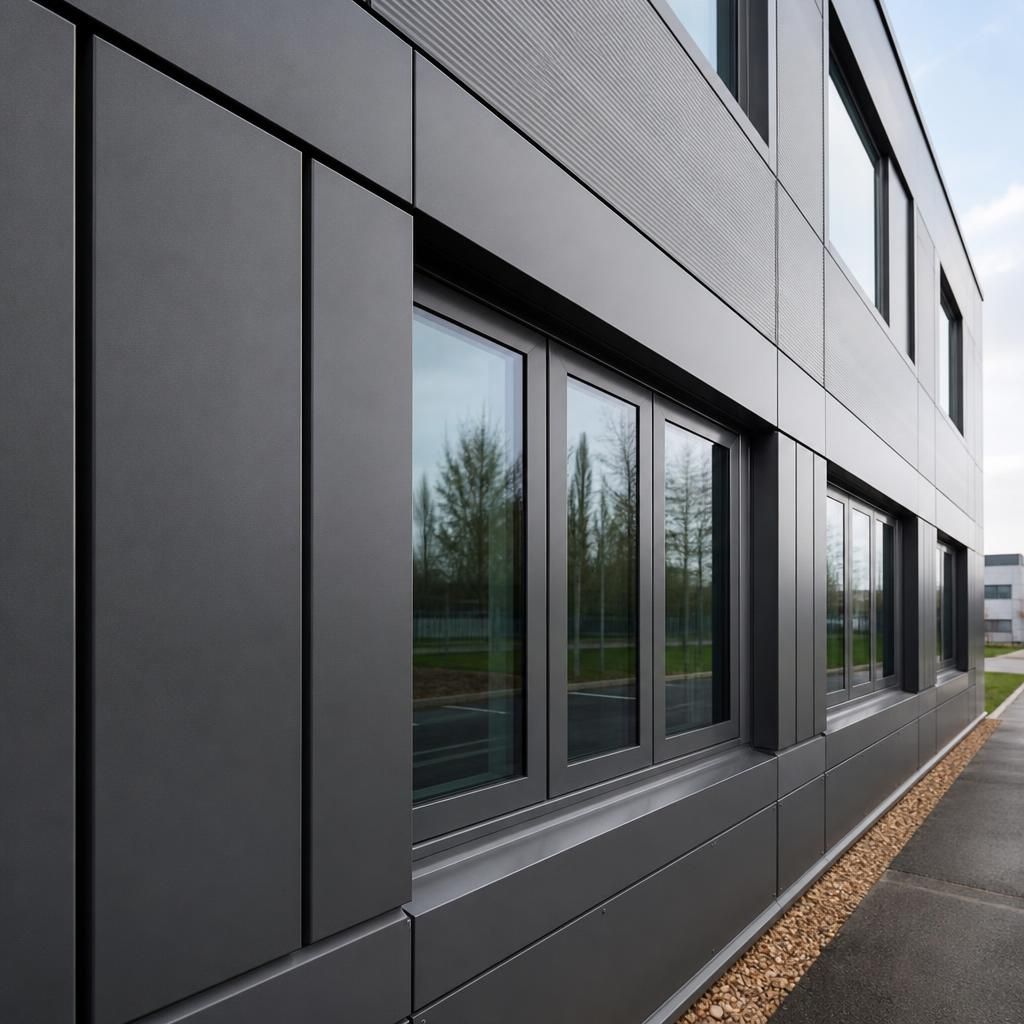
Interpon D2015 and D2525 finishes can create visual hierarchy across an aluminium installation by using a coordinated colour with carefully selected differences in gloss or texture. For example, frames, panels and trims can share the same colour while their surface treatments distinguish individual elements without making the design appear inconsistent.
This approach is particularly useful where aluminium components have different functions or levels of prominence. The cured powder coating preserves the chosen distinction by providing a continuous protective film over the prepared surface, helping the design remain coherent as the components are handled, installed and exposed to everyday conditions. The final specification should record the finish for each component so that colour, gloss and texture are applied consistently throughout production.
Discuss Your Interpon D2015 or D2525 Aluminium Finish Requirements
Discuss your aluminium finish requirements with the powder-coating team, including the intended appearance, component design and project conditions. This helps establish a suitable Interpon D2015 or D2525 specification before production.