

What are the cost implications and potential savings when opting for RAL 7035 powder coated aluminium compared to other finishes?
RAL 7035 powder coated aluminium can cost more initially than basic liquid paint, but its durable, factory-applied finish may reduce ongoing maintenance and recoating requirements over the component’s service life. Overall cost depends on preparation, component size and design, production volume, coating specification, and whether collection and delivery are required, so comparisons should assess whole-life cost rather than the finish price alone.
RAL 7035 powder coated aluminium is usually best assessed on a whole-life cost basis rather than by comparing the quoted coating price alone. RAL 7035 identifies the light grey colour; the final cost also depends on the powder specification, aluminium substrate, surface preparation, component design and required performance. A higher initial coating cost can be justified where the finish reduces future intervention, protects the component and provides a consistent appearance over its intended service life.
The main cost implications arise at several stages:
- Specification: Standard architectural or industrial powder may be suitable for general applications, while enhanced durability, chemical resistance or exterior performance can require a more specialised powder system. Selecting a specification beyond the actual operating conditions adds cost without necessarily adding useful value.
- Preparation: Aluminium normally requires cleaning and a suitable pretreatment before powder application. Contamination, oxidation, existing coatings, weld discolouration and difficult-to-remove residues may increase preparation work. Inadequate preparation can result in adhesion problems, premature deterioration and the cost of rectification.
- Component design: Deep recesses, enclosed sections, sharp edges, threaded areas and assemblies containing different materials can require additional handling, masking or process controls. Designing parts with coating access and drainage in mind can help avoid unnecessary preparation and rework.
- Batch planning: Larger, repeatable batches can make better use of setup, racking and handling processes. Small or irregular batches may carry a higher cost per component because the same preparation and process stages are spread across fewer parts.
- Inspection and finishing requirements: Requirements for colour consistency, film coverage, appearance and masking need to be agreed before production. Tight cosmetic criteria may increase inspection time and the likelihood that a component is rejected for rework, particularly where the aluminium has visible imperfections.
Compared with liquid paint, powder coating can avoid some solvent-related handling and may produce a more uniform factory-applied finish. However, liquid paint can be more practical for very large fixed structures, heat-sensitive assemblies or work that cannot be taken through a curing process. The lower initial price of a liquid system should therefore be considered alongside application conditions, expected maintenance, touch-up requirements and the consequences of coating failure.
Anodising provides a different comparison. It forms an integrated oxide layer rather than applying a separate powder film and can be appropriate where the natural metallic appearance or particular surface properties are required. Its colour range, appearance and suitability can differ from those of RAL 7035 powder coating. Powder coating may offer greater flexibility when a specific opaque colour, visual uniformity or additional protective layer is required, but the appropriate choice depends on the component’s exposure and design.
Bare aluminium has the lowest finishing cost at the outset, but it does not provide the same coloured surface or specified barrier protection. Leaving a component unfinished may also affect its appearance and its suitability for environments where abrasion, pollutants, moisture or handling are concerns. The relevant comparison is not simply the purchase price: it is the cost of achieving the required appearance and performance throughout the use of the part.
Potential savings from RAL 7035 powder coating commonly come from avoiding repeated cosmetic work, reducing the need to remove and refinish components, and limiting disruption when parts need to remain presentable in service. These savings are project-dependent rather than automatic. A component used indoors with limited handling may not justify a premium performance specification, whereas exposed, frequently handled or difficult-to-access items may make finish durability more financially important.
A practical comparison should request like-for-like quotations and identify:
- the aluminium grade and current surface condition;
- the required powder type and performance classification;
- pretreatment and preparation included in the price;
- masking, plugging, racking and handling requirements;
- acceptable colour and surface tolerances;
- the quantity, repeat frequency and dimensional range of the parts;
- inspection, packaging and any remedial work arrangements; and
- the expected maintenance and replacement implications for each finish.
For manufacturers, fabricators and other commercial users, the strongest financial case is established by comparing the initial coating cost with the expected cost of maintenance, rework, downtime, replacement and appearance-related intervention. RAL 7035 powder coated aluminium is therefore not automatically the cheapest finish, but it can be the more cost-effective option when its performance and consistency match the demands placed on the finished component.
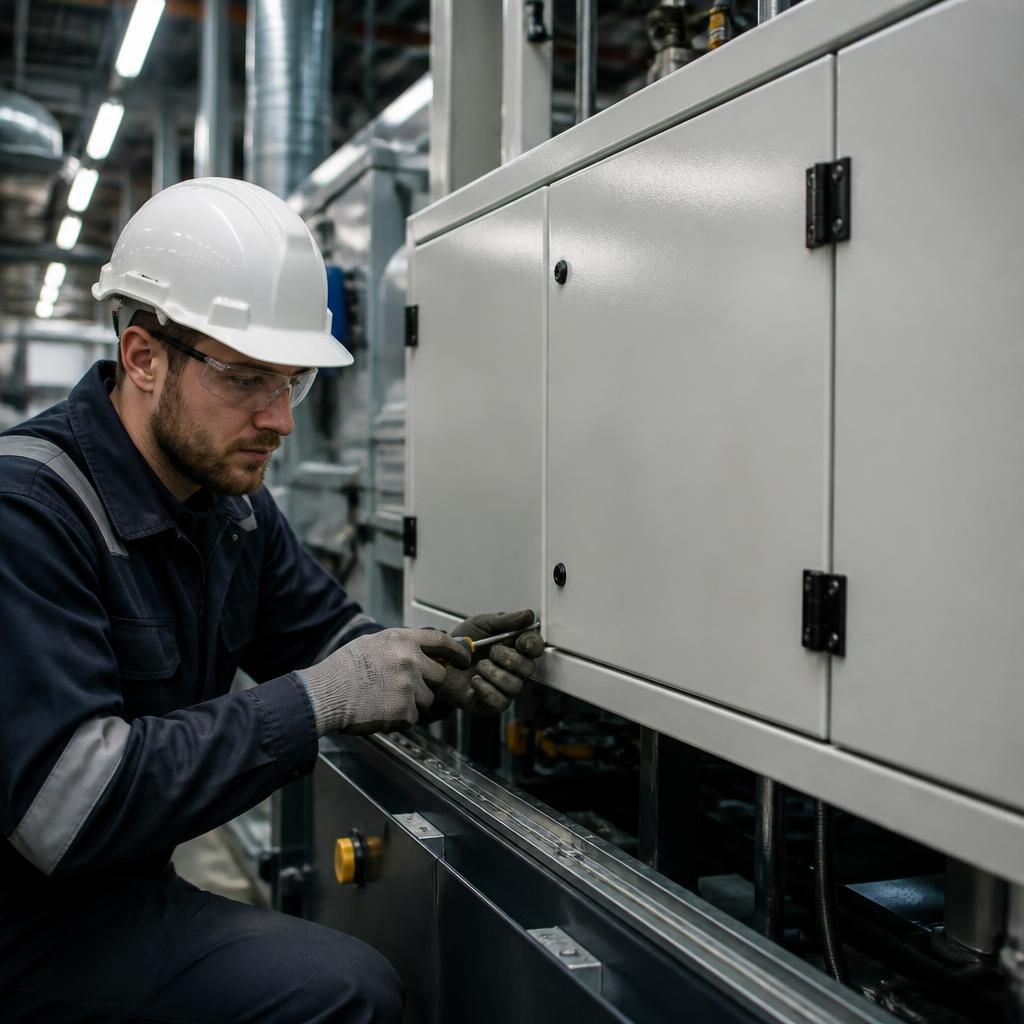
One often-overlooked cost is the access required to refinish aluminium after installation. If a component must be removed, transported, stripped or temporarily isolated before recoating, the expense can extend beyond the coating work itself. It may include disassembly, handling, reinstatement and disruption to surrounding operations.
For this reason, the value of RAL 7035 powder coated aluminium can be greater where parts are installed in locations that are difficult to reach or where removal would interfere with production. Comparing finishes should therefore consider not only the original quotation, but also how easily each option can be repaired, removed and reinstated during the component’s expected use.