

What are the specific benefits of choosing RAL 1018 powder coating for aluminium components in high-traffic industrial areas?
RAL 1018 powder coating gives aluminium components a durable, uniform yellow finish that improves visibility in busy industrial environments. It also provides a hard-wearing protective surface that can help components withstand routine handling, abrasion and general exposure when the aluminium is correctly prepared and the coating system is properly specified.
The main benefits of RAL 1018 powder coating on aluminium components in high-traffic industrial areas are consistent colour control, a cleanable surface, reliable coverage of complex profiles and a finish that can be matched across batches. These advantages are practical where components are frequently handled, exposed to dirt or need to remain visually consistent as part of an industrial installation.
- Consistent specification: RAL 1018 provides a recognised colour reference rather than relying on a subjective description such as “yellow”. This makes it easier to specify the same finish for replacement parts, extensions and separate production batches. The final appearance will still be influenced by gloss level, surface texture, coating thickness, lighting and the condition of the aluminium substrate, so these details should be included in the coating specification.
- Easier surface cleaning: A correctly cured powder coating creates a continuous finish with fewer surface irregularities than many manually applied paint systems. Dust, workshop residue and general industrial grime can therefore be removed using suitable cleaning methods without treating the bare aluminium directly. Cleaning products should be compatible with the selected coating system, and abrasive pads or aggressive solvents should be avoided unless the coating manufacturer has approved them.
- Improved resistance to routine contact: In busy production and storage areas, aluminium parts may be touched, moved, stacked or fitted repeatedly. A properly specified coating system helps maintain the component’s finished surface during this routine use. It does not make the part immune to gouging, sharp impacts or damage from unsuitable handling equipment; the required resistance should be agreed according to the component’s actual duty.
- Coverage of formed components: Powder coating is suitable for many aluminium fabrications, extrusions, panels, brackets and other shaped components. It can provide an even finish over broad faces and profile surfaces when the part is correctly hung, electrically connected and prepared. Designers should still identify recesses, enclosed sections, drainage points, threaded areas and sharp edges at the quotation or design stage, as geometry affects powder deposition and curing.
- Protection of the aluminium substrate: The coating separates the aluminium from everyday contaminants and moisture, reducing direct exposure of the metal surface. This benefit depends heavily on preparation. Degreasing, removal of oxidation and an appropriate pretreatment are particularly important because residues or poorly prepared areas can reduce adhesion and allow localised coating failure.
- Practical visual management: RAL 1018 can support a defined colour scheme for equipment, guards, panels or components within a facility. Used as part of an agreed identification system, a standardised finish can help distinguish particular equipment groups or functional areas. The colour should not be treated as a substitute for formal safety signs, labels or statutory markings where those are required.
- Efficient repeat production: Powder coating is well suited to repeatable processing of batches of similar aluminium parts. Once the preparation, powder type, film requirements, curing conditions and appearance have been agreed, the same process can be applied consistently across a production schedule. Samples or an approved reference panel are useful where colour matching is important, particularly if components will be produced at different times.
- Reduced need for on-site wet painting: Components can be coated before installation, avoiding the need to apply a conventional liquid finish around operating equipment or within a completed industrial area. This can simplify site work and help produce a more controlled factory-applied appearance. Any subsequent cutting, drilling or welding must be planned carefully because exposed edges and repaired areas require suitable treatment.
For high-traffic use, RAL 1018 should be selected as part of a complete coating specification rather than as a colour choice alone. The specification should cover the aluminium alloy and condition, preparation and pretreatment, powder chemistry, gloss and texture, required coating thickness, curing parameters and expected exposure. Internal areas with frequent handling may require a different performance balance from external areas exposed to sunlight, moisture or industrial chemicals.
It is also important to distinguish cosmetic damage from structural damage. Powder coating can protect the surface around ordinary service conditions, but a severe impact may penetrate the film and expose the aluminium. Damaged areas should be assessed and repaired using a compatible method; simply applying an unrelated paint over the mark may produce a visible mismatch and may not restore the original performance.
In practice, RAL 1018 is most beneficial where a repeatable yellow finish, straightforward cleaning and dependable coverage are required on properly prepared aluminium components. The powder coating contractor should review the component drawings, handling conditions and exposure before confirming the system, especially where forklift contact, abrasive dust, oils, cleaning chemicals or outdoor weathering are expected.
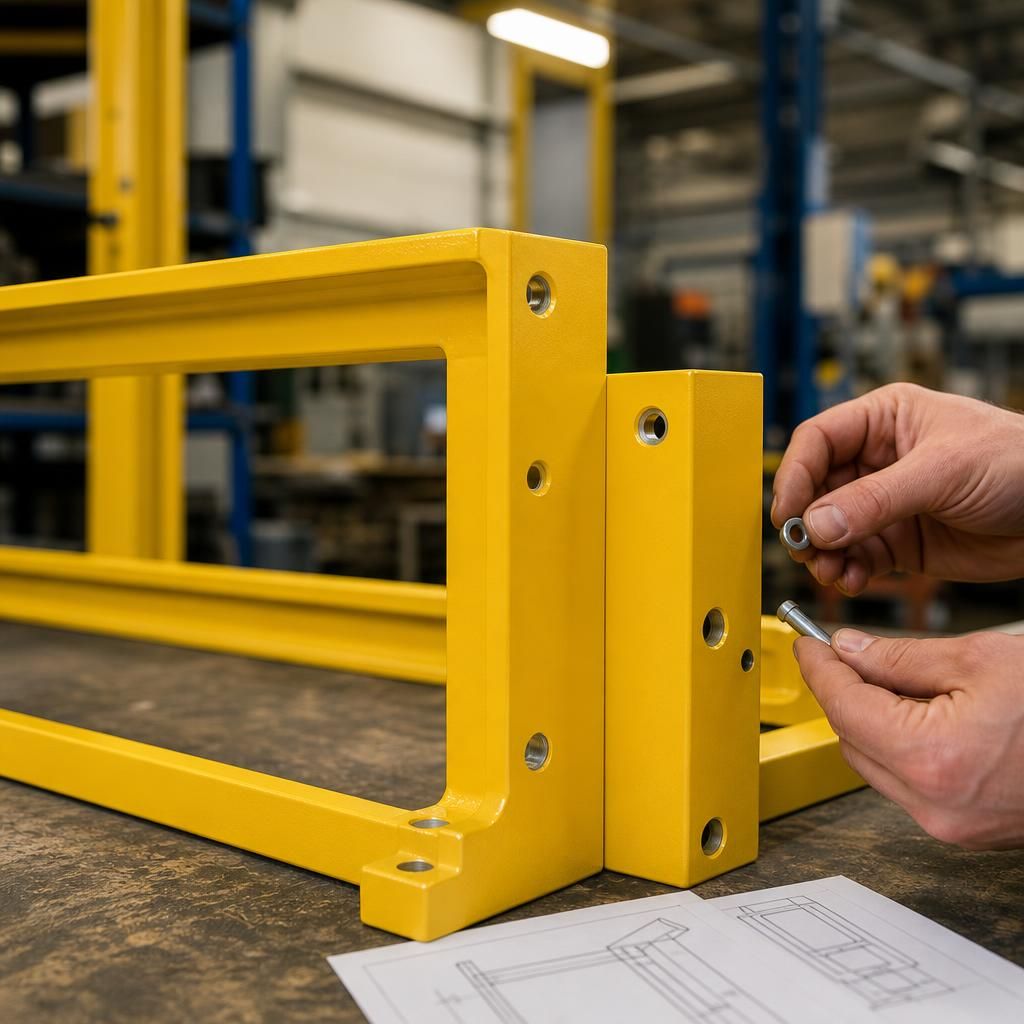
One practical benefit of RAL 1018 powder coating on high-traffic aluminium components is that the finish can be specified around assembly tolerances and service interfaces. Where panels, guards, covers or brackets must be fitted repeatedly, the coating specification should identify areas that must remain uncoated or receive controlled film coverage, such as mating faces, earthing points and close-fitting joints. This helps the finished component remain compatible with its intended assembly rather than treating the colour as a separate decision from the engineering requirements.
This is particularly relevant in busy industrial areas, where components may be removed for inspection, adjustment or replacement. Drawings should show masking requirements before coating, and the coater should review how the part is hung and electrically connected during processing. RAL 1018 can then provide the required visible finish while the aluminium component retains the access, bonding and fit characteristics needed for its installation.
Discuss RAL 1018 Powder Coating for High-Traffic Aluminium Components
Share the aluminium component drawings, expected handling conditions and exposure details with a powder coating specialist to confirm whether the proposed RAL 1018 system is suitable. Request a coating specification covering preparation, pretreatment, powder type, film requirements and curing parameters before production.