

How does the aesthetic versatility of RAL 9023 aluminium powder coatings suit various industrial design requirements?
RAL 9023 aluminium powder coating provides a refined pearl dark grey finish that combines a contemporary metallic appearance with the consistency required for industrial components. Its neutral, adaptable colour can complement modern equipment, fabricated assemblies, architectural metalwork and automotive parts where a durable finish must also support a coherent design specification.
RAL 9023 aluminium powder coating is aesthetically versatile because its restrained dark-grey tone can be specified across functional metalwork without imposing a strong colour identity on the wider product or installation. This makes it suitable for designs where the coating needs to look considered and consistent while allowing the component’s form, detailing and surrounding materials to remain visually prominent.
It supports different design languages. On contemporary equipment, housings and fabricated assemblies, the colour can provide a controlled, technical appearance. On architectural or construction-related metalwork, it can sit comfortably alongside glass, concrete, masonry, timber and other neutral finishes. For automotive components and engineered parts, it can create visual continuity between separate metal elements without relying on a bright or highly decorative colour.
The finish is particularly useful where a project contains several component types. Frames, brackets, panels, guards, enclosures and smaller ancillary parts can share the same colour specification, helping them read as part of one coordinated system. Alternatively, RAL 9023 can be used selectively on particular sections to establish contrast against lighter coated parts, exposed materials or uncoated surfaces. This gives designers control over visual hierarchy without requiring a different colour for every component.
Surface appearance depends on more than the RAL reference. The apparent result is influenced by the powder formulation, gloss level, surface texture, coating thickness, substrate condition and curing process. Lighting also affects how a pearl or metallic-looking surface is perceived: a component may appear deeper or lighter under direct illumination than it does in diffuse indoor light. For that reason, a colour chip alone may not fully represent the appearance of a large panel, formed section or assembled product.
- Gloss and texture: a smoother surface can present a cleaner, more precise appearance, while a textured finish can alter the way light is reflected and change the visual emphasis of edges and imperfections.
- Component geometry: folds, apertures, welds, corners and changes in plane can produce different highlights across the same part, particularly on larger or more complex fabrications.
- Substrate preparation: aluminium surface condition and pretreatment affect how evenly the coating presents, so the intended aesthetic cannot be separated from suitable preparation.
- Batch control: components intended to appear together should be planned and assessed as a group, since small differences in powder, application or curing can be more noticeable across adjacent parts.
For larger installations, the design specification should therefore identify RAL 9023 alongside the required gloss or texture, substrate, acceptable visual tolerance and any areas that must remain uncoated. Where appearance is critical, sample panels or representative components should be assessed in the lighting conditions in which the finished product will be viewed. This helps confirm that the selected surface works across flat faces, edges and formed sections rather than relying only on a small reference sample.
RAL 9023 also allows practical design decisions to be made without compromising visual coherence. It can be applied to repeat-production parts, one-off fabrications and mixed assemblies, provided the specification and preparation are controlled consistently. The most suitable use is determined by the relationship between the colour, the part’s geometry, the surrounding environment and the required surface characteristics—not by the colour reference alone.
For manufacturers and fabricators, the key benefit is specification flexibility: RAL 9023 can provide a consistent visual basis for products that contain different metal components, while still leaving room for contrast, zoning and material coordination. A coating specialist can help assess sample finishes and confirm how the selected formulation will present on the actual aluminium components before production quantities are processed.
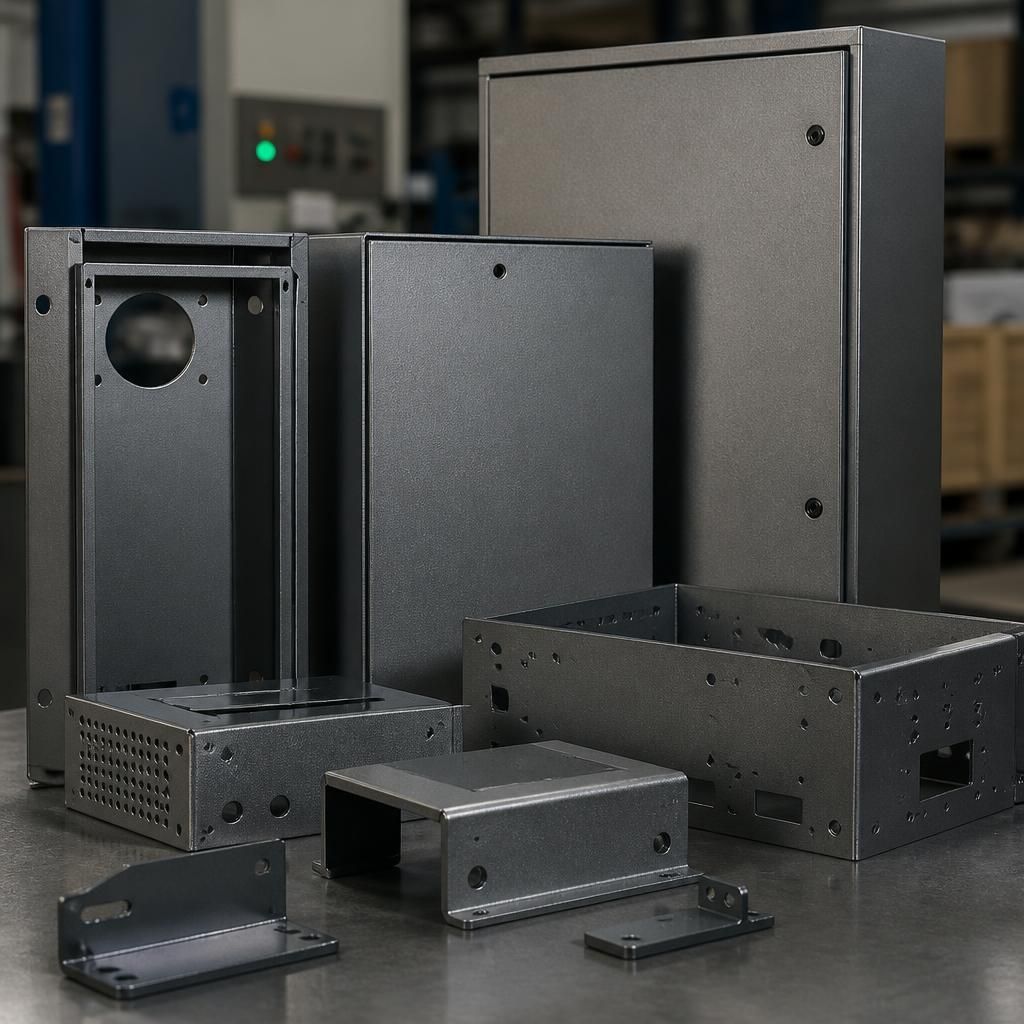
RAL 9023 is well suited to product ranges that need a stable visual identity across different models or revisions. A manufacturer can retain the same aluminium finish while changing panel layouts, bracket designs or enclosure dimensions, so the appearance of the range remains recognisable without making the coating the dominant feature.
This is useful for equipment and fabricated products that may be specified for different environments or customer requirements. The neutral pearl dark grey provides a consistent design baseline, while functional differences can be communicated through component shape, labelling, control layouts or carefully selected secondary colours. In this way, the coating supports product differentiation without requiring a separate aesthetic treatment for every variation.