

What are the environmental benefits of opting for black powder coated aluminium compared to traditional paint finishes?
Black powder coated aluminium can reduce environmental impact compared with traditional liquid paint by using little or no solvent, producing fewer volatile organic compound (VOC) emissions and creating less coating waste. Its durable finish can also reduce the need for frequent recoating, while aluminium remains recyclable at the end of the component’s service life.
Black powder coated aluminium can have a lower environmental impact than a traditional liquid-painted finish because the coating is applied as a dry powder and bonded to the metal through heat. This changes the materials, handling and lifecycle considerations involved, although the overall benefit depends on the powder formulation, pretreatment, curing process and eventual recycling route.
A key advantage is that powder coating does not require the same solvent-based application system as many conventional paint finishes. The powder is electrostatically attracted to the aluminium before curing, which allows the applicator to control deposition without preparing a liquid mixture with thinners. This can reduce the need to store, handle and dispose of solvent-containing materials. It also avoids the cleaning stages associated with liquid paint equipment, where solvents or other cleaning agents may be required to prevent paint from drying inside spray equipment.
Powder application can also support more controlled use of coating material. Correctly set equipment can limit overspray, and suitable powder systems may allow some recovered material to be reused. Recovery is not automatically appropriate in every situation: colour changes, contamination, mixed powders and the required finish may restrict reuse. Even so, a controlled powder-coating line can make it easier to separate usable material from waste than an uncontrolled liquid-painting process.
The aluminium substrate adds an important lifecycle benefit. Aluminium can be recycled repeatedly when it is collected and processed through an appropriate recycling system. The presence of a coating does not remove the need for proper sorting and treatment, but the metal remains a valuable recyclable material rather than becoming disposable simply because it has a finished surface. For industrial components, designers should therefore consider how the coated part will be separated, recovered or processed at the end of its intended use.
Environmental performance is also affected by the choice of pretreatment. Cleaning and conversion stages may use chemicals that require controlled storage, application and disposal. A powder-coated finish should therefore be assessed as a complete process rather than judged solely by the powder itself. The coating specification, pretreatment chemistry, wastewater controls and waste-management arrangements all influence the result.
Curing requires an oven and therefore uses energy. This is an important qualification when comparing powder coating with liquid paint: lower solvent use does not mean that the process has no environmental burden. The impact of curing can be influenced by efficient oven operation, appropriate batch planning and selecting a coating system that cures at a suitable temperature for the aluminium component. Parts should not be specified with a curing schedule that is more demanding than the coating manufacturer requires.
For businesses assessing the environmental implications of black powder coated aluminium, the following points are particularly relevant:
- Confirm whether the selected powder is suitable for the required application and curing conditions.
- Ask how overspray, contaminated powder and other process residues are handled.
- Review the pretreatment process as well as the visible black finish.
- Specify only the coating thickness and performance level needed for the component, avoiding unnecessary material use.
- Consider whether the finished aluminium part can be identified, dismantled and sent through an appropriate recycling route.
- Compare the complete lifecycle of the finish rather than focusing on application emissions alone.
For manufacturers, fabricators and construction-related businesses, the most reliable comparison is a process-to-lifecycle assessment. Black powder coated aluminium may offer environmental advantages over traditional paint where solvent use, application control and end-of-life recyclability are important, but those advantages depend on responsible preparation, efficient curing and proper management of the coated aluminium after use.
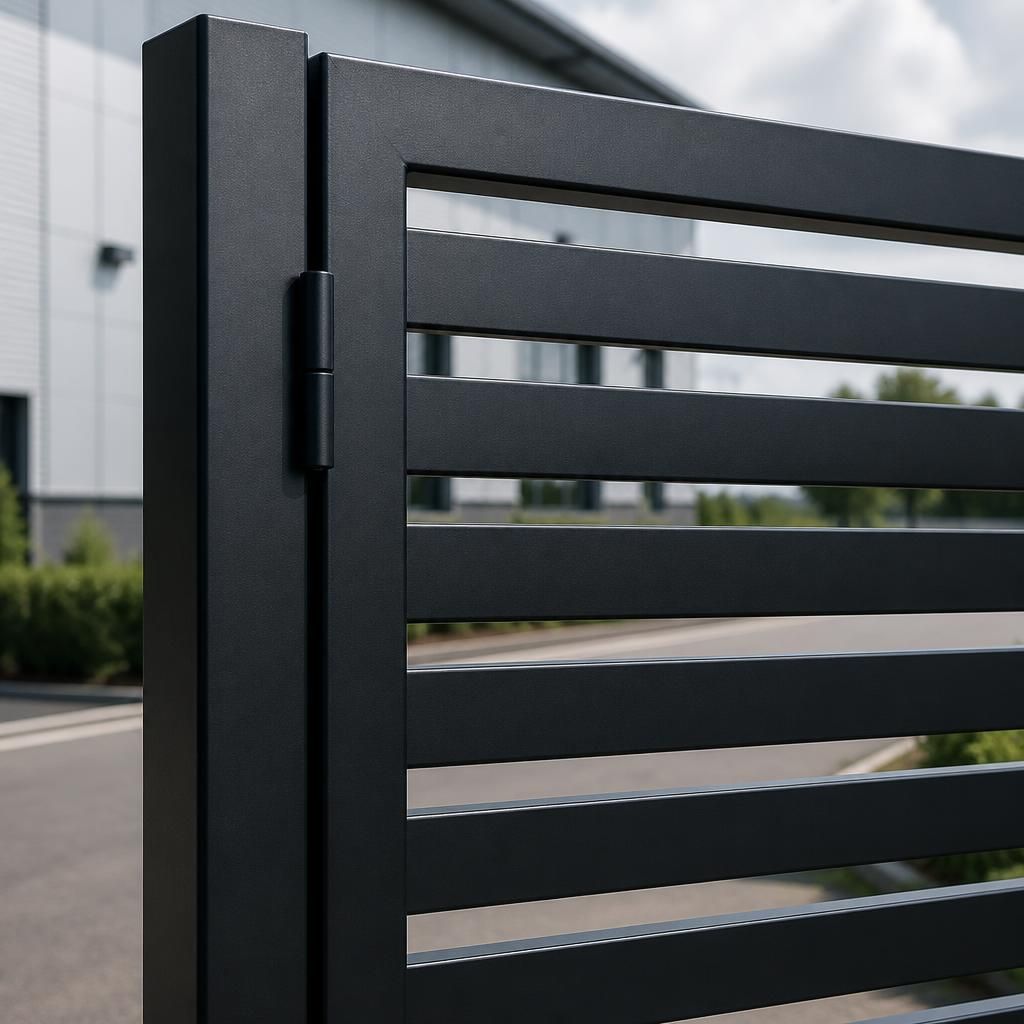
A further environmental benefit of black powder coated aluminium is the protection it provides to the underlying metal. By helping the aluminium withstand weathering and routine exposure, a suitable coating can support a longer useful service life for the finished component. This may reduce the need to manufacture and transport replacement parts, helping to limit the material and energy impacts associated with repeated replacement.
The benefit depends on selecting a powder system and pretreatment appropriate to the component’s environment. If the finish is damaged, poorly bonded or unsuitable for the exposure conditions, the part may require earlier repair or replacement. Environmental assessment should therefore consider expected service life, repairability and the consequences of replacing the complete aluminium component, rather than comparing application methods alone.
Discuss the environmental requirements for your black powder coated aluminium
Discuss the environmental requirements for your black powder coated aluminium components with the team, including the coating specification, pretreatment and end-of-life considerations. This will help you compare the complete finishing process with traditional paint before confirming a suitable approach.