

What advantages do nylon primers offer for specific applications in the powder coating process?
Nylon primers are used in specialist powder coating applications where enhanced adhesion, wear resistance and corrosion protection are required. They can provide a robust base for the topcoat on metal components exposed to abrasion, impact, chemicals or demanding service conditions, subject to correct substrate preparation and system compatibility.
Nylon primers are most useful where a powder coating system needs a specialist intermediate layer between the prepared metal substrate and a nylon-based topcoat. Their main advantage is that they help the complete system perform more consistently in applications involving repeated handling, sliding contact, complex component geometry or difficult service conditions. The benefit depends on choosing a primer that is chemically and thermally compatible with both the substrate and the specified nylon finish.
For components with an irregular profile, a nylon primer can help create a more uniform foundation for the topcoat. This is particularly relevant to fabricated parts with corners, recesses, edges, weld zones or changes in section. A suitable primer system can reduce variation in the finished coating by providing a more consistent intermediate surface, although it cannot compensate for oil, mill scale, weld contamination or inadequate preparation.
Nylon primers can also be considered where the component needs a controlled surface for functional contact. Examples include parts that slide against other components, guides, handling equipment, protective guards and selected engineering assemblies. In these cases, the primer forms part of a wider coating specification designed around the nylon topcoat’s surface properties. The primer should not be selected solely because the part is made from steel or aluminium; the expected contact conditions, movement, loading and mating materials all need to be assessed.
Another advantage is their use in systems where the substrate and topcoat have different characteristics. A prepared metal surface and a nylon finish do not necessarily interact in the same way during heating, cooling and service. The primer provides an intermediate layer that can help the coating system accommodate these differences. This is useful for components subject to temperature changes, handling during assembly or minor movement in service. The exact suitability depends on the primer’s cure requirements, film build and ability to remain compatible with the nylon layer throughout the process.
Nylon primer systems may be valuable for parts with a demanding visual specification as well as a functional one. An even intermediate coat can support more consistent topcoat coverage and help limit visible variation caused by differences in the substrate. This is especially relevant to batch-produced components, where repeatability between parts matters. Consistent results still depend on controlled pretreatment, racking, application settings, powder recovery practices and curing conditions.
There are also practical process advantages when the primer is selected as part of a defined two-coat system. It can allow the applicator to separate the requirements of the substrate from those of the nylon topcoat rather than expecting one powder layer to perform every function. The primer may be chosen for substrate interaction and barrier performance, while the nylon layer is specified for its surface and service characteristics. This approach is more adaptable than treating the coating as a single generic finish.
Before specifying a nylon primer, assess the following points:
- Substrate: Confirm whether the component is steel, galvanised steel, aluminium or another metal, and identify any existing plating, conversion coating or repair material.
- Preparation: Define the required cleaning, degreasing, abrasive preparation or chemical pretreatment. Surface salts, residues and welding by-products can undermine the system even when the primer itself is suitable.
- Topcoat compatibility: Check that the primer and nylon powder are designed to work together. Incompatible layers can cause poor intercoat bonding, defects, uneven appearance or problems during curing.
- Temperature exposure: Compare the complete cure schedule with the substrate’s limitations and the component’s intended operating temperature. The primer must remain stable through application, curing and service.
- Film thickness: Establish suitable primer and topcoat thicknesses rather than allowing excessive build. Heavy deposits can affect edge definition, fit, coverage and the final appearance.
- Component design: Consider recesses, sharp edges, internal corners, drain holes and areas that may be difficult to coat or cure evenly. Racking and powder application may need to be planned around these features.
- Service requirements: Identify contact with moisture, cleaning agents, oils, fuels, chemicals, outdoor exposure, impact and repeated movement. The complete system should be assessed against these conditions, not the primer in isolation.
A nylon primer is therefore a specialist design choice rather than a universal replacement for conventional powder coating primers. It offers the greatest value when the application requires a properly engineered nylon coating system and the primer, substrate preparation, topcoat and curing process are treated as one specification. For industrial components, trial panels or representative sample parts can help confirm appearance, film build and intercoat performance before a full batch is processed.
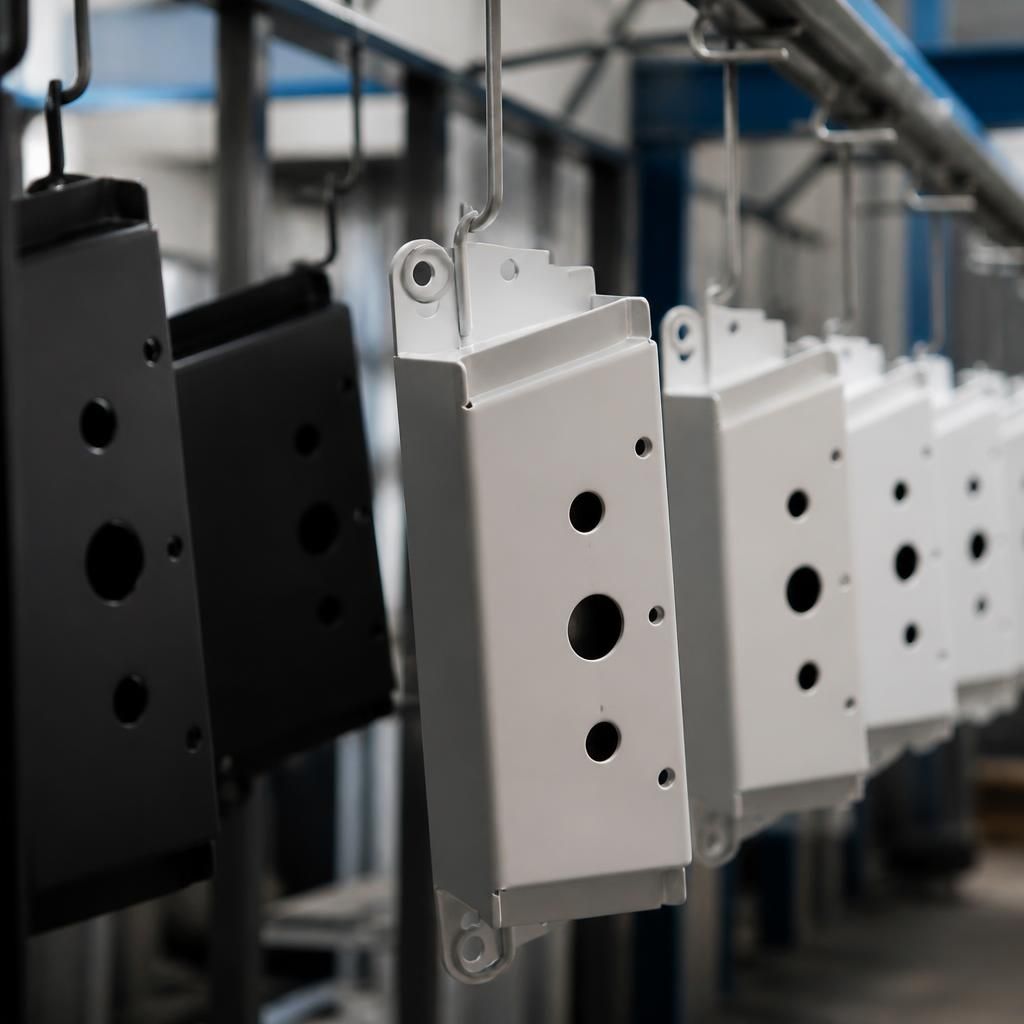
For components that require electrical insulation, a compatible nylon primer can support a more continuous insulating coating system by providing a stable base beneath the nylon layer. This can be relevant to selected electrical housings, brackets, guards and engineering components where the coating must separate the metal substrate from adjacent parts or equipment.
The primer should be assessed as part of the complete system rather than treated as an insulating solution on its own. The specification should confirm the electrical requirements, coating continuity, acceptable film build and compatibility with the nylon topcoat. Areas such as sharp edges, recesses, threaded features and contact points may need particular attention because incomplete coverage or later damage can compromise the intended insulating function.
Discuss whether a nylon primer suits your application
Discuss your component’s substrate, nylon topcoat and service conditions with our powder coating team to assess whether a nylon primer system is appropriate. Representative sample parts or trial panels can then be considered before processing a full batch.