

What environmentally sustainable practices are used in producing powder coated perforated aluminium?
Environmentally sustainable production of powder coated perforated aluminium typically combines solvent-free powder application, recovery of unused powder, efficient curing and careful material preparation to reduce waste and emissions. The resulting durable finish can extend the component’s service life and aluminium can be recycled at the end of its use.
Environmentally sustainable production of powder coated perforated aluminium depends on controlling the full manufacturing cycle, from panel design and preparation through to packaging and end-of-life recovery. In addition to the powder application and curing stages, important measures include efficient component design, responsible pretreatment, controlled water use, waste segregation and lower-impact logistics.
Material-efficient design can reduce the environmental impact before coating begins. Perforation patterns should be agreed carefully so that the required open area, strength and appearance are achieved without unnecessary aluminium or excessive offcuts. Accurate cutting and nesting of sheets help use the available material efficiently. The design should also allow the finished panels to be dismantled or separated from other materials where practical, making recycling more straightforward at the end of service.
Preparation and pretreatment are essential because a clean, stable surface helps the coating adhere without avoidable rework. Responsible production may involve selecting pretreatment chemicals with a lower environmental burden, maintaining process baths carefully and monitoring contamination. This reduces the likelihood of rejected parts, repeat processing and unnecessary consumption of aluminium, chemicals and energy. For perforated components, preparation must also reach the edges of holes and other difficult areas rather than treating only the broad faces.
Water management is another relevant consideration. Pretreatment and rinsing stages can be operated with controlled flow, suitable filtration and, where the process allows, recirculation. Used process water should be managed in accordance with applicable environmental requirements rather than discharged without treatment. Careful control of these stages limits contamination and supports consistent coating quality.
Application control contributes to sustainability by placing the correct amount of powder on the component and avoiding excessive build. Racking and part orientation should be planned around the shape of the perforated aluminium so that the coating reaches the required surfaces while reducing overspray and masking waste. Colour changes and batch planning can also be organised to reduce cleaning materials and discarded residue between production runs.
Quality assurance has an environmental role as well as a performance role. Checking the substrate, film coverage, adhesion and visible finish before dispatch helps identify defects before the components enter another stage of construction or assembly. Preventing rework avoids repeating preparation, coating, curing, packaging and transport. Inspection should pay particular attention to hole edges, corners and contact points, where handling or poor coverage may otherwise create defects.
Packaging and handling should protect the coated panels without creating unnecessary waste. Reusable stillages, returnable separators and recyclable protective materials can be considered where suitable for the component size and delivery arrangement. Packaging should prevent perforated edges from rubbing against adjacent parts, since damage in transit can lead to repair or replacement and therefore additional material use.
Transport impacts can be reduced through sensible load planning, consolidated deliveries and collection arrangements that avoid unnecessary empty journeys. Panels should be packed to make good use of available vehicle space while retaining adequate protection. These decisions are particularly relevant when components move between a fabricator, coating facility and construction or manufacturing site.
The environmental benefit of the finished item also depends on its service life. A correctly specified powder coating can protect aluminium from surface deterioration and reduce the frequency of replacement or refurbishment. The coating system should therefore be selected for the expected exposure, cleaning regime and appearance requirements rather than treated as a one-size-fits-all finish.
At the end of use, aluminium has a strong recycling pathway because the metal can be recovered and reprocessed. For responsible end-of-life management, components should be kept identifiable and separated from incompatible fixings, sealants or composite materials where possible. The powder coating does not remove the value of the aluminium as a recyclable material, although local recycling arrangements will determine how individual assemblies are handled.
For businesses assessing a coating specification, useful questions include:
- Has the perforation and cutting layout been designed to minimise offcuts?
- Are pretreatment chemicals, rinse water and process residues managed responsibly?
- Is application controlled to limit rework, overspray and rejected components?
- Can reusable packaging or consolidated transport be used?
- Can the finished aluminium be separated and recycled at the end of its service life?
These measures work together: efficient design reduces material demand, controlled production reduces avoidable waste, and a durable, recyclable finished component supports a longer product lifecycle. Midlands manufacturers, fabricators and construction businesses can discuss the relevant coating and handling requirements with a regional powder coating specialist when developing a specification for perforated aluminium.
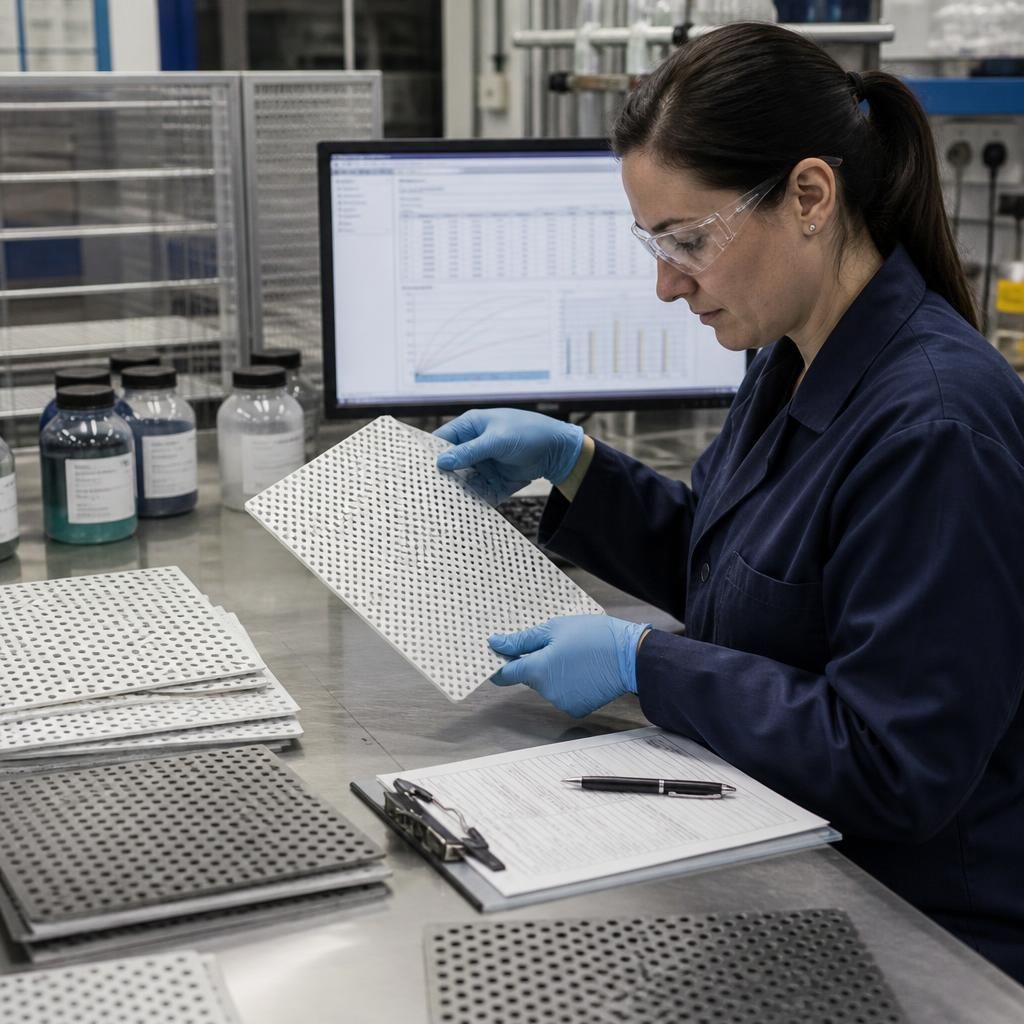
Environmental sustainability in powder coated perforated aluminium also depends on traceable material selection. Coating powders, pretreatment products and ancillary materials should be assessed using current technical and environmental information, including curing requirements, handling controls and disposal instructions. This helps the producer choose a system that is suitable for the aluminium and the expected exposure without relying on unnecessary additional coatings or repeat processing.
Maintaining batch records and process documentation supports responsible production by linking the finished panels to the materials and settings used. It also makes it easier to review defects, investigate waste and confirm that the specified coating system has been applied consistently. For B2B projects, this information can form part of a wider environmental review alongside design, transport, service-life and end-of-use considerations.