

How do nylon and protective aluminium coatings contribute to reducing maintenance costs over time?
Nylon and protective aluminium coatings reduce long-term maintenance costs by forming durable barriers against corrosion, abrasion, chemicals and moisture, helping metal components remain serviceable for longer. By reducing surface deterioration, they can limit the need for frequent repairs, recoating and component replacement.
Nylon and protective aluminium coatings reduce maintenance costs over time by lowering the frequency and complexity of intervention required to keep metal components fit for service. The financial benefit is not limited to the coating itself: it can also affect inspection, cleaning, labour, access, production scheduling and the cost of taking equipment or components out of use.
A useful way to assess the benefit is to consider total cost of ownership rather than the initial finishing price. A lower-cost coating may require more frequent attention, while a more suitable protective system can reduce the number of maintenance events across the component’s working life. The relevant comparison can include:
- planned inspection and cleaning time;
- labour for removing, preparing and refitting components;
- access equipment or isolation needed to reach installed parts;
- costs associated with taking machinery or structures out of service;
- replacement parts, fasteners or adjacent components affected by deterioration; and
- recoating, surface preparation and waste-handling requirements.
Nylon is particularly useful where a coating must tolerate regular handling, contact or friction without quickly losing its protective surface. If the finish remains intact, maintenance teams may be able to carry out routine checks and cleaning without immediately progressing to more extensive remedial work. This can make maintenance planning more predictable, especially where components are difficult to remove or are installed within larger assemblies.
Protective aluminium coatings contribute to cost control in a different way, depending on the coating system, substrate and operating conditions. They are selected for applications where aluminium-based protection is appropriate for the required environmental exposure and service conditions. Choosing the correct system at the specification stage can avoid relying on repeated repairs to compensate for a finish that is unsuitable for the component’s environment.
The quality of preparation and application has a direct effect on the economic result. Contamination, inadequate preparation, inconsistent coverage, unprotected edges or incorrect curing can create weak points that require early attention. For this reason, the cost-saving potential of nylon or protective aluminium coating depends not only on the material but also on factors such as:
- the condition and composition of the metal substrate;
- the type and severity of exposure;
- the required coating thickness and coverage;
- areas that need masking or special treatment;
- the component’s operating temperature and mechanical contact; and
- inspection requirements for the finished coating.
Correct specification can also reduce unnecessary maintenance caused by incompatibility. A coating should be assessed against the actual combination of moisture, chemicals, movement, impact, abrasion, temperature and cleaning methods rather than against a single environmental factor. The most suitable choice for a frequently handled metal part may not be the same as the choice for a fixed structural component exposed to weather.
Maintenance planning should still include periodic inspection. A durable coating is not a reason to remove inspection from the maintenance schedule. Instead, inspection helps identify damage, contamination or local defects while they are easier to manage. Small areas can sometimes be assessed and treated as part of planned work, reducing the likelihood that a minor issue develops into a larger repair or replacement requirement.
For manufacturers, fabricators, construction firms and automotive businesses, the practical question is therefore whether the coating supports the component’s complete service requirement. A sound assessment compares the initial finishing cost with the expected maintenance activities, access constraints, replacement implications and consequences of unplanned downtime. Nylon and protective aluminium coatings can offer lower long-term maintenance demands when their properties, application method and service environment are properly matched.
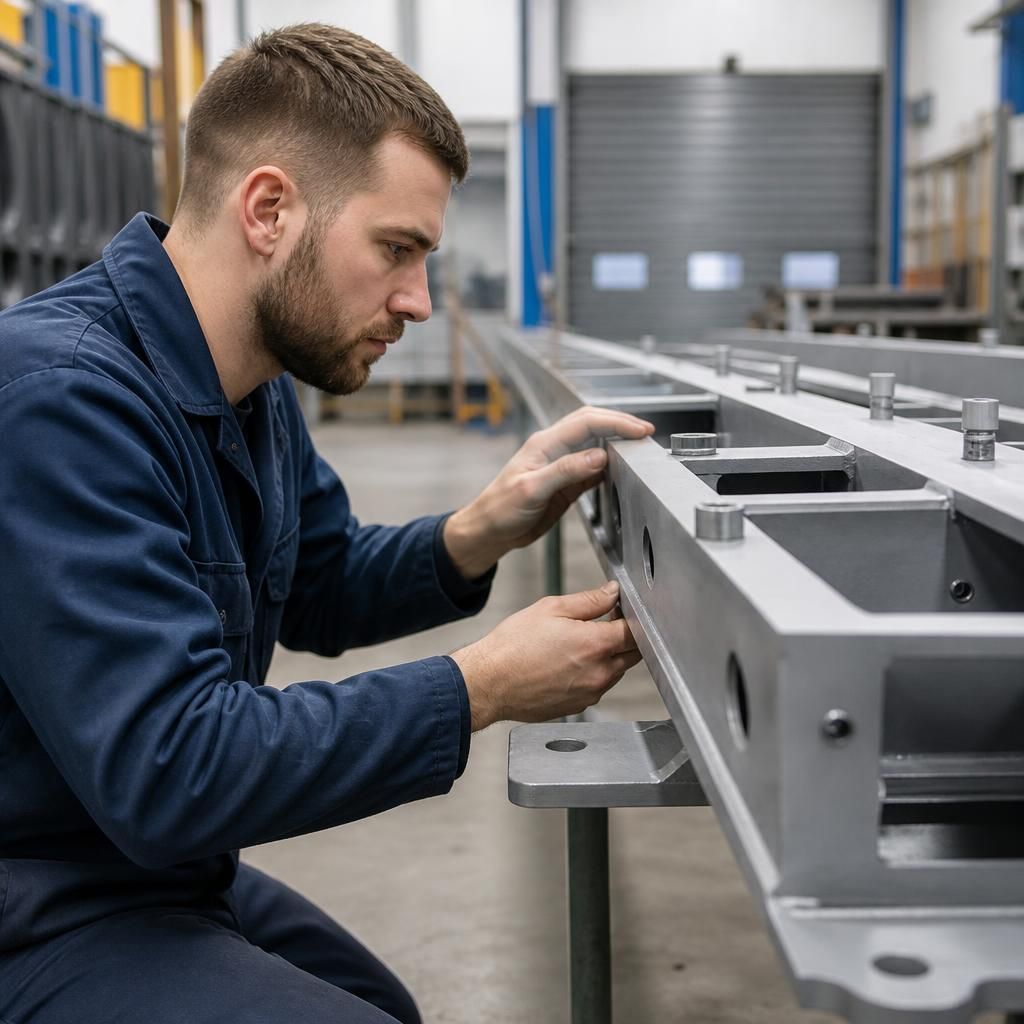
The coating can only reduce maintenance costs if the component design does not create avoidable corrosion traps. Joints, recesses and enclosed sections that retain water or debris can deteriorate even when accessible surfaces are coated. Providing suitable drainage, allowing inspection access and specifying appropriate masking or sealing around interfaces helps the nylon or protective aluminium finish perform consistently across the part rather than leaving difficult areas vulnerable.
This is particularly relevant to fabricated assemblies and components that remain in service for long periods. Reviewing the finished design alongside the coating specification can prevent remedial work caused by trapped moisture, inaccessible surfaces or coating applied where movement or fit must be preserved. The result is a more maintainable component, with fewer design-related defects requiring investigation after installation.
Discuss Your Nylon or Protective Aluminium Coating Requirements
Discuss your component’s substrate, operating environment and maintenance requirements with the powder-coating team to assess whether nylon or protective aluminium coating is the appropriate specification. This information can support a more informed comparison of coating options before finishing is arranged.