

What are the cost implications and potential savings associated with choosing matte clear versus white powder coatings for aluminium projects?
The cost difference between matte clear and white powder coating for aluminium depends on surface preparation, coating specification, component size, batch volume and process requirements rather than colour alone. Potential savings come from selecting the finish that meets the appearance and performance brief, while accounting for preparation, application, inspection and any risk of rework.
The lower-cost option is not determined by colour alone. For an aluminium project, matte clear and white powder coatings can have different overall costs because they place different demands on the substrate, appearance specification, application controls and quality inspection. A sound comparison should therefore assess the complete installed and lifecycle cost, not just the coating line item.
Matte clear coating costs
Matte clear powder coating leaves more of the aluminium’s underlying appearance visible. This can increase the importance of substrate condition, surface uniformity and pretreatment quality. Scratches, stains, weld marks, extrusion variation and inconsistent finishing may remain visible beneath a clear finish, particularly where the project requires a uniform architectural or industrial appearance. Additional preparation, sorting or inspection may therefore be needed before coating.
A clear finish can also make defects more apparent during final inspection. If components do not meet the agreed appearance standard, the cost implications may include stripping, re-preparation, recoating, replacement or delayed assembly. These are not automatic costs, but they should be considered when a clear finish is specified for visually critical aluminium parts.
Matte clear may be financially appropriate where the natural aluminium appearance is part of the design brief and the substrate already has a consistent, acceptable surface. It can avoid the need to select and manage a coloured pigment system, although the coating specification, finish level and application requirements still need to be confirmed. The commercial benefit is strongest when the clear appearance can be achieved without extensive corrective preparation or rework.
White powder coating costs
White provides an opaque, consistent colour layer that can make differences in the underlying aluminium less noticeable. This may reduce the visual impact of minor substrate variation, but it does not remove the need for proper preparation. Corrosion protection, adhesion, edge coverage, cleanliness and film build remain important to the performance of the finished component.
The selected white shade and gloss or matt level can affect material selection, approval requirements and inspection criteria. A project with several white-coated parts may also need controls for colour consistency between batches or between separately processed components. Where close visual matching is required, sample approval and retained reference standards can help limit disputes and avoid unnecessary rework.
White may offer a practical cost advantage when it provides the required appearance without demanding a highly uniform decorative substrate. However, a white coating is not automatically cheaper: the final price may change with the specified powder, finish, pretreatment, masking, curing requirements and inspection standard.
Where potential savings arise
- Reduced preparation: selecting the finish that suits the existing aluminium surface can limit unnecessary grinding, correction or cosmetic treatment.
- Lower rework risk: a realistic appearance specification helps avoid rejecting parts for characteristics that the chosen finish was never intended to conceal or display.
- Efficient batch planning: grouping compatible components and agreeing colour, finish and quality requirements in advance can reduce handling and changeover inefficiencies.
- Fewer downstream issues: accurate drawings and clear masking instructions can prevent coating from entering threads, bores, contact faces or assembly interfaces, where removal would add labour.
- Longer useful service: a correctly specified coating can reduce the likelihood of premature refurbishment or replacement, although service life depends on exposure, design, preparation and maintenance as well as the selected colour.
These potential savings should be evaluated against the cost of the whole project. A finish with a slightly higher initial coating charge may be more economical if it reduces preparation, inspection failures or future remedial work. Conversely, choosing a visually demanding matte clear finish without allowing for substrate preparation can make the apparent material saving insignificant.
How to compare quotations accurately
Request quotations that identify the same technical basis for both finishes. The comparison should state the aluminium grade and condition, pretreatment system, powder specification, finish and gloss level, target film build, masking requirements, curing conditions, inspection standard, packaging and any collection or delivery arrangements. It should also clarify whether preparation, testing, approval samples, stripping and recoating are included or charged separately.
For larger or repeat projects, consider both the initial batch cost and the cost of maintaining a consistent finish across future batches. A white coating may be easier to reference through an agreed colour standard, while matte clear may require closer control of the aluminium substrate and surface appearance. The most economical choice is the one that meets the required technical and visual performance with the fewest avoidable process steps and the lowest credible risk of rework.
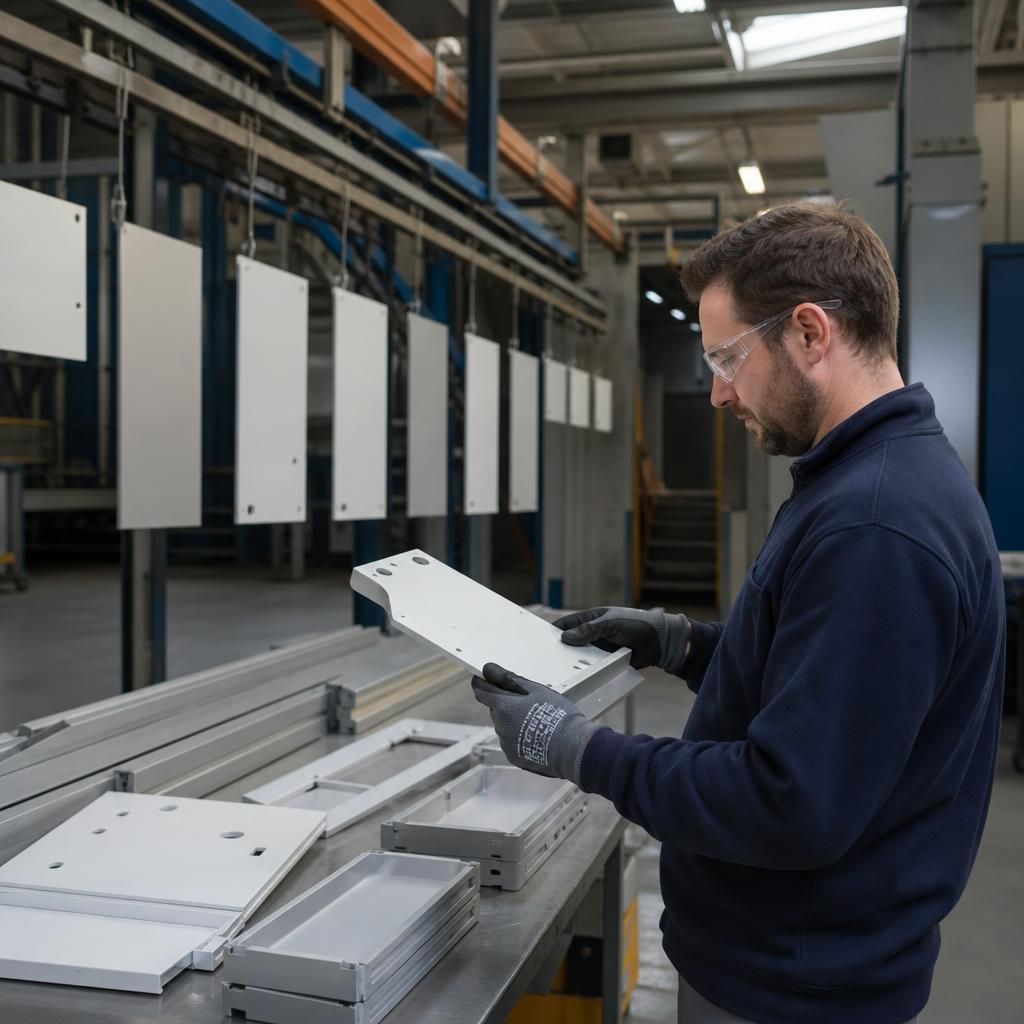
Assess the cost per coated component, not only the powder price. The amount of aluminium loaded onto each coating run can affect the economics of matte clear and white finishes. Parts with similar dimensions may require different handling if their geometry affects hanging, access to the coating equipment or the usable surface area. A finish that appears cheaper by weight may therefore offer little financial advantage if it requires less efficient loading or additional handling.
For a meaningful comparison, ask for costs to be related to the actual component mix and expected production quantities. This is particularly important where a project combines large panels, extrusions, brackets or intricate fabricated parts. Reviewing the proposed loading method and coating sequence alongside the finish price can show whether the apparent saving is likely to remain once the full batch is processed.
Compare the Costs of Matte Clear and White Powder Coating
Discuss your aluminium components, finish requirements and expected quantities with Powder-coatings.co.uk to establish whether matte clear or white powder coating is the more economical specification. Provide drawings or component details where available so preparation, masking and processing requirements can be assessed accurately.