

What specific measures does our aluminium powder coating plant take to ensure the longevity and performance of coatings under various environmental conditions?
Our aluminium powder coating plant supports long-term performance by controlling surface preparation, powder application and curing, then checking finished components for consistent coverage and adhesion. Coating selection and process control are matched to the component’s intended environment, helping finishes withstand conditions such as moisture, weathering, handling and industrial use.
Long-term aluminium coating performance is achieved by matching the coating system and production controls to the environmental exposure expected in service. Our plant considers factors including ultraviolet light, moisture, condensation, pollutants, temperature changes, abrasion, impact and contact with chemicals before processing aluminium components, rather than treating every application as an identical coating requirement.
Environmental exposure is assessed before the coating system is selected. Aluminium used externally may need stronger resistance to sunlight, rain and recurring wet-and-dry cycles than components used indoors. Parts installed in sheltered industrial areas may face different risks, such as airborne oils, cleaning chemicals or process contaminants. This assessment helps determine whether the proposed finish is appropriate for the component’s location and intended use.
- Ultraviolet exposure: Exterior aluminium finishes must resist colour change, loss of gloss and deterioration caused by sunlight. Powder selection is therefore considered in relation to the expected level of weathering.
- Moisture and corrosion risk: Rain, condensation and trapped moisture can place additional demands on the coating system. Component design, drainage and the treatment of vulnerable areas are considered so that water is less likely to remain against the coated surface.
- Temperature variation: Aluminium can experience repeated expansion and contraction as temperatures change. The coating system and processing conditions must be suitable for the component so that normal thermal movement does not unnecessarily reduce finish performance.
- Mechanical wear: Parts exposed to handling, friction, impact or abrasion require consideration beyond appearance alone. The intended use influences the choice of finish and the care taken during movement and packing.
- Chemical contact: Oils, detergents, solvents, salts and other substances can affect a coating differently. Where chemical exposure is expected, compatibility is considered before production rather than relying solely on the colour or visual appearance of the powder.
Aluminium alloy, component shape and end use also influence the risk profile. Sections with recesses, joints, edges or concealed faces may experience different environmental stresses from broad, exposed faces. Reviewing the complete component helps identify areas where water, dirt or chemicals could collect and where handling may cause local damage.
Process consistency is another safeguard against premature deterioration. Powder quantity, equipment settings, component loading and oven conditions are controlled as part of the production process, with attention to repeatability between batches. This is particularly important when a manufacturer supplies repeated aluminium parts, because small variations can become significant when components are installed together or exposed to the same environment.
Finished components are assessed against the agreed specification, including visual uniformity and the suitability of the coating for its intended service conditions. Where a project has unusually demanding exposure, useful technical information includes the installation location, expected contact with chemicals or salt, cleaning methods, operating temperatures, handling requirements and whether colour or gloss retention is critical. These details allow the coating plant to identify environmental risks at the planning stage and avoid selecting a finish on appearance alone.
Protective performance also depends on what happens after coating. Aluminium parts should be stored and transported so that surfaces are not scratched, contaminated or exposed to trapped moisture before installation. Correct installation, suitable fasteners, effective drainage and appropriate cleaning practices all help preserve the coating once the components leave the plant. The coating provides an important protective barrier, but it cannot compensate for unsuitable design, severe chemical exposure or damage left untreated.
For B2B projects, this approach supports a more reliable specification for aluminium components used by manufacturers, fabricators, construction firms and automotive businesses. It combines exposure assessment, material and finish selection, repeatable production controls and practical handling guidance so that the coating is selected for the conditions it must withstand, not simply for its initial appearance.
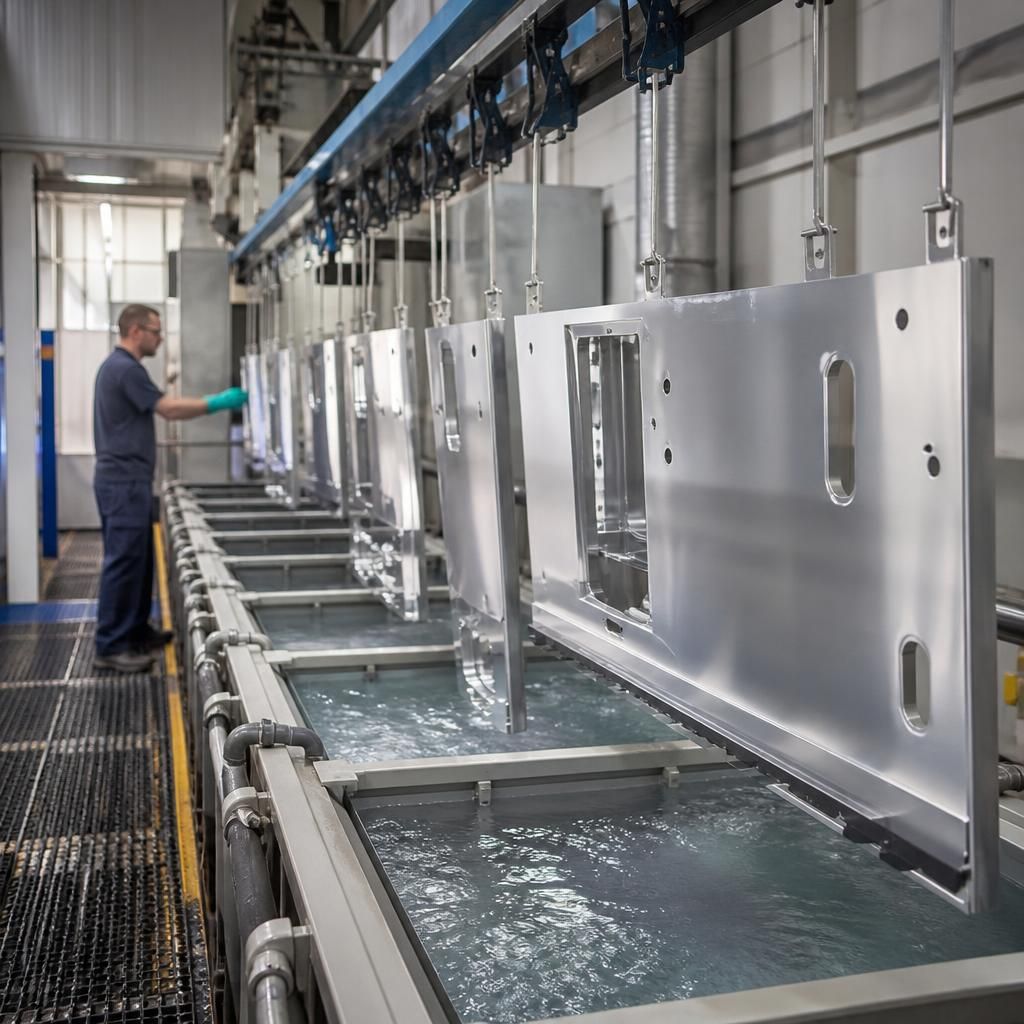
Aluminium coating longevity depends heavily on the condition of the metal before powder is applied. Our plant treats cleaning and pretreatment as controlled stages, removing oils, residues and surface contamination that could interfere with adhesion. Aluminium components are then prepared and dried consistently so the powder bonds to a suitable surface rather than concealing defects or contaminants beneath the finish.
This is particularly important where components will face moisture, condensation or repeated handling. A clean, suitably prepared substrate reduces the risk of local adhesion failure, lifting or early deterioration. The required preparation is considered alongside the aluminium grade, component design and intended exposure, helping the finished coating provide a more dependable protective barrier throughout its service life.