

What are the critical safety considerations when selecting polyester powder coated aluminium for industrial applications?
When selecting polyester powder coated aluminium for industrial applications, assess the coating’s resistance to the chemicals, abrasion, moisture, UV exposure and operating temperatures it will encounter, as well as the aluminium grade and component design. Confirm that preparation, curing and handling controls will produce sound adhesion and avoid hazards such as sharp edges, trapped contaminants, coating breakdown or interference with electrical contact points.
Safe selection of polyester powder coated aluminium depends on matching the complete coating system to the component’s use, not simply choosing a colour or nominal finish. The assessment should cover the coating specification, aluminium substrate, preparation method, curing controls, end-use regulations, electrical and fire requirements, handling risks, and evidence that the finished part has been inspected and tested appropriately.
Define the duty of the component. Start with how the aluminium part will be used, installed and maintained. A protective finish for an enclosed machine guard has different safety requirements from one used on external equipment, architectural elements, transport components or parts handled frequently by personnel. Consider contact with oils, cleaning products, process chemicals, salt, dirt and other contaminants, together with the expected impact, flexing, vibration and temperature cycling. The coating must remain sound under the actual service conditions; a finish that is suitable for appearance alone may not provide adequate protection where coating failure could expose the substrate or affect component performance.
Check the intended regulatory use. If coated aluminium will be used in a setting involving food, drinking water, healthcare, children, hazardous substances or other controlled environments, confirm that the complete coating system is suitable for that application. A general industrial polyester powder coating should not automatically be treated as food-contact, potable-water, hygienic or chemically resistant material. Request the relevant declaration, test evidence or technical limitation from the coater or coating supplier, and ensure it applies to the actual substrate, preparation process and cured film.
Specify the coating system rather than the finish alone. A safe specification should identify the aluminium alloy or component grade, required preparation, primer or additional layer where applicable, polyester powder type, colour, gloss, texture and performance requirements. It should also state which surfaces must remain uncoated. This is particularly important for faces used for bonding, earthing, bolted connections, seals, bearings or close-fit assemblies. Masking and post-coating operations need to be defined so that the finished component does not create an unsafe assembly condition.
Consider electrical behaviour. Polyester powder coating is electrically insulating. That can be useful where isolation is required, but it can create a hazardous discontinuity if the aluminium part is intended to provide an earth path, screen, bonding route or conductive contact. The design should identify all required contact points and specify how they will be protected, exposed or treated after coating. Electrical continuity should be checked as part of inspection rather than assumed from the appearance of the part. Where the component forms part of electrical equipment, the coating specification should be reviewed alongside the equipment’s applicable electrical safety requirements.
Assess fire and heat-related requirements separately. Aluminium is non-combustible as a metal, but the performance of a coated assembly depends on the whole construction, including the coating, substrate, backing materials, seals, adhesives and nearby components. Do not infer a fire classification, smoke performance or suitability for high-temperature service from the use of polyester powder alone. Where the part is used near ignition sources or in a regulated building, transport or industrial environment, request evidence for the specific system and installation rather than relying on a generic product description.
Control preparation and contamination risks. Pretreatment residues, oils, moisture, blasting media, trapped process chemicals and deposits in joints or cavities can affect adhesion and may create corrosion or exposure risks later. Components should be designed and supplied so that cleaning and rinsing are effective. Hollow sections, folded areas, overlaps and drainage points deserve particular attention because retained liquid or powder can remain hidden after coating. Any required venting, drainage or access features should be agreed before production. The finished part should be free from loose material, blistering, lifting, pinholes or other defects that could allow contamination or undermine its protective function.
Review geometry and handling safety. Coating does not remove hazards caused by the underlying component. Lifting points, handling areas, fixing holes and edges should be designed for safe movement and installation. The coating must not obstruct safety-critical apertures, identification marks, inspection points, threads or moving clearances. If the coating adds thickness to mating surfaces, confirm that fasteners, seals and mechanical interfaces still operate correctly. Parts should be protected during transport and storage so that damage does not expose bare aluminium before installation.
Distinguish cosmetic defects from safety-critical defects. Agree acceptance criteria before coating begins. Colour variation or minor visual differences may be tolerable in some industrial locations, whereas poor adhesion, exposed substrate, coating damage at a fixing point or blocked ventilation may be unacceptable. Inspection should consider coverage, cure, adhesion, film condition, masking, dimensions and the condition of functional interfaces. The appropriate checks depend on the component’s duty; visual inspection alone is insufficient where coating failure could affect electrical, mechanical, hygienic or corrosion performance.
Use representative validation. For a new component or demanding application, validate the proposed system on representative aluminium parts or samples. The assessment should reflect the actual alloy, preparation, geometry, cure conditions and areas that are difficult to coat. Useful evidence may include adhesion, impact, corrosion, chemical exposure, heat, electrical continuity or fire-related testing, but the selected tests should relate to the identified risks rather than being treated as a universal checklist. Results should be recorded with the coating specification and any limitations.
Maintain traceability and communication. The component designer, purchaser, coater and installer should share information about service conditions, prohibited substances, contact areas, inspection requirements and repairs. Keep the coating specification, technical data, safety information, batch details and inspection records with the project documentation. If damage occurs during fabrication or installation, repair it using an approved method compatible with the original system; an improvised touch-up may not provide equivalent protection or electrical performance.
For industrial aluminium components, the safest choice is therefore a documented, application-specific coating system with clearly defined interfaces, validated performance and controlled handling. This approach prevents a visually satisfactory finish from concealing risks associated with electrical bonding, fire performance, contamination, assembly tolerances or regulated end use.
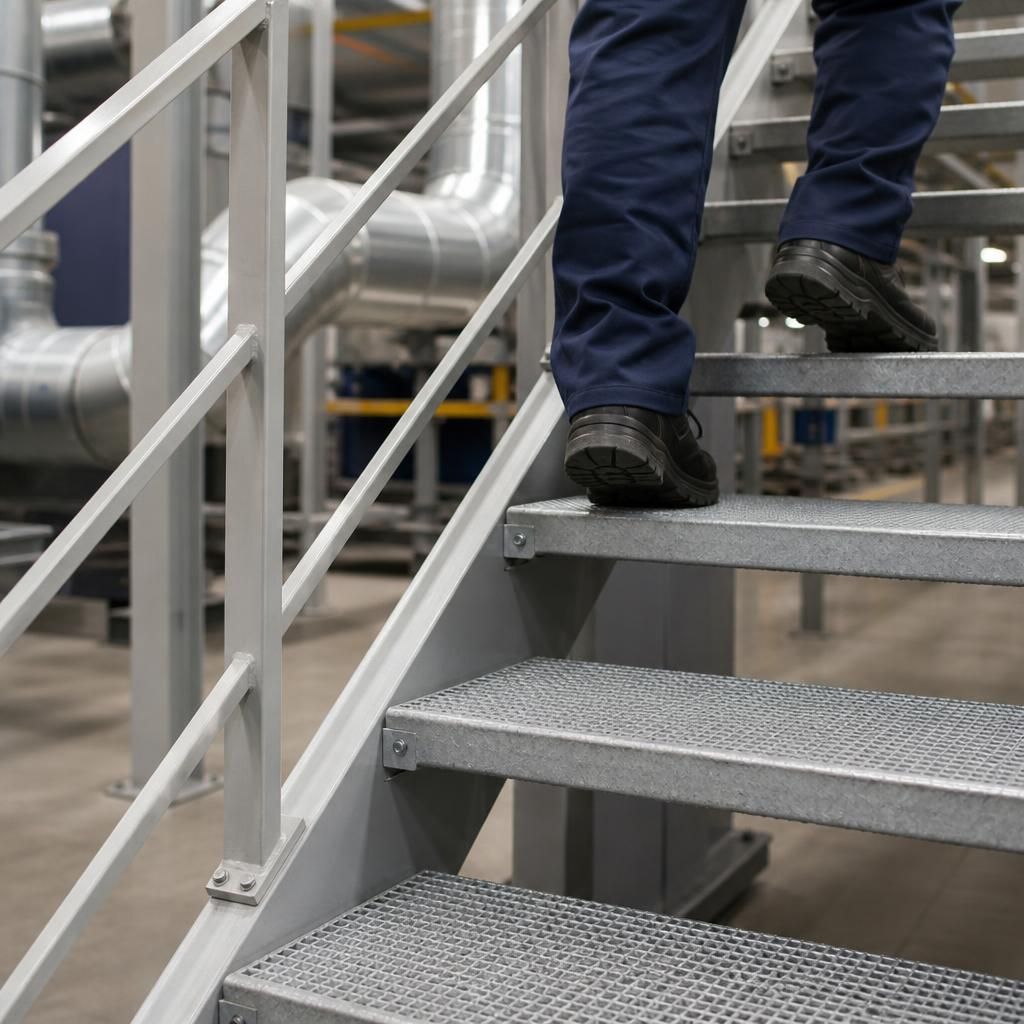
Where polyester powder coated aluminium forms a walkway, step, platform, ramp or hand-contact surface, assess slip and grip performance separately from corrosion and appearance. A smooth decorative finish may not provide sufficient traction when exposed to water, oil, dust or process residues. The specification should therefore identify whether a textured or profiled surface is required and confirm that the complete surface system is suitable for the intended traffic and contamination conditions.
Check that any textured coating remains cleanable and does not create snagging points, sharp projections or difficult-to-inspect areas. Slip-resistant performance should be assessed on the finished component, including joints, edges, fixings and transitions, rather than inferred from the powder type alone. This prevents a visually acceptable coating from introducing a foreseeable access or handling hazard.
Discuss your polyester powder coated aluminium safety requirements
Discuss your polyester powder coated aluminium safety requirements with our team. Share the component drawings, intended use and relevant compliance requirements so the coating specification and inspection approach can be assessed appropriately.