

What are the key considerations in choosing the right coating thickness for aluminium frames and tubes, and how does this affect performance in industrial applications?
The right coating thickness for aluminium frames and tubes depends on the service environment, required corrosion and wear resistance, component geometry and the powder manufacturer’s specification. A correctly controlled thickness supports consistent coverage and adhesion, while an unsuitable or uneven coating can affect appearance, fit, flexibility and long-term performance in industrial use.
The correct coating thickness is the specified dry film build of powder on the aluminium after curing. It should be selected as part of the complete coating system rather than treated as a simple measure of how much powder has been applied. The objective is a continuous, properly cured film that meets the component’s functional, dimensional and appearance requirements without creating problems during assembly or service.
Start with the required performance. A frame used mainly as a visible enclosure may have different coating requirements from a tube exposed to repeated contact, impact, abrasion or handling during installation. The specification should therefore identify the expected loading, contact points, exposure conditions, cleaning methods and design life. These factors help determine whether the coating needs to prioritise surface protection, resistance to handling damage, appearance retention or a balance of several properties.
Consider the complete aluminium preparation system. Thickness cannot compensate for poor preparation. Aluminium surfaces normally require suitable cleaning and chemical pretreatment so that the powder film can bond effectively and the substrate is less vulnerable if the surface is damaged. The powder type, pretreatment and curing schedule should be compatible. A thicker layer over contamination, oxide residue or an unsuitable pretreatment may still fail prematurely.
Account for the shape of the component. Frames and tubes can contain corners, recesses, joints, edges, slots and enclosed sections that do not receive powder in the same way as broad, accessible faces. Electrostatic application can also produce differences in film build between exposed areas and recessed sections. Sharp edges may have less effective coverage, while internal corners can accumulate excess powder. Reviewing the design before coating can identify areas that need edge treatment, masking, drainage or a different application approach.
Tubes require particular attention where the inside is part of the required finish. The specification should state whether internal surfaces need coating, whether they will be visible or exposed to the service environment, and how powder will be applied and cured in those areas. Hollow sections may also need suitable venting and drainage provisions during processing. Without these details, an apparently acceptable external finish may not meet the component’s actual use requirements.
Protect dimensional and assembly tolerances. Powder adds a measurable layer to mating surfaces, apertures, slots, threads and other close-fitting features. Excessive build can make parts difficult to assemble, alter clearances or interfere with electrical contact and seals. Critical faces should be identified on the drawing and masked where necessary. This is particularly important for fabricated frames, tube connections, sliding components and parts that must fit into an existing industrial installation.
Masking should be agreed before production because it affects both the finished appearance and the areas that remain protected. Contact faces, earthing points and threaded features may require exposed metal or a defined coating limit. The specified finish should make clear whether these areas are functional exclusions or simply visual preferences.
Separate appearance requirements from functional requirements. A uniform visual finish does not by itself prove that a coating will withstand service, and a small variation in appearance may not affect protection. Visible frames may need consistent colour, gloss and texture across batches, whereas concealed tubes may be judged mainly on coverage and resistance to handling. If appearance is important, the specification should define the viewing conditions and acceptable variation rather than relying on thickness alone.
Control curing as well as film build. Powder coating develops its intended properties only when the coating reaches the required curing conditions for the relevant period. The metal temperature, not simply the oven air temperature, is significant, particularly for heavy sections, assembled frames and components with varying wall thicknesses. Under-cured powder may have reduced adhesion or mechanical performance, while inappropriate processing can affect colour and surface quality. Production records and representative checks are useful where components have different thermal masses.
Use measurement intelligently. Dry film thickness should be checked on representative areas of the component, including faces that are most likely to receive low or high build. Measurements should be interpreted against the agreed specification and the limitations of the gauge, substrate and geometry. A single reading cannot describe a complex frame or tube. Where the application is critical, the coater and customer may also agree checks for adhesion, cure, visual quality and resistance relevant to the service.
Testing should reflect the intended use rather than replace sound process control. For example, a coating selected for frequent handling may need mechanical resistance to be assessed, while an external structural enclosure may require greater attention to weathering and corrosion-related performance. The relevant acceptance criteria should be agreed before coating so that inspection is consistent and meaningful.
For industrial aluminium frames and tubes, the most reliable specification normally records:
- the required dry film thickness or acceptable range;
- the powder and pretreatment system to be used;
- critical faces, holes, threads, contact points and areas to be masked;
- the required internal coverage for hollow sections;
- appearance requirements, including colour, gloss and texture;
- the curing requirements and any restrictions caused by the component design; and
- the inspection and test methods to be used for acceptance.
Powder-coating specialists can review drawings and application requirements before processing a batch, especially where tolerances, internal tube surfaces or complex geometry are involved. For businesses in the Midlands and surrounding areas, a regional coating provider with collection and delivery options can support this specification process while keeping attention on the practical requirements of the finished aluminium components.
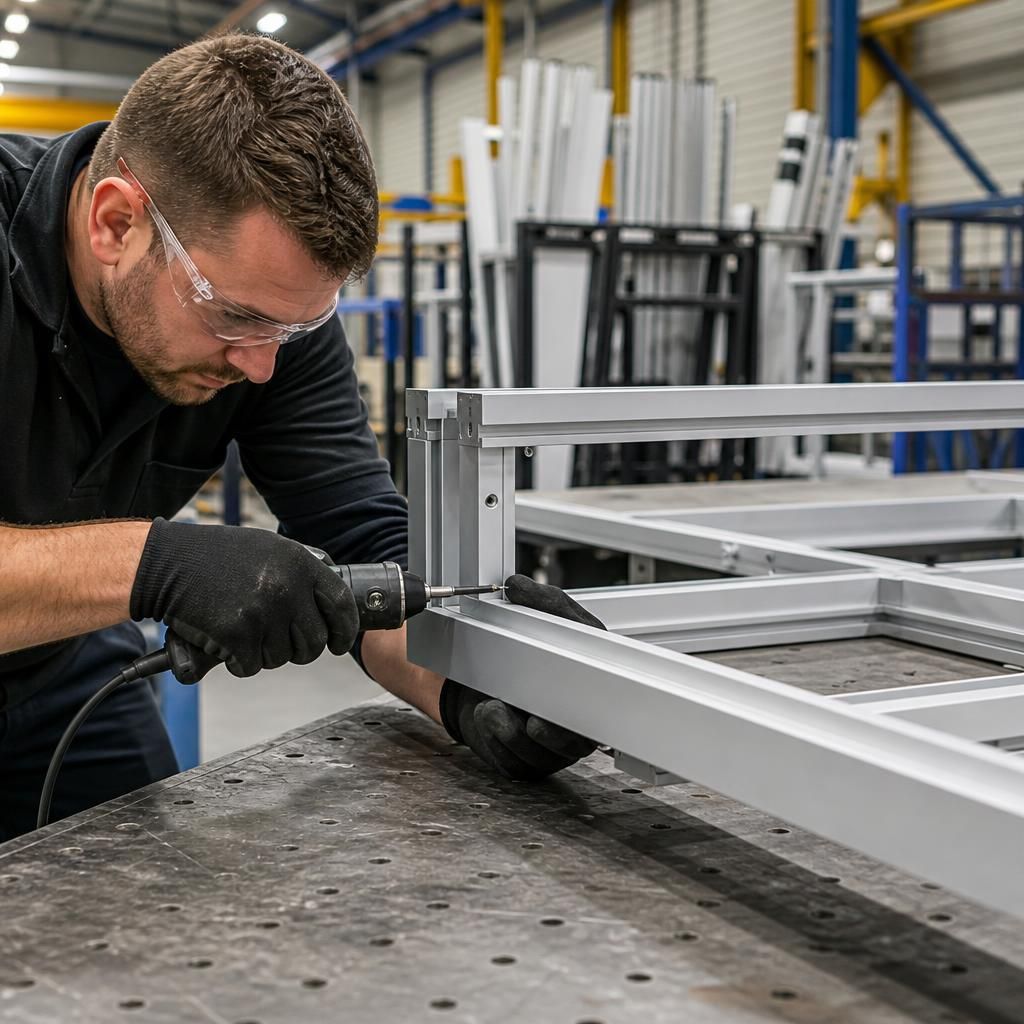
Coating thickness must also be compatible with any work carried out after powder coating. If aluminium frames or tubes are cut, drilled, bent, swaged or machined after finishing, those operations can fracture the film or expose uncoated edges. The thickness specification should therefore be agreed alongside the manufacturing sequence, rather than treating coating as an independent final step.
Where post-coating work cannot be avoided, the drawing should identify which edges and surfaces will be affected and how they will be protected afterwards. In some cases, it is more suitable to complete fabrication first and coat the finished component; in others, damaged areas may need an agreed repair procedure. This prevents a coating that meets its original thickness requirement from being compromised during subsequent production or installation.
Discuss your aluminium coating thickness requirements
Discuss your aluminium coating thickness requirements with a powder-coating specialist, including the component’s service conditions, tolerances and critical surfaces. Providing drawings and application details will help establish a practical coating specification for your frames or tubes.