

What are the benefits of using zinc-rich primers for powder coating repairs in corrosive environments?
Zinc-rich primers help protect exposed steel during powder coating repairs by providing both a physical barrier and sacrificial corrosion protection. In corrosive environments containing moisture, salts or industrial pollutants, they can reduce the risk of underfilm rust and support a more durable repair when properly prepared and compatible with the powder coating system.
The main benefit of a zinc-rich primer in a powder coating repair is that it gives exposed steel an additional level of protection in areas where moisture, salts or industrial contaminants could otherwise initiate corrosion. Its zinc content can provide localised electrochemical protection when the coating is damaged, while the cured primer also forms a prepared surface for the replacement powder coating.
This is particularly useful where a repair includes bare steel around a chip, scratch, cut edge, drilled hole, weld or area of removed coating. These locations are vulnerable because the original powder film has been breached and corrosion can begin at the perimeter of the repair. A suitable zinc-rich layer helps protect the exposed substrate before the powder topcoat is applied and can limit corrosion spreading beneath the surrounding finish.
- Protection at coating defects: zinc particles can continue to protect the steel locally if a small defect reaches the primer, provided the primer has been applied correctly and remains in suitable contact with the substrate.
- Improved resistance at edges and joints: repairs around seams, fixings and fabricated details often have more exposure than broad, intact surfaces. Zinc-rich primers are useful in these concentrated-risk areas.
- Better support for long-term repairs: combining substrate preparation, a compatible zinc-rich primer and a suitable powder finish creates a multi-layer repair system rather than relying on the topcoat alone.
- Suitability for demanding exposure: the additional protection can be valuable on components exposed to persistent dampness, de-icing salts, coastal air, chemical vapours or industrial contamination, although the complete coating specification must match the severity of the environment.
The zinc content is only effective when the formulation and application method allow the particles to perform their intended function. The primer must be applied to clean, sound steel at the specified film thickness. Oil, grease, loose rust, mill scale and poorly adhered coating can prevent proper contact with the metal. Abrasive preparation or another approved preparation method is normally required, followed by removal of dust and contamination before priming.
For powder coating repairs, compatibility is as important as corrosion performance. The zinc-rich primer must be suitable for use beneath the selected powder system and able to withstand its curing cycle. The powder manufacturer or coating supplier should confirm requirements for:
- the type of zinc-rich primer, such as an organic or inorganic formulation;
- the required surface preparation and minimum or maximum primer thickness;
- primer curing, drying and overcoating intervals;
- adhesion between the primer and powder layer;
- resistance to pinholing, bubbling, solvent retention or other defects during powder curing; and
- the repair method where the component cannot be returned to a full factory coating process.
Using too much primer can be as problematic as using too little. An excessive or uneven film may produce surface texture, interfere with powder flow or cause defects during heating. Conversely, gaps, thin areas and unprimed edges leave the steel less protected. Application should therefore be controlled rather than treating the primer as a general-purpose paint applied until the surface looks covered.
A zinc-rich primer is not a substitute for removing active corrosion or correcting the cause of exposure. If water is being trapped by a joint, the component has inadequate drainage, or salts remain on the surface, corrosion may continue despite the primer. The repair should address the substrate condition and the design detail as well as rebuilding the coating layers.
Inspection should cover the prepared steel, the continuity of the primed area and the finished powder coating. Particular attention is needed at feathered coating edges, welds, corners, holes and transitions between old and new finish. Any visible lifting, blistering, pinholing or exposed steel should be assessed before the component is returned to service.
In summary, zinc-rich primers can make powder coating repairs more robust in corrosive environments by protecting vulnerable steel at local defects and helping the repair withstand exposure beyond the immediate topcoat. Their benefit depends on correct preparation, controlled application and proven compatibility with the powder coating system; a zinc-rich product should not be selected solely because it contains zinc.
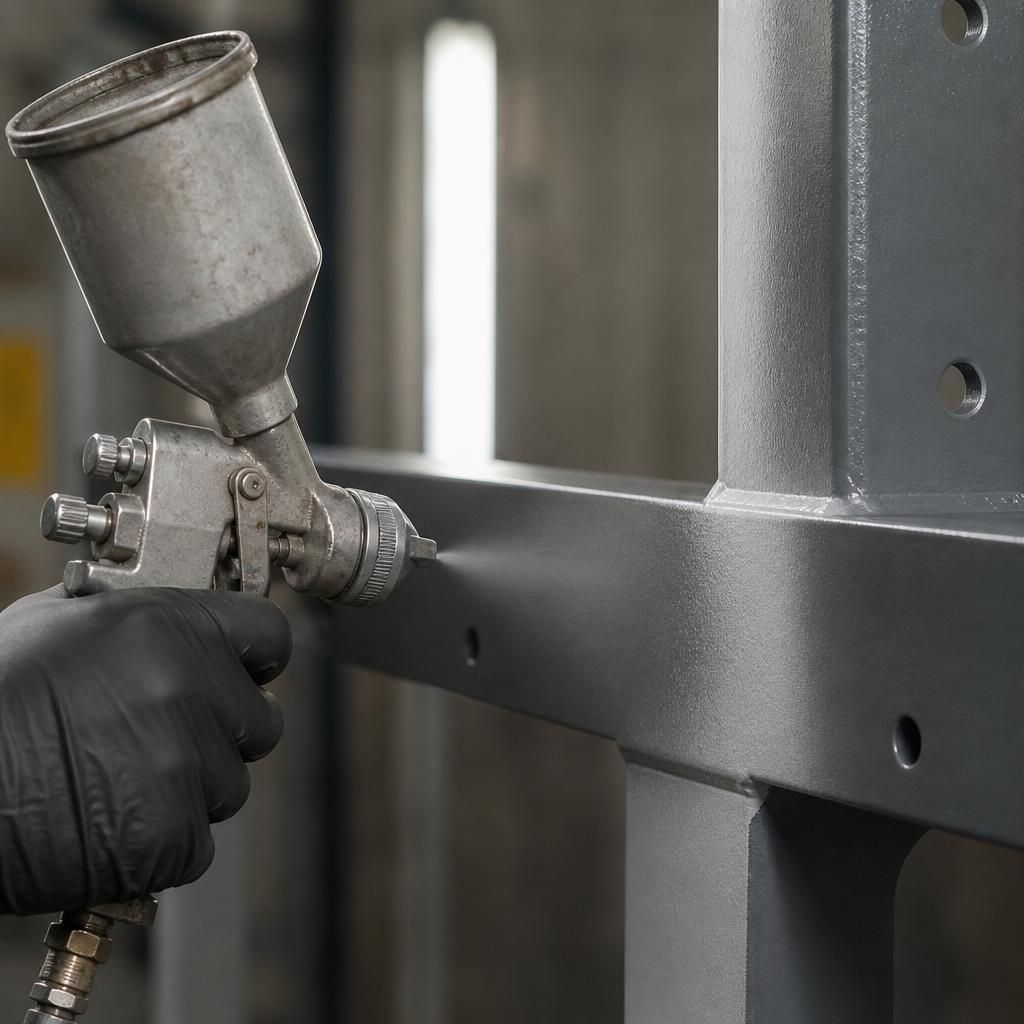
One practical consideration is the effect a zinc-rich primer can have on the appearance of the repaired area. Its metallic pigment and surface profile may influence the colour, texture or gloss of a powder topcoat, particularly where the repair is shallow, the finish has limited opacity or the surrounding coating has a fine texture.
For visible components, the repair specification should therefore consider both corrosion protection and visual uniformity. A small trial area can help assess whether the selected powder provides sufficient coverage and whether the repaired section blends acceptably with the existing finish. This is especially useful on panels, fabricated parts and other components where a technically sound repair must also meet defined appearance requirements.
Discuss zinc-rich primer options for your powder coating repair
If you are assessing a powder coating repair in a corrosive environment, discuss the substrate condition, exposure and existing finish with a coating specialist before selecting a zinc-rich primer. This helps establish whether the primer is suitable for the repair method and compatible with the intended powder coating system.