

What maintenance practices should be implemented to preserve the integrity and performance of an electrostatic powder coating system over time?
Preserve an electrostatic powder coating system by following a planned maintenance routine covering cleaning, inspection, electrical safety, grounding, powder-flow checks and calibration. Remove powder build-up from the gun, hoses, booth and recovery equipment, inspect wear parts and cables for damage, verify earthing and spray settings, and record servicing so faults can be identified before they affect finish quality or production.
Maintaining an electrostatic powder coating system requires more than cleaning the spray equipment. A durable maintenance programme also controls the condition of the compressed-air supply, powder storage, booth environment, curing oven, conveyor and control systems, while using records to identify gradual changes before they affect coating consistency.
Use a planned maintenance schedule. Divide tasks into routine, periodic and condition-based activities. Routine checks can cover the operating environment and process controls, while periodic servicing should address moving assemblies, extraction components, air treatment equipment and oven systems. Follow the equipment manufacturer’s service instructions for replacement intervals and isolation procedures rather than relying solely on a calendar.
Protect the compressed-air supply. Powder application depends on clean, dry and stable air. Drain condensate from air receivers and check filters, regulators, dryers and water separators for deterioration or pressure loss. Oil or moisture entering the powder system can cause poor powder transport, surface defects and inconsistent deposition. Investigate unusual pressure fluctuations instead of compensating by repeatedly changing spray settings.
Manage powder correctly. Store powder in sealed, labelled containers in a clean, dry area away from excessive heat and moisture. Apply stock rotation so older material is used appropriately, and keep different colours, chemistries and batches clearly separated. Do not return contaminated or visibly altered powder to usable stock. Where reclaim powder is used, maintain a controlled blend and record the source material so changes in finish can be traced.
Maintain the booth environment and extraction performance. Stable airflow helps contain overspray and supports consistent powder deposition. Monitor extraction for changes in airflow, unusual noise or excessive loading of filtration components. Check booth seals, access doors and duct connections for air leakage. The correct maintenance method depends on the booth and recovery design, so filters and collection equipment should be serviced in accordance with their specified operating limits.
Keep the curing oven thermally consistent. Powder may appear correctly applied but fail to develop its intended properties if the part does not receive the required cure. Check temperature controllers, probes, burners or heating elements, circulation fans and door seals. Periodically verify temperature uniformity at representative positions in the working zone, particularly after alterations, faults or changes in production loading. Conveyor speed should also be checked because a change in dwell time changes the heat exposure received by the component.
Look after mechanical handling equipment. Inspect conveyor chains, hooks, hangers, bearings and drive components for wear, looseness or restricted movement. Poor contact between a hanger and the component can interfere with the charging process, while vibration or inconsistent conveyor movement can affect coating thickness and oven dwell time. Keep contact points free from excessive cured material and replace damaged hooks or fixtures before they distort the process.
Maintain process controls and records. Record significant settings, powder batch details, oven observations, faults, replaced parts and corrective actions. Trend recurring alarms, pressure changes, temperature drift and coating defects. This creates a useful baseline for distinguishing a material problem from a fault in application, recovery or curing equipment. Back up relevant controller parameters where the system permits it, and restrict unauthorised changes to process recipes.
Use defined acceptance checks. Maintenance should be linked to checks on the finished coating, such as visual uniformity, adhesion, colour consistency and cure-related performance where these are relevant to the specification. A defect found on coated parts should prompt a review of the complete process rather than an immediate adjustment to the spray gun alone. Test methods and acceptance limits should be agreed with the customer or internal quality system for the component’s intended use.
Train operators and keep suitable spares. Operators should know which conditions require the line to be stopped, which adjustments are permitted and how to report abnormal sounds, alarms, defects or material changes. Keep approved replacement items such as seals, filters, hoses, nozzles, probes and conveyor wear parts identified in the maintenance system. Using unsuitable substitutes can alter powder delivery, air performance or cure control.
A well-maintained system is therefore managed as a complete process: material handling, air preparation, application, extraction, movement, curing and documentation must remain within their intended operating conditions. This approach reduces avoidable variation and helps preserve reliable finish quality over the working life of the equipment.
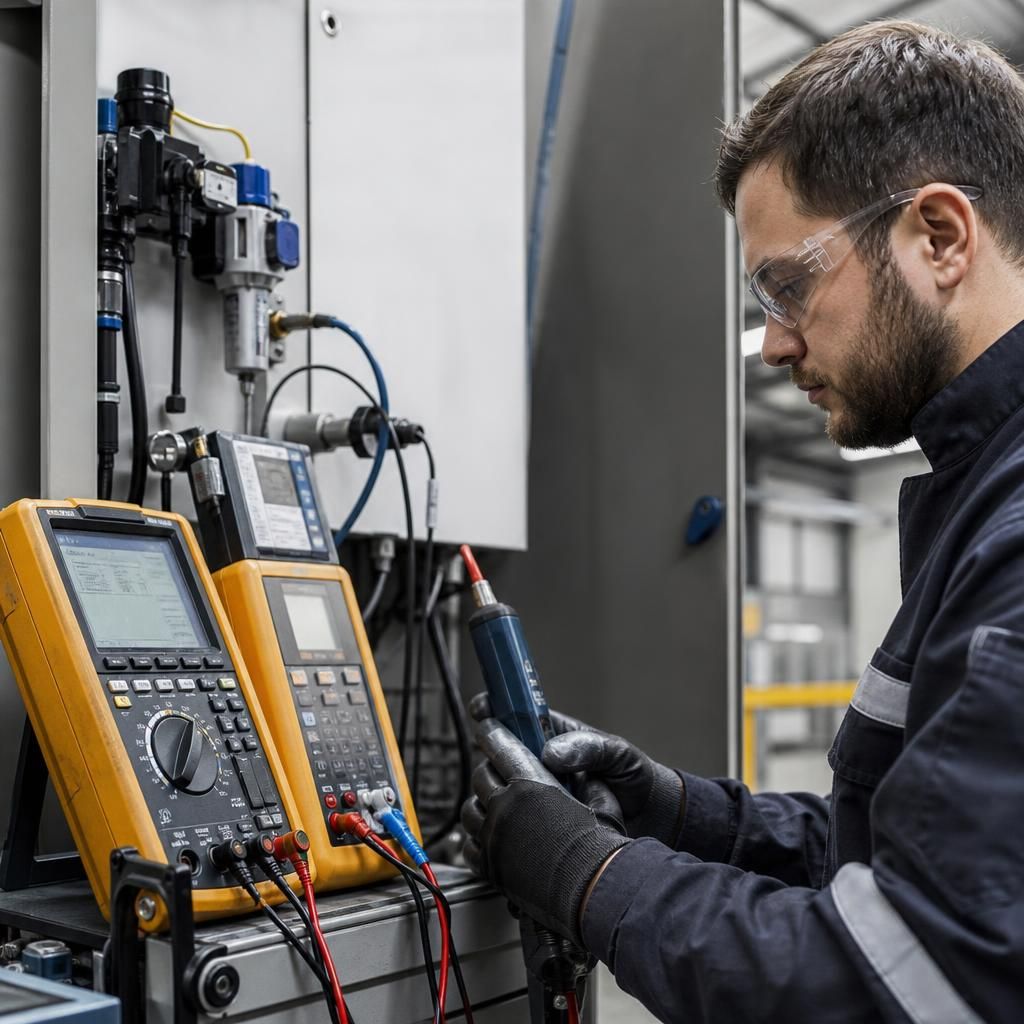
Calibration checks confirm that an electrostatic powder coating system is measuring and delivering its process conditions accurately, rather than merely appearing to operate normally. Verify the accuracy of relevant voltage, current, pressure, temperature and flow readings against suitable reference equipment, following the system manufacturer’s procedure.
Calibration should be reviewed after electrical repairs, replacement of sensors or control components, unexplained changes in transfer efficiency, or repeated finish defects that cannot be traced to powder or substrate preparation. Record the instrument used, the observed reading, any adjustment made and the next review point. This creates a reliable reference for separating genuine process changes from faulty measurement and prevents operators from compensating for inaccurate readings with unsuitable equipment settings.
Discuss Your Electrostatic Powder Coating System Maintenance Needs
Contact Powder-coatings.co.uk to discuss your electrostatic powder coating system maintenance requirements and identify suitable inspection or servicing priorities. Providing details of your equipment and recurring process issues will help focus the discussion on practical next steps.