

What are the best practices for ensuring the longevity and quality of nylon coatings when dealing with large-scale metal components?
Long-lasting nylon coatings on large metal components depend on a coating specification suited to the substrate and service conditions, consistent application and curing, and careful inspection of coverage, adhesion and finish. Controlling component handling, storage and subsequent maintenance also helps protect the coating from avoidable damage during service.
The best way to extend the life and maintain the quality of a nylon coating on large metal components is to control the whole coating system rather than treating application as a single finishing step. The substrate, nylon material, component design, application conditions, curing profile, inspection method and handling procedure must all be suitable for the component’s intended service.
Define the service requirements first. Before processing begins, identify the operating conditions that the coating will face. These may include abrasion, impact, moisture, cleaning chemicals, temperature changes, outdoor exposure and contact with other materials. The required nylon coating should then be selected for those conditions and for the metal substrate. A coating that performs well on an indoor fabricated part may not be appropriate for a component exposed to repeated mechanical wear or aggressive cleaning.
Large components often contain several areas with different demands. Edges, corners, apertures, welds, brackets and contact points may experience more wear than broad, flat faces. The specification should therefore address the complete component, including areas that are difficult to reach with the coating equipment. Where the component has a complex profile, the racking and application plan should be agreed before production so that all relevant surfaces can be coated consistently.
Design the component and its supports for coating. Drainage and ventilation points are important where the component is hollow, enclosed or contains fabricated sections. Trapped moisture, cleaning residue or process material can affect the finish and may emerge during heating. Suitable lifting points and robust racking also reduce the risk of contact marks, distortion or damage while large parts are being moved through the process.
Racking should support the component securely without unnecessarily shielding surfaces from the coating. Contact points need to be positioned deliberately, as they can leave small uncoated areas or marks. For repeat work, using a consistent jig or hanging arrangement helps make the coating position and contact locations repeatable from batch to batch.
Keep the process consistent across the full component. Large metal parts can present greater process variation than small, simple items. Differences in mass, thickness and geometry affect how the component heats and cools. The process should be controlled so that the coating receives the intended treatment across lighter sections, heavy weldments, recessed areas and exposed faces. This requires suitable oven loading, correct component positioning and monitoring of the process rather than relying only on the oven’s displayed setting.
Batch work should be organised so that components with comparable material, geometry and thermal behaviour are processed together where practical. Changes between batches should be recorded, particularly where there are differences in substrate, coating specification or component size. Traceable job information makes it easier to investigate variation and reproduce an acceptable finish on future production runs.
Control coating coverage and appearance. Visual inspection should look beyond colour and general appearance. Check for missed areas, thin coverage, runs, contamination, pinholes, inclusions, roughness, orange peel and visible damage. Particular attention is needed around corners, recesses, welds, edges and areas close to racking contacts. Large surfaces can make minor variation more noticeable, so inspection should be carried out under suitable lighting and from more than one viewing angle.
Where the specification requires it, use an appropriate coating thickness measurement method and define where readings are taken. Measurements should represent the component rather than relying on a single convenient location. The acceptable range must come from the coating specification and service requirement: excessive build can affect fit, flexibility or appearance, while insufficient coverage can reduce protection and wear resistance.
Protect the finish after processing. Nylon coatings can be damaged by careless lifting, stacking or contact with unprotected steel fixtures. Components should be separated with clean, compatible supports and should not be dragged across one another. Packaging needs to prevent rubbing, impact and contamination during internal movement, transport and storage. Large coated items should be secured in a way that avoids concentrated pressure on edges or finished faces.
Maintenance should use cleaning methods compatible with the nylon coating. Remove abrasive deposits with a suitable non-damaging method, avoid harsh chemicals unless their compatibility has been established, and investigate any chips, scratches or areas of lifting rather than covering them without identifying the cause. Early repair is generally easier when damage has not allowed contamination or corrosion to develop at the coating interface.
For manufacturers, fabricators and other commercial users, the most reliable approach is to document the coating specification, component orientation, racking arrangement, process conditions, inspection findings and any repairs. This creates a repeatable control plan for large-scale work and helps distinguish a coating defect from damage caused during assembly, transport or service. Specialist powder coating providers serving businesses across the Midlands can also review the component design and production requirements before processing, with collection and delivery options available where required.
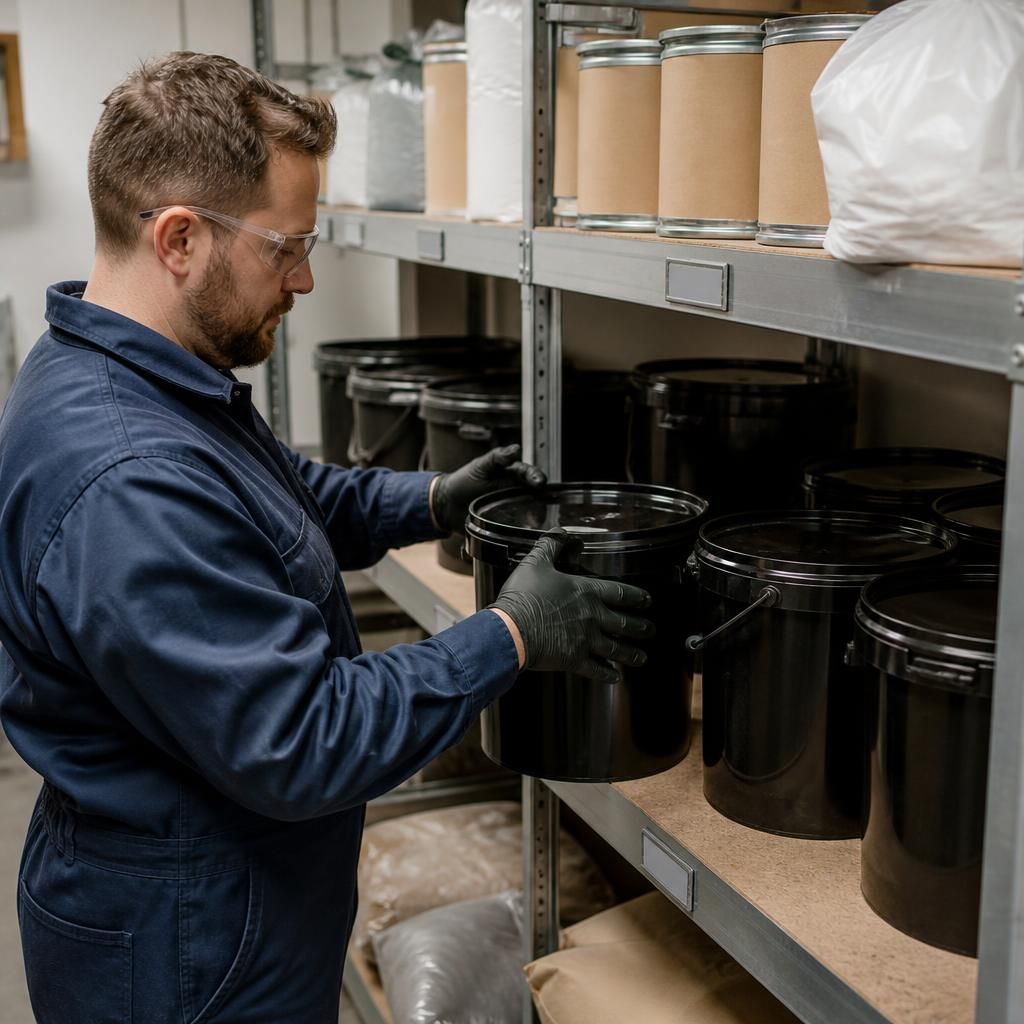
For large-scale metal components, nylon coating quality also depends on how the powder is stored and managed before application. Nylon powders can be sensitive to moisture and contamination, so they should be kept in sealed, clearly identified containers under the conditions specified for the material. Powder that has been exposed to damp air or mixed with foreign material may affect transfer, surface appearance and the consistency of the finished coating.
Production controls should include checking the powder condition before use, preventing contact with dirty equipment and separating different coating materials. Any reclaimed powder should only be reused where the coating specification and process controls allow it; uncontrolled mixing can alter the finish and make batch results harder to reproduce. For large components, these precautions are particularly important because defects or variation across a substantial surface can be difficult to correct after processing.