

What cutting-edge technologies should be considered when upgrading to an advanced powder coating system to ensure future-proof efficiency and output quality?
When upgrading an advanced powder coating system, consider smart process controls, real-time temperature and film-thickness monitoring, energy-efficient curing, automated powder recovery and data logging. Choose modular equipment with scalable software and adaptable interfaces so the system can support consistent output quality, efficient production and future process changes.
The most useful cutting-edge technologies for an upgraded powder coating system are those that improve powder application precision, changeover control, defect detection, equipment connectivity and operational safety. The best upgrade is not necessarily the newest individual machine; it is a compatible combination of technologies that can be integrated with existing ovens, booths, conveyors and production procedures without creating isolated systems or unnecessary complexity.
Advanced electrostatic application equipment should be considered where finish consistency and powder utilisation are priorities. Modern spray guns can provide more controlled voltage and current regulation than older equipment, helping the operator or application system match the electrostatic charge to the part, powder type and geometry. This is particularly relevant for components with recesses, edges, Faraday cage areas or varying surface profiles. Improved powder pumps and feed systems can also deliver a more stable powder-air mixture, reducing fluctuations in application and supporting repeatable coverage across batches.
For a system handling several colours or powder types, automated colour-change technology can have a significant effect on production efficiency. Enclosed powder paths, purge systems and tool-free gun or hose connections can reduce residual powder in the circuit during a changeover. The specification should address not only the time required to change colour, but also the level of cross-contamination that remains afterwards. This matters when switching between contrasting colours, specialist powders or finishes with different application characteristics.
Machine vision and inline inspection are increasingly valuable additions. Cameras positioned at suitable points in the line can identify visible issues such as missed areas, contamination, runs, inclusions, inconsistent colour appearance and surface defects. A vision system should be selected according to the finish being inspected: gloss, texture, metallic effect and dark colours can each present different inspection challenges. Vision does not replace a properly defined inspection procedure, but it can provide a more consistent first check and help identify recurring faults before a large batch is completed.
Where components have complex shapes, three-dimensional scanning and geometry-aware inspection can provide more useful information than a simple two-dimensional camera view. Scanning can create a digital representation of a part for checking coverage around holes, flanges, returns and recessed sections. It can also support more consistent positioning and help assess whether a fixture or hanging arrangement is exposing all required surfaces. This technology is most worthwhile when component geometry varies or when missed coverage would lead to significant rework.
Modern booth and air-management technology should also be assessed during an upgrade. Variable-speed extraction, improved airflow balancing and pressure monitoring can help maintain stable booth conditions as filters load or production requirements change. Booth design should provide sufficient access for cleaning and inspection, while conductive construction and suitable earthing help manage electrostatic risks. The correct arrangement depends on the powder, component dimensions, throughput and recovery method, so airflow must be validated rather than judged solely by extraction capacity.
Emerging powder chemistry and application methods may offer another route to future-proofing. Low-temperature powders, thin-film formulations and specialist powders for particular corrosion, chemical or wear requirements can alter the technical demands placed on the line. Some newer systems may require different application settings, cure profiles or substrate preparation. A proposed powder should therefore be tested on representative components, including the actual substrate, edge conditions and required film build, before the equipment is committed to a new operating range.
Safety and compliance technology is essential when upgrading high-voltage application equipment, extraction systems and combustible powder-handling areas. Consider monitored earthing, access interlocks, emergency isolation, fire detection and suitable protection against dust-related hazards. The design should be reviewed against applicable UK requirements, including the principles of DSEAR where relevant, and the complete installation should be assessed rather than treating each machine as a separate item. Safety controls must remain effective during cleaning, maintenance, colour changes and fault conditions.
Finally, specify equipment using open, documented interfaces and replaceable components where possible. This makes it easier to add inspection devices, new application equipment or revised handling arrangements later without replacing the entire line. Before selecting a technology, compare its compatibility with existing plant, powder formulations, part sizes, maintenance skills, cleaning procedures and quality requirements. A controlled trial using representative production parts is usually more informative than a demonstration on a simple test panel, because it reveals how the proposed technology performs across the geometries and finishes the system must actually process.
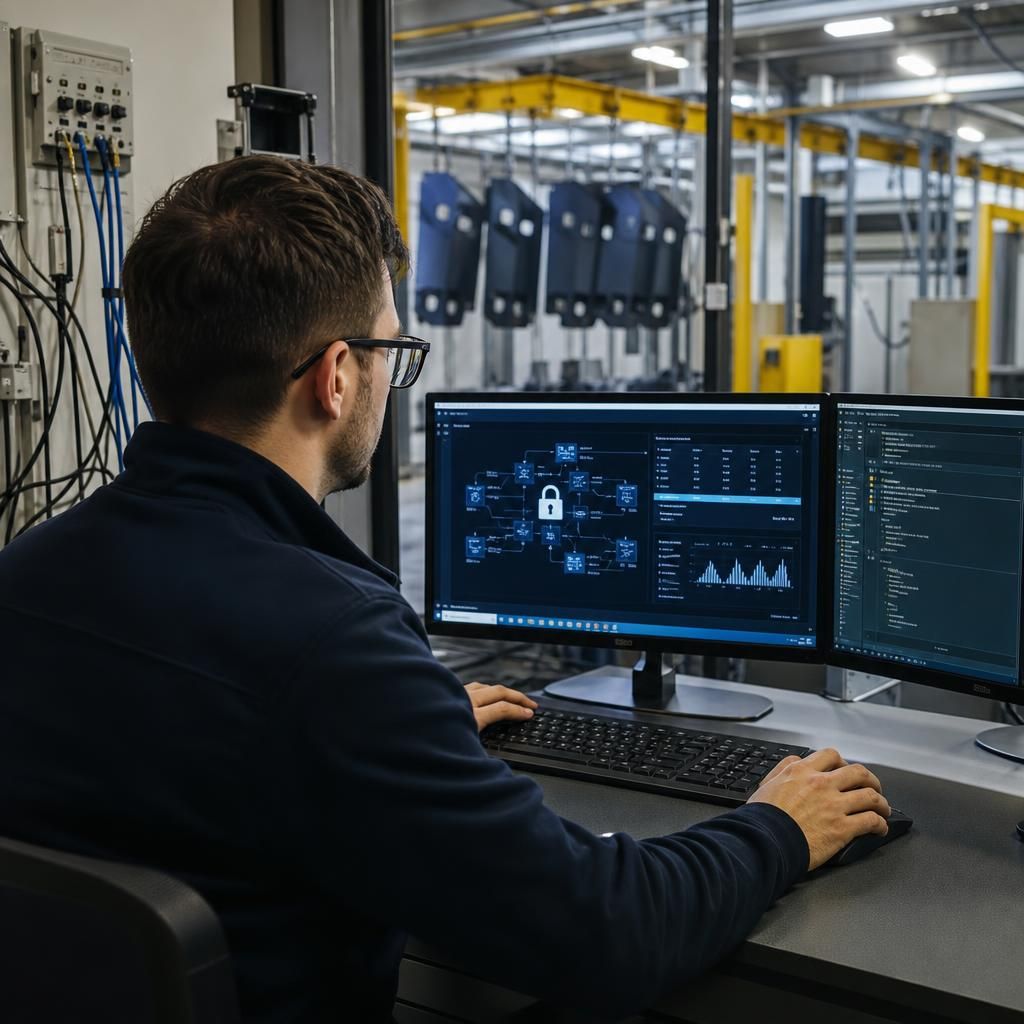
Cybersecurity and software lifecycle management should be included when upgrading to a connected powder coating system. Networked controllers, inspection equipment and production records can introduce risks that are not present in isolated machinery, particularly if remote access, wireless connections or shared factory networks are used. The system specification should therefore define user permissions, secure authentication, network separation and controlled remote access before equipment is installed.
Future-proof software also requires a clear approach to backups, updates and data ownership. Production recipes, alarm histories and quality records should be backed up in a usable format, with changes to control software recorded and reversible where practical. Confirm that essential functions remain available if a network connection fails, and establish who can apply updates, support the system and recover its configuration. These provisions help prevent an otherwise capable powder coating line from becoming dependent on obsolete software or inaccessible data.