

What are the long-term maintenance considerations for components coated with thermoset powder paint to ensure sustained performance and appearance?
Long-term maintenance of components coated with thermoset powder paint involves regular cleaning, inspection and prompt attention to damage, while controlling exposure to chemicals, moisture, abrasion and excessive heat. Use suitable cleaning methods, check for chips, corrosion, blistering, fading or loss of adhesion, and repair or recoat affected areas according to the coating specification to preserve both protection and appearance.
Long-term maintenance of thermoset powder-painted components is primarily a matter of managing the complete coating system, not simply cleaning the visible surface. Sustained performance depends on the original substrate preparation, powder specification, film integrity, component design, operating environment and the quality of any subsequent repair. A documented maintenance plan should therefore link each component to its coating specification and intended service conditions.
Retain the coating and application records
Keep the powder manufacturer’s technical information, colour reference, gloss level, substrate details, preparation method and curing requirements with the component records. This information is important when a part needs touching up, recoating or replacing. A colour name alone may not identify the correct repair material, particularly where the component requires a primer, a specific resin chemistry or a defined level of corrosion protection.
Records should also note any changes in use, location or surrounding process. A component originally installed indoors may later be exposed to outdoor conditions, cleaning agents, production fluids or more demanding mechanical service. Reviewing the coating specification when the operating environment changes helps prevent a maintenance treatment from being selected on appearance alone.
Assess the whole component, including interfaces
Powder coating performance can be affected by areas that are difficult to see, such as folded edges, recesses, joints, fixing points, drilled holes and contact faces. Pay particular attention to locations where water, process residue or debris can collect, and where the coating may have been disturbed during installation. Drainage paths should remain clear, while seals and jointing materials should be checked for deterioration that could allow moisture behind the coating.
Maintenance should also consider fasteners, brackets and dissimilar metals in contact with the coated part. Movement, trapped contamination or galvanic interaction at an uncoated edge can create a local problem that is not apparent on the main painted surface. Where components are dismantled, avoid dragging, levering or clamping directly against finished faces, and protect exposed edges before reassembly.
Control mechanical damage during service
Thermoset powder paint is hard and durable, but it is not immune to impact from handling equipment, tools, vibration or repeated contact. The most effective long-term measure is often procedural: use suitable lifting and storage protection, prevent metal-to-metal contact where practical, and review handling points after recurring damage is found. If a particular edge or fixing area is repeatedly marked, changing the handling method or adding a suitable protective interface may provide a more lasting solution than repeated touch-up work.
Do not use a damaged coating as a basis for tightening, grinding or welding without considering the surrounding finish. Such work can enlarge the affected area and leave a repair boundary that is more vulnerable than the original surface. Any modification should be followed by suitable preparation and a repair system selected for the service environment.
Use a controlled repair method
Thermoset coatings form a crosslinked film during curing, so they cannot be softened and re-melted in the way a thermoplastic coating can. A local defect must therefore be prepared and overcoated rather than healed by reheating the existing finish. The usual repair sequence is to remove loose material, eliminate any underlying corrosion, prepare a sound keyed edge and apply a compatible repair coating in accordance with its technical instructions.
- Define the full extent of the defect rather than covering only the most visible mark.
- Feather the boundary between sound and damaged coating to reduce a sharp edge.
- Remove dust, residues and corrosion products before applying repair material.
- Use a primer where the specification requires additional protection or adhesion.
- Allow the repair to cure under the conditions stated for that product.
- Record the repair location, materials used and any remaining limitation on service.
A local repair may restore protection without reproducing the original colour, texture or gloss exactly. Where appearance is critical, or where damage is widespread, a full strip and recoat may provide a more consistent result. The decision should be based on coating condition, component function, access, substrate condition and the required visual standard.
Review performance against the service environment
Maintenance intervals should reflect actual exposure rather than a generic calendar. Components used in sheltered internal areas may need a different review frequency from those installed outdoors, near manufacturing processes or in locations subject to frequent handling. Establish measurable acceptance criteria, such as permissible coating damage, visible substrate exposure, loss of finish uniformity or deterioration around joints. This makes inspections more consistent between maintenance personnel and across batches of components.
Trend information is useful. Repeated defects in the same location can indicate a design, installation or process issue rather than ordinary ageing. Examples include insufficient clearance between moving parts, poor drainage, unsuitable packing materials or a curing problem affecting a particular production batch. Escalating recurring findings for technical review can prevent isolated repairs from becoming a cycle of repeated failure.
Plan for refurbishment or replacement
When a component approaches the end of its practical coating life, assess it before the substrate becomes extensively compromised. A professional refurbishment normally involves removing the existing coating where necessary, treating the substrate, checking dimensions and interfaces, and applying a new coating system suited to the current environment. Coating over an unstable or poorly prepared surface can conceal deterioration without resolving its cause.
For batch-manufactured parts, retain a representative reference sample or approved finish record where colour and appearance matter. This supports consistent decisions during future refurbishment and helps distinguish normal variation from a genuine change in coating condition. Long-term maintenance is most effective when it combines sound records, controlled handling, environment-specific review and technically compatible repair rather than relying on cosmetic treatment alone.
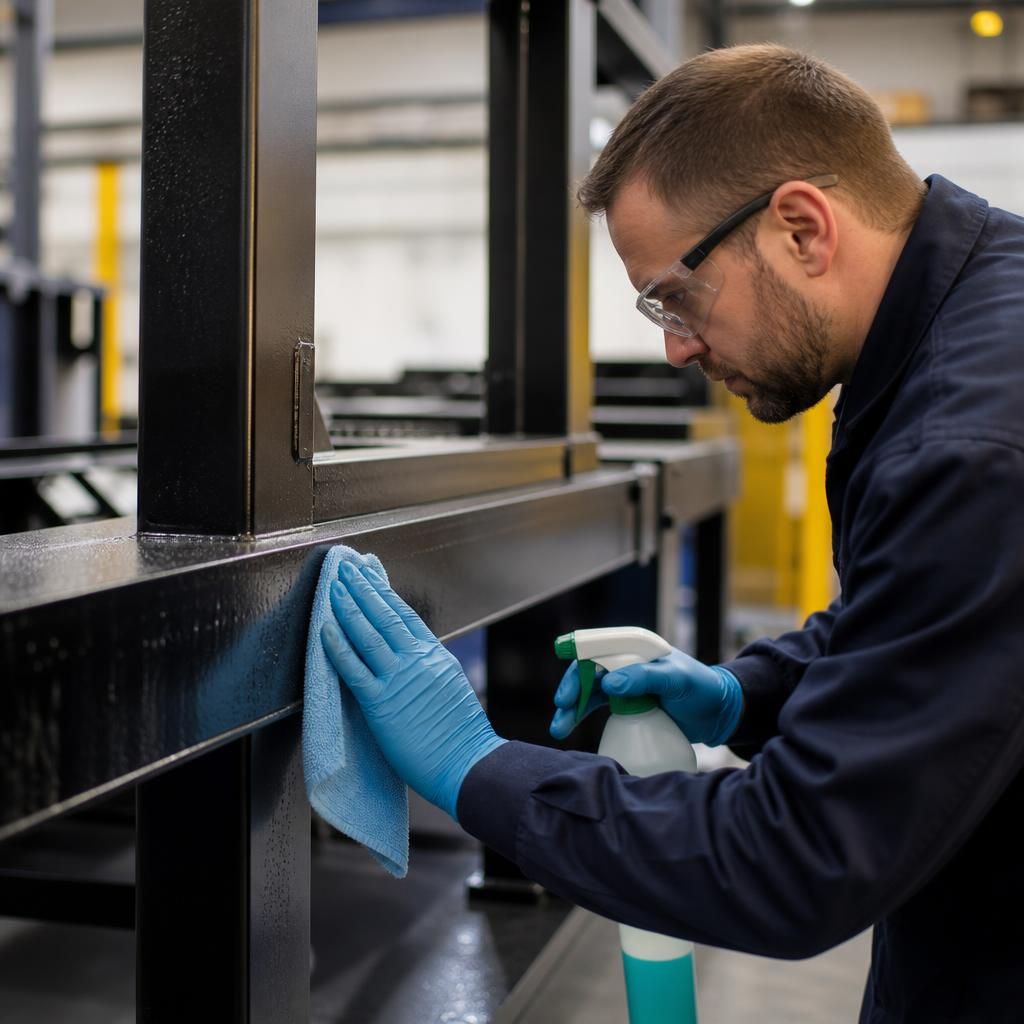
Routine cleaning helps thermoset powder paint retain its appearance and limits the build-up of substances that can attack the coating or hold moisture against the metal. Use clean water with a mild, coating-compatible detergent and a soft cloth, sponge or non-abrasive brush. Rinse away detergent and contaminants thoroughly, then dry the component, particularly around joints, recesses and horizontal surfaces.
Avoid abrasive pads, aggressive solvents, highly alkaline or acidic cleaners and uncontrolled high-pressure washing, as these can mark the finish or force water into vulnerable interfaces. Before adopting a cleaning product across a production site, check its suitability with the coating specification and test it on a small, inconspicuous area. Cleaning frequency should reflect the type and concentration of contamination rather than appearance alone; industrial residues, salts and chemicals should not be allowed to remain on the surface.
Discuss your thermoset powder paint maintenance requirements
Discuss your component’s operating environment, finish requirements and planned maintenance approach with the powder-coating team to identify a suitable thermoset coating specification. Provide relevant drawings, substrate details and service conditions so any recommendation can be assessed against the component’s intended use.