

What are the implications of choosing a powder coat finish with specific RAL colours in matt versus gloss for achieving brand consistency across different metal components?
Using the same RAL colour in matt and gloss does not produce the same visual result: gloss reflects more light and appears deeper or more vivid, while matt diffuses light and gives a flatter, softer appearance. For consistent branding across different metal components, specify the RAL colour and finish together, then apply that specification consistently while considering how component shape, substrate and lighting affect perceived colour.
Brand consistency depends on controlling the RAL colour and the surface sheen as one coating specification. A RAL reference identifies the colour family, but it does not by itself define whether the finished component will have a matt, semi-gloss or gloss appearance. Using the same colour reference across a product range therefore requires a controlled finish description, agreed samples and consistent quality checks.
The main implications are:
- Matt and gloss should be treated as separate finish options. A matt version of a RAL colour can appear more muted, while a gloss version may look more saturated or visually darker because of its stronger reflections. They should not be substituted for one another where colour matching is important.
- Finish terminology needs to be precise. Descriptions such as “black matt” or “RAL colour gloss” may leave too much room for interpretation. The specification should identify the RAL reference, the required sheen level or finish category, the coating type where relevant, and any acceptable variation agreed for production.
- Approved reference panels are useful for sign-off. A physical panel in the selected colour and finish gives stakeholders a more reliable reference than a screen image or printed swatch. Digital displays and print materials can alter the apparent colour, whereas an approved coated panel can be used when reviewing production samples and retained for future comparison.
- Parts for the same branded product should be planned together. If housings, brackets, covers and frames are coated at different times or by different processes, their appearance may not align even when the paperwork names the same RAL colour. Grouping compatible components into a controlled coating plan can reduce avoidable variation.
- Surface preparation affects the visual result. Differences in pretreatment, substrate condition, edge coverage and coating build can alter how uniformly the colour and sheen appear. Consistent preparation and application are particularly important when adjacent parts are expected to read as one branded assembly.
- Gloss can make surface defects more visible. Reflections on a glossy finish may highlight waviness, handling marks, inclusions or minor preparation imperfections. Matt finishes tend to reduce direct reflections, although they are not immune to visible defects or uneven coating. The selected sheen should therefore suit both the desired brand appearance and the expected visual standard for the component.
- Component orientation and viewing conditions should be considered during approval. Large flat panels, folded sections, perforated parts and cylindrical items can reflect light differently. Samples should be reviewed under representative lighting and from normal viewing distances rather than judged only under one inspection light.
For a multi-component product, a useful specification records the RAL reference, finish description, approved sample identification, substrate and preparation requirements, and the inspection method. It should also state which surfaces are appearance-critical and whether hidden or internal areas require the same finish. This prevents a general colour reference from being interpreted differently by production, purchasing and inspection teams.
Where components are supplied in separate batches, retain coating records and compare each batch with the approved reference. Visual checks should look for uniformity within an individual part and consistency between mating or adjacent parts. If tighter colour control is required, an agreed instrumental measurement method can supplement visual assessment, but the acceptance limits must be established in advance and applied consistently.
Brand consistency does not always mean that every metal part must have identical sheen. A design may deliberately use a matt body with gloss details, for example, provided the distinction is documented and repeated consistently. The important point is that each finish has a defined role and that components are not allowed to move between matt and gloss simply because the RAL reference remains unchanged.
Before production, confirm the finish against the intended brand guidelines, inspect a representative coated sample and identify which parts will be seen together. For repeat work, use the same approved specification and reference sample rather than relying on memory or colour names alone. This approach makes the choice between matt and gloss a controlled branding decision rather than an informal variation in surface appearance.
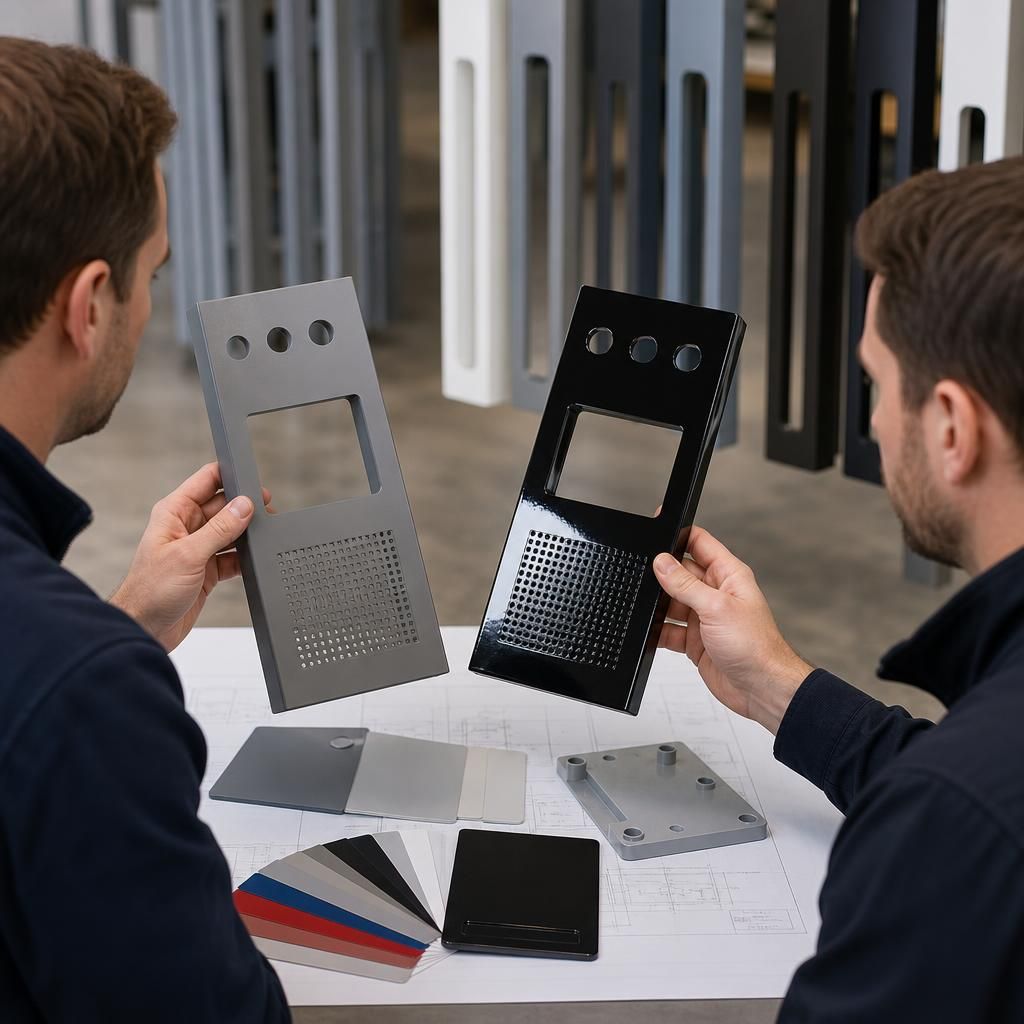
Brand consistency can be affected when powder-coated metal components sit beside plastics, anodised aluminium, wet-painted parts or printed graphics. A matching RAL reference does not make different surface technologies appear identical: their texture, reflectivity and colour depth can vary. Where coated parts form part of a wider branded assembly, assess the matt or gloss finish alongside the neighbouring materials rather than approving the metal component in isolation.
This is particularly important for visible interfaces such as bezels, enclosures, panels and control housings. A gloss powder coat may create a stronger visual contrast against a low-sheen material, while a matt finish may integrate more quietly. The preferred option should therefore be recorded as part of the product’s visual design, with the relationship to adjacent materials clearly defined for future component revisions and replacement work.