

How can I ensure that the powder coating process for steel is compliant with industry standards and regulations?
Ensure the powder coating process for steel follows the relevant UK regulations and agreed industry specifications by controlling pre-treatment, coating thickness, curing conditions and inspection requirements. Use documented procedures, calibrated equipment, suitable safety and environmental controls, and retain batch records and test results to demonstrate that each component meets the required specification.
Compliance for powder coating steel depends on matching the coating system to the component’s intended use, then demonstrating that the work satisfies the applicable legal duties, technical standards and customer specification. There is no single regulation that covers every steel part. Requirements vary according to exposure, appearance, structural function, location and whether the component forms part of a regulated product.
Begin with a written compliance specification. Before production, identify the steel grade, component use, expected environment, required appearance, corrosion-protection objective, coating type and acceptance criteria. The specification should also state which standard takes priority if contractual requirements and general industry guidance differ. This prevents a coating being judged against an unsuitable standard after the work has been completed.
For external or corrosive environments, the specification may refer to the BS EN ISO 12944 series, which provides a framework for selecting protective paint systems according to corrosivity and durability expectations. It is not a blanket approval for every powder coating system: the selected powder, substrate preparation and application method must still be suitable for the stated environment. For general powder-coating quality, relevant parts of the ISO 8130 series may be used for particular test methods and powder characteristics.
Where a project calls for a recognised quality scheme, the exact scheme and edition should be named in the contract rather than relying on a general reference to “industry standard”. A scheme such as Qualicoat may impose requirements for approved materials, production controls and testing, but it should not be claimed unless the organisation and the specific work fall within the required certification scope. The same principle applies to any customer approval or sector-specific qualification.
Check the legal requirements separately from technical standards. Standards are often contractual or industry requirements, whereas legislation creates legal duties. A steel coating operation should be assessed against the requirements that apply to its activities, including:
- Health and safety: duties under the Health and Safety at Work etc. Act, COSHH controls for powders, pretreatment chemicals and cleaning substances, and suitable control of dust, vapour, noise, lifting and stored energy.
- Workplace and equipment safety: safe operation and maintenance of ovens, spray equipment, extraction systems, compressed-air systems and handling equipment, with risks assessed for the actual installation.
- Fire and explosion risk: powder dust, combustible residues and ignition sources should be considered under the Dangerous Substances and Explosive Atmospheres Regulations where applicable.
- Environmental controls: chemical storage, discharge, waste classification, packaging and disposal must be managed in line with the relevant environmental and waste requirements. Waste transfer and consignment evidence should be retained where required.
- Chemical legislation: substances and mixtures used in the process should be supported by current safety information and managed in accordance with applicable UK REACH and related chemical-safety obligations.
Additional requirements may apply when coated steel is incorporated into a construction product, safety-critical assembly, vehicle component or other regulated product. For structural steelwork, for example, the project may specify requirements associated with execution, factory production control and conformity assessment under the relevant construction framework. The coating provider should establish whether it is responsible only for the finish or also for evidence required for the completed product.
Control the supply chain. Use coating powders and chemicals that are identified by product name, batch or lot reference, technical data and safety documentation. Check that the selected material is approved for the intended substrate and service conditions. Any substitution should be reviewed against the specification before use; a visually similar powder is not automatically an equivalent product in terms of chemical resistance, weathering or corrosion performance.
Define responsibilities between the steel fabricator, coating company and final manufacturer. Important questions include who approves the coating system, who confirms the steel condition, who authorises deviations, who releases non-conforming parts and who submits the compliance dossier. Written acceptance of changes is particularly important where the coating affects assembly, electrical continuity, tolerances, welding, bonding or product certification.
Use objective evidence rather than appearance alone. A sound compliance dossier normally links the job specification to the supplied materials, production batch, test results, non-conformance decisions and final release. Evidence may include supplier declarations, safety data, approved-system information, laboratory reports, photographs where appropriate and records showing that personnel were competent for their assigned tasks. The evidence should be traceable to the relevant components or batch, not merely retained as generic plant paperwork.
Testing should be selected for the service requirement. Depending on the specification, this can include adhesion, coating continuity, visual appearance, corrosion resistance, chemical resistance, weathering or mechanical performance. Test methods, sample selection, conditioning and pass criteria should be agreed in advance. A result is meaningful only when the method and acceptance limit are identified; terms such as “high quality” or “industrial grade” do not provide a measurable compliance standard.
Finally, review the finished compliance pack before delivery and retain it for the period required by the contract, certification scheme or applicable legal duty. If a result falls outside the agreed requirement, quarantine the affected work, record the decision and obtain an authorised disposition before release. This approach allows a business to demonstrate not only that the steel was coated, but that the coating system was selected, applied and accepted against requirements that are appropriate to its intended use.
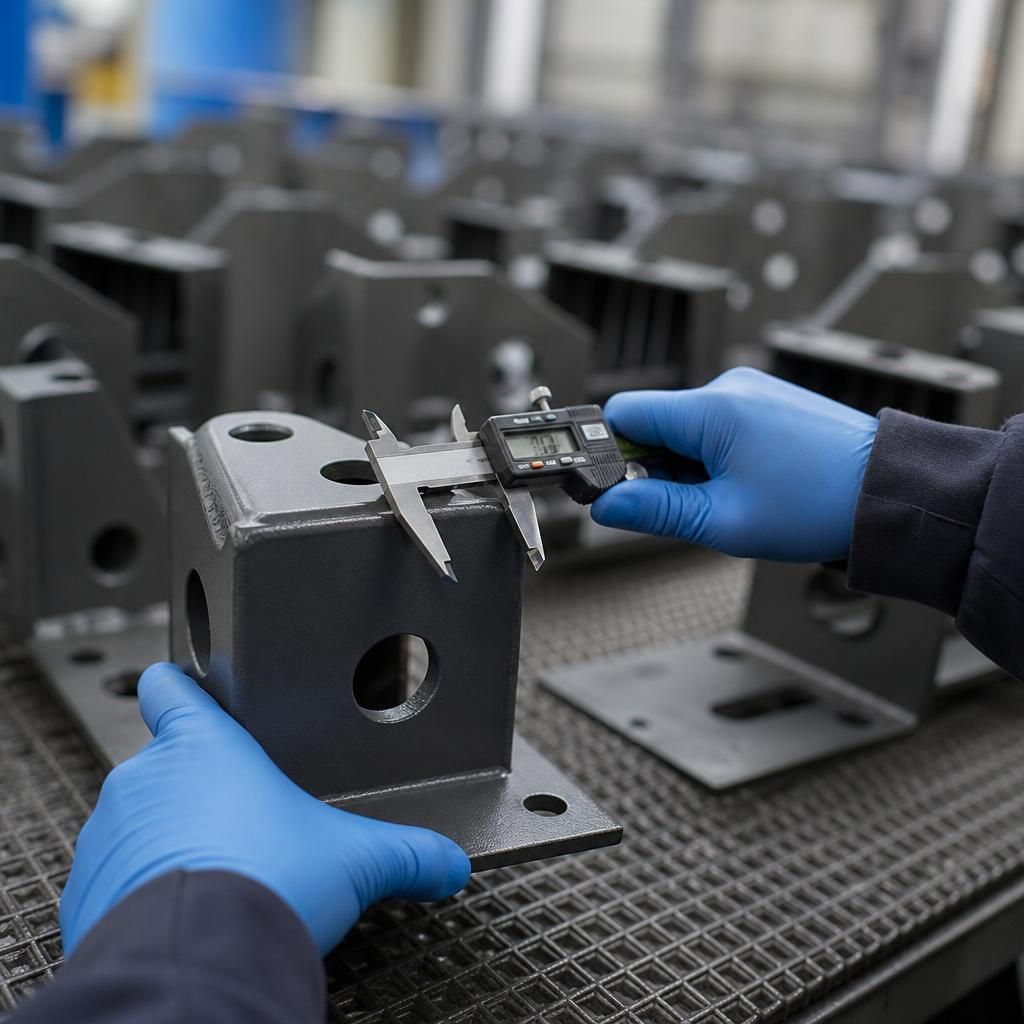
Compliance also includes confirming that the coating will not interfere with the steel component’s fit or function. Powder thickness can affect threads, mating faces, apertures, earthing points and close-tolerance assemblies, while overspray on masked areas may prevent correct installation.
Before coating, identify surfaces that must remain uncoated or meet a tighter dimensional requirement. Use an agreed masking plan, define acceptable build-up and inspect critical features after curing. Recording these checks alongside the coating batch records provides evidence that the finished part meets both its coating specification and its intended engineering purpose.
Discuss your steel coating compliance requirements
Discuss your steel coating compliance requirements with Powder-coatings.co.uk, including the component’s intended use, specification and evidence required for release. Providing these details at the outset helps establish the appropriate coating and inspection requirements for your project.