

How do specialised coatings, such as nylon and corrosion-resistant options, enhance the performance and longevity of metal components in specific industries?
Specialised coatings improve metal components by adding protection matched to their operating conditions: nylon coatings provide a tough, wear-resistant surface, while corrosion-resistant coatings help shield metal from moisture, chemicals and corrosive environments. This can extend service life and maintain component performance in sectors such as manufacturing, construction and automotive, where parts may face abrasion, impact or exposure to damaging substances.
Specialised coatings enhance metal components by tailoring the finished surface to the component’s operating demands. Rather than using a standard decorative finish for every application, the coating system can be selected for requirements such as abrasion resistance, electrical insulation, chemical exposure, impact, flexibility, hygiene or resistance to under-film corrosion.
Nylon coatings are used where a metal part needs a resilient, relatively low-friction surface. The coating can help reduce damage caused by repeated contact between components, sliding movement or the handling of parts during production and installation. This makes nylon suitable for items such as guides, brackets, rollers, handling equipment and other components where surface contact is a significant source of wear.
Nylon also provides a degree of electrical insulation and can reduce metal-to-metal contact. In the right application, this may help limit noise, surface marking and galling. Its performance still depends on the specific nylon formulation, coating thickness, substrate preparation and operating environment. Temperature, exposure to solvents and the required dimensional tolerance should be assessed before specifying it, particularly where coated surfaces must fit closely with mating parts.
Corrosion-resistant coatings are designed to create a barrier between the metal substrate and its surroundings. Moisture, salts, industrial contaminants and chemicals can reach exposed or poorly prepared metal and initiate corrosion. A correctly selected protective system reduces the opportunity for those substances to contact the substrate, helping preserve structural integrity and the accuracy of fabricated parts.
Protection is influenced by more than the powder itself. Blast cleaning or other suitable preparation removes contaminants and creates a surface profile for adhesion. Coaters must also account for welds, recesses, sharp edges, drilled holes and joints, as these areas can affect coverage and may become points of early deterioration. Appropriate masking is needed where threads, bearing faces, earth points or close-fitting interfaces must remain free of coating.
The practical benefits vary between industries:
- Manufacturing: nylon and wear-resistant finishes can be specified for fixtures, guards, machine parts and handling components exposed to repeated contact, impact or movement. Protective finishes can also help preserve fabricated housings and frames in production environments where oils, cleaning agents or process contaminants are present.
- Construction: structural and fabricated metalwork may encounter rain, condensation, road salts and airborne pollutants during transport, installation and service. A corrosion-resistant system helps maintain the condition of items such as brackets, supports, access components and external fabricated assemblies, subject to the exposure category and the preparation used.
- Automotive: components can face abrasion, stone impact, road contamination, moisture and cleaning chemicals. Coating selection may therefore prioritise adhesion, chip resistance, flexibility, chemical resistance or a combination of these properties, depending on whether the part is exposed externally or located within a vehicle assembly.
Some applications require more than one protective property. For example, a component may need resistance to wear at a contact surface while also requiring protection from moisture elsewhere. In such cases, the specification should identify the function of each surface rather than treating the component as a single uniform requirement. Masking, selective coating or a compatible multi-stage system may be considered where the design permits it.
Coating thickness must be controlled carefully. Too little material may leave inadequate coverage, while excessive build can affect fit, threads, moving clearances and the appearance of edges. Cure conditions are equally important because insufficient or excessive curing can influence hardness, adhesion and flexibility. Consistent preparation, application and oven control are therefore central to achieving the intended performance across a batch.
Before choosing a specialised finish, the specification should record the base metal, component dimensions, expected temperature range, contact or abrasion conditions, chemical exposure, indoor or outdoor use, appearance requirements and any areas that must remain uncoated. Testing may also be appropriate for demanding work, including checks of adhesion, coating thickness, visual coverage and resistance relevant to the service environment.
For Midlands manufacturers, fabricators, construction firms and automotive businesses, a specialist powder-coating service can assess these factors before processing a batch. Collection and delivery options can support the movement of larger or production-related components, while the coating specification remains focused on the conditions each part must withstand rather than on appearance alone.
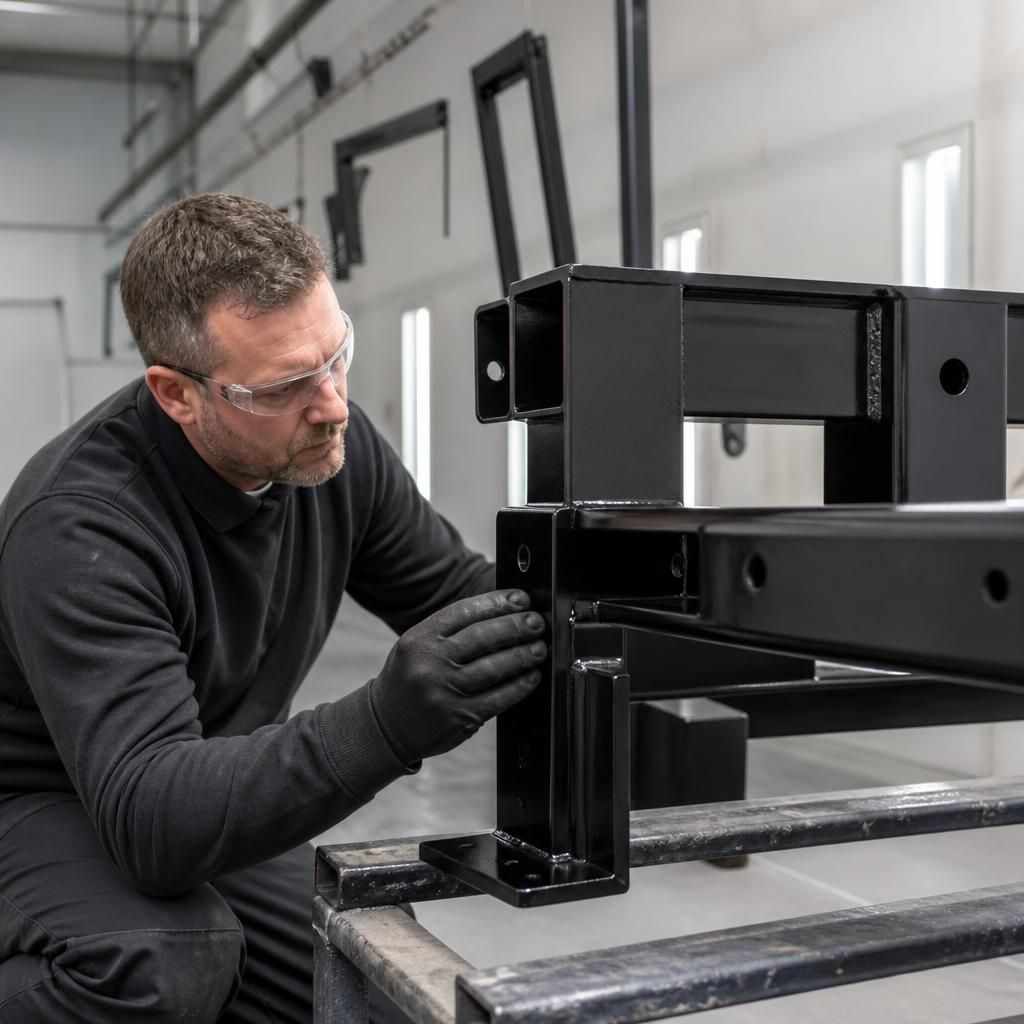
The performance of a specialised coating is influenced by component design as well as powder selection. Enclosed sections, lap joints and unvented cavities can retain moisture or restrict coating access, creating conditions where corrosion develops despite a sound finish on exposed faces. Designing components with suitable drainage, ventilation and accessible surfaces helps the coating provide more complete protection throughout service.
This is particularly relevant to fabricated assemblies used in construction, manufacturing and automotive applications. Designers and coaters should consider how parts will be joined, cleaned, handled and exposed after installation. Reducing water traps, separating dissimilar materials where appropriate and allowing for inspection can help preserve both the coating and the underlying metal. A specialised finish therefore works most effectively when its properties are considered alongside the component’s geometry, assembly method and operating environment.
Discuss specialised coating requirements for your metal components
Discuss your component’s operating conditions, substrate and finish requirements with a specialist to identify a suitable nylon or corrosion-resistant coating system. Providing details of exposure, dimensions and any surfaces that must remain uncoated will help inform the coating specification.