

What are the specific benefits of choosing powder coating over traditional painting methods for steel and aluminium components?
Powder coating gives steel and aluminium components a tougher, more uniform finish than traditional wet painting, with improved resistance to chipping, abrasion, corrosion and weathering. The dry application also supports efficient batch processing, consistent coverage and a clean finish without the runs or brush marks associated with conventional painting.
For steel and aluminium components, powder coating offers advantages over traditional wet painting through its controlled application, curing and material usage. The process applies electrically charged dry powder to the prepared metal, then uses heat to form a continuous coating. This removes several variables associated with liquid paint, including solvent evaporation, wet-film flow and the need to build a finish through multiple drying stages.
Key benefits include:
- More controlled film formation: Powder is applied as a measured dry layer and fused during curing. This helps produce a defined coating thickness across repeat components, provided the part preparation, application settings and oven conditions are properly controlled.
- Reduced risk of application contamination: Wet paint can be affected by dust, moisture, solvent balance and airborne particles while it is drying. Powder is applied dry and cured in a controlled environment, reducing the period in which the newly applied finish remains vulnerable to handling or airborne contamination.
- Less solvent use: Conventional paints commonly rely on liquid carriers that evaporate during drying. Powder coating does not use the same solvent-based application system, which can reduce solvent emissions and simplify the management of paint-related vapours. The precise environmental profile still depends on the powder formulation, pre-treatment chemicals and the overall process.
- Efficient use of coating material: Powder that does not initially adhere to a component may be collected and, where the system and powder type permit, reused. This can reduce material waste compared with wet paint overspray, which normally requires collection and disposal. Reclaim arrangements need careful control so that colour and finish consistency are not affected.
- Fewer drying-related handling issues: Once a coated component has completed its cure and cooled sufficiently for handling, there is no wet film to smear, drag or mark in the way that can occur with recently painted parts. This is particularly useful for fabricated assemblies, brackets, enclosures and other items that need to move through subsequent production or packing stages.
- Consistent results across repeat parts: Automated guns, controlled voltage and repeatable oven settings can make powder coating well suited to production runs. The same specification can be applied across a batch when the components have consistent geometry and are correctly positioned for spraying.
- Flexible appearance options: Powder systems are available in a broad range of colours, gloss levels and surface textures. This allows a steel or aluminium component to be specified for a particular visual requirement as well as its functional use. Textured finishes can also help disguise minor surface variations that would remain more visible beneath a smooth liquid coating, although powder cannot conceal poor fabrication or inadequate preparation.
- Suitable for different component geometries: Electrostatic application can coat accessible faces, edges and profiles without the brush marks associated with manual painting. Powder selection and spray technique must be adapted for recessed areas, Faraday cage effects, sharp edges and complex fabrications, as these features can affect how the charged particles reach the surface.
The benefit is not simply the powder itself. Steel and aluminium require appropriate preparation before application, and the preparation route differs according to the substrate, existing surface condition, contamination and the intended service environment. Degreasing, removal of mill scale or oxidation, suitable conversion treatment and thorough drying all influence the final bond. Aluminium in particular needs careful control of surface oxidation, while steel may require preparation that addresses mill scale or early corrosion.
Powder coating can also simplify specification because the finish is formed in one controlled curing cycle rather than relying on a series of wet coats to achieve the required build. That does not mean every component should receive a single coat: the correct system depends on the metal, pre-treatment, powder type, geometry and exposure conditions. Components with unusual dimensions, heat-sensitive fittings or assembled parts need to be assessed before processing because the curing oven and temperature profile form part of the coating method.
Traditional painting remains appropriate in some situations, including components that cannot tolerate curing temperatures, items that are too large for the available oven, or work requiring extensive on-site touch-up. Powder coating is most advantageous where the component can be prepared consistently, safely accommodated in the curing equipment and processed to a defined specification. For manufacturers and fabricators, the practical choice should therefore consider the metal grade, dimensions, batch pattern, required appearance, service conditions and any later machining or assembly.
A specialist coating provider can assess these factors before production and recommend a preparation and powder system suited to the steel or aluminium component. This helps ensure that the comparison with traditional painting is based on the complete process—not just the application method—and that the selected finish is compatible with how the part will be manufactured, handled and used.
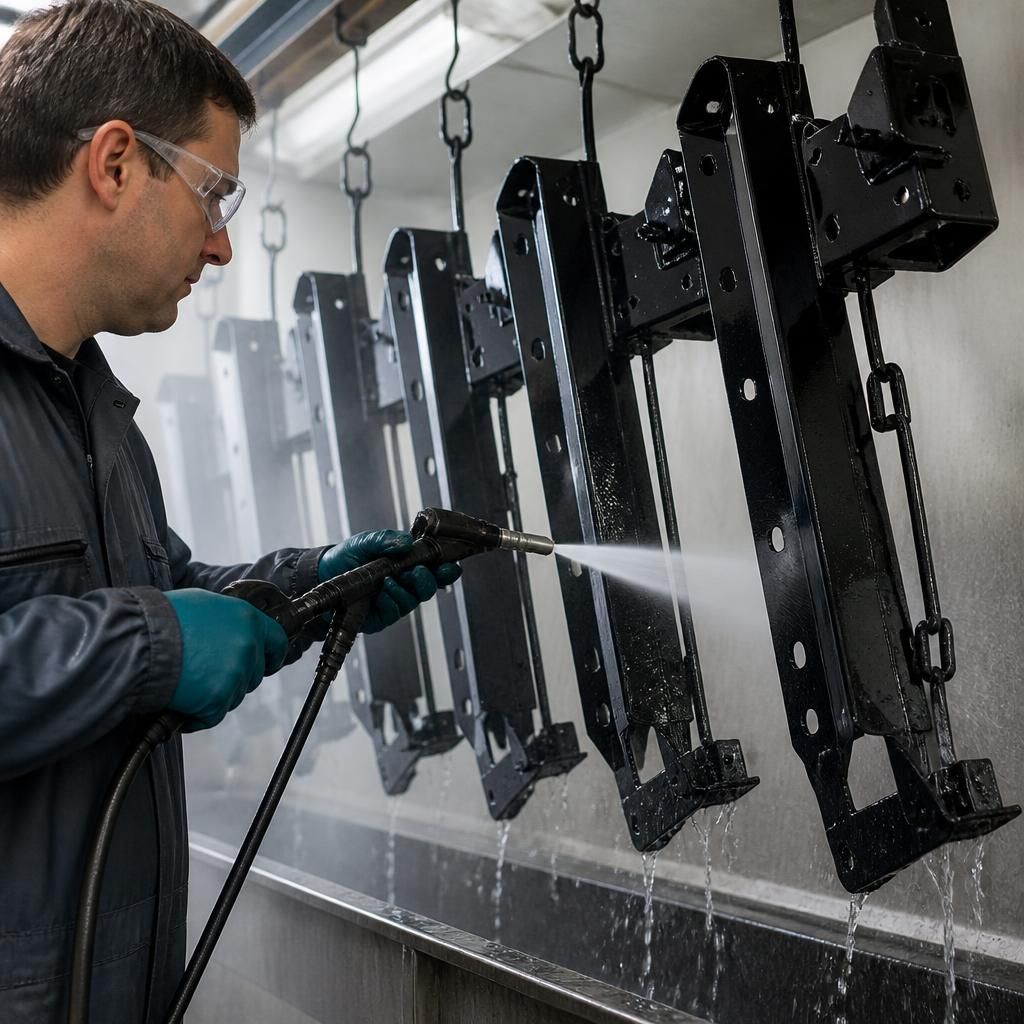
Powder coating can provide stronger resistance to many oils, cleaning agents and industrial contaminants than a conventional decorative paint system, provided the powder formulation is selected for the intended exposure. During curing, the powder forms a cross-linked film that is less likely to soften, swell or lift when exposed to routine contact with specific chemicals.
This is particularly relevant for steel and aluminium components used around machinery, fabrication equipment, vehicles or industrial handling areas. The correct choice still depends on the chemical, its concentration, contact time and operating temperature, so chemical exposure should be included in the coating specification rather than treated as a general property of every powder finish.