

What are the key maintenance practices required after applying a protective powder coating to ensure its longevity and effectiveness?
Protective powder coating lasts longest when its surface is cleaned with a mild detergent, inspected regularly for chips, scratches, corrosion or loss of adhesion, and kept free from contaminants that may damage the finish. Repair exposed areas promptly using a compatible system, avoid abrasive tools and harsh chemicals, and address moisture, salt or chemical deposits before they can undermine the coating.
Effective maintenance of a protective powder-coated surface depends on controlling how the coated component is handled, installed and exposed throughout its service life. The coating should be allowed to cure fully in accordance with the specified system before it is assembled, transported or put into service, then managed through a planned regime that limits mechanical damage, trapped moisture, incompatible contact materials and unsuitable repairs.
Allow the coating to complete its cure before use. Powder coating develops its intended properties during the specified curing cycle. After application, avoid stacking, packaging tightly, assembling or loading components until the coating provider’s requirements have been met. Premature handling can mark the finish, cause blocking between surfaces or reduce resistance at contact points. Use clean, non-abrasive separators during storage and transport, and avoid dragging coated items across benches, floors or other metalwork.
Control handling and installation damage. Lifting equipment, clamps, chains, slings and packing materials should be suitable for finished components. Where contact is unavoidable, use protective padding that will not leave residues or rub through the film. During installation, prevent tools from striking the coating and avoid tightening fixings in a way that crushes or chips the finish. Edges, corners, drilled areas and bracket interfaces require particular care because they are more vulnerable to impact and local damage than broad, flat faces.
Manage joints, fixings and contact points. Powder-coated parts should be installed so that water cannot remain trapped behind brackets, beneath overlapping sections or around fasteners. Drainage paths must remain clear, and sealants or jointing materials should be confirmed as compatible with the coating and the service environment. Where coated metal is assembled with a different metal, the design should consider electrical isolation and moisture at the interface to reduce the risk of galvanic corrosion. Cut edges, drilled holes and areas exposed during assembly may require an approved treatment suited to the complete protective system rather than an unrelated touch-up product.
Prevent mechanical and operational overload. A coating protects the substrate but is not a substitute for impact protection or correct component design. Review areas subject to repeated rubbing, vibration, abrasion, vehicle contact, moving parts or contact with sharp materials. Guards, spacers and revised handling procedures may be more effective than repeatedly repairing the same damaged location. If the component’s use changes, reassess whether the original coating system remains suitable for the new loading, temperature or chemical conditions.
Keep drainage and surrounding conditions under control. Maintenance should include the condition of nearby seals, gaskets, vents, drainage holes and supports, since failures in adjacent components can expose the coating to prolonged wet conditions. Remove accumulated material from concealed gaps and structural interfaces using methods that do not damage the film. In external or industrial settings, review changes in nearby processes, emissions, storage materials or chemicals; a coating selected for one exposure may require a different maintenance approach if the environment changes.
Use a documented maintenance schedule. The appropriate interval depends on the coating specification, component design, location and severity of exposure, so a fixed interval should not be applied to every installation. A practical record should identify the coated item, application date, coating system, installation environment, repair materials and any recurring problem areas. Record unusual exposure events, such as impact, flooding, chemical release or prolonged heat, and assess the affected areas separately from routine maintenance.
Deal with damage as a coating-system issue. A local repair should not simply conceal a defect. First establish whether the substrate has been exposed, whether corrosion has developed beneath the surrounding film, and whether the damage indicates a wider adhesion or preparation problem. The repair material, surface preparation, film build and curing method should be compatible with the original system and the operating environment. On highly exposed or safety-critical components, obtain a coating specialist’s assessment before applying a touch-up.
Where damage is widespread, the practical solution may be refurbishment and recoating rather than repeated local repairs. This normally requires assessment of the existing film, removal of poorly bonded material, treatment of any corrosion and confirmation that the proposed replacement system is compatible with the substrate and intended exposure. Keeping application and maintenance records makes that decision more reliable and helps ensure that future work preserves the protective function rather than adding an incompatible layer.
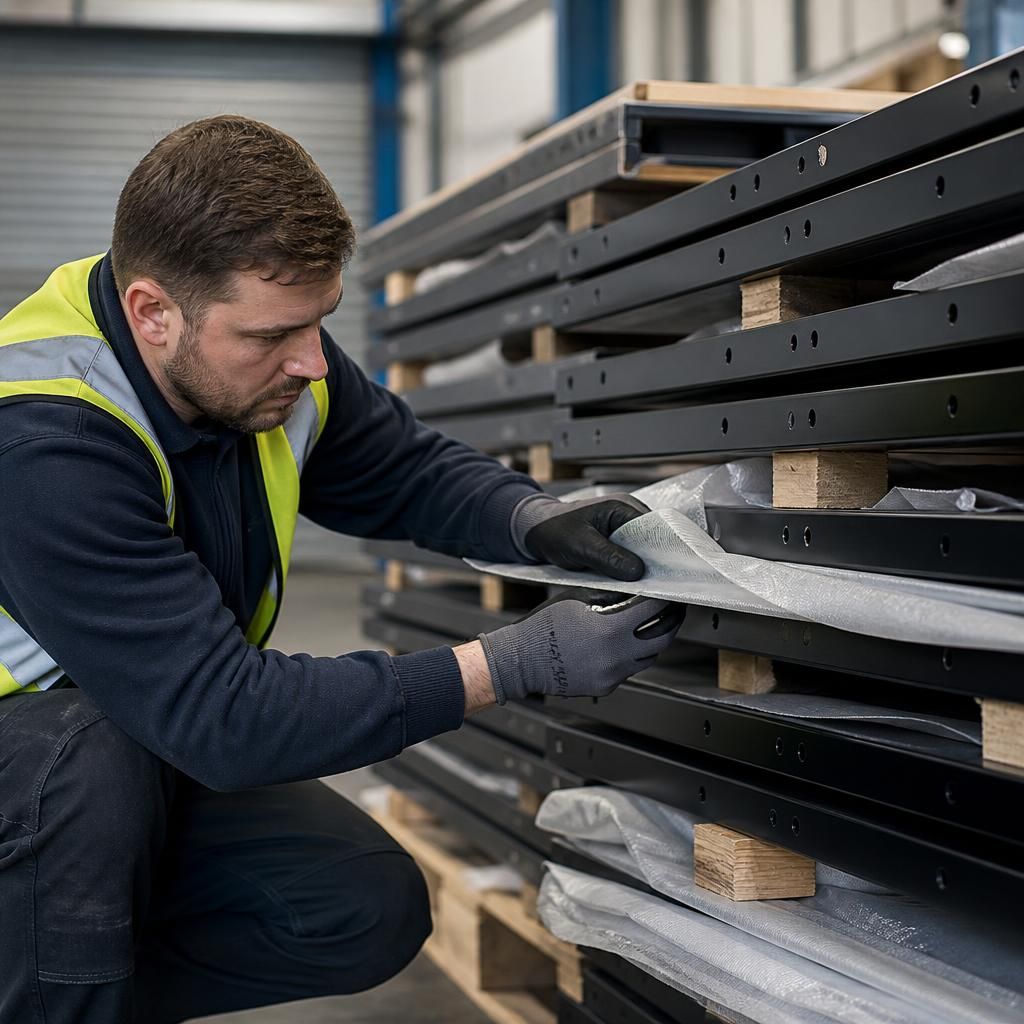
Protective powder coating maintenance also includes checking the materials that remain in contact with the finished surface. Adhesive labels, tapes, rubber pads, plastic components, treated timber and storage materials can transfer residues, retain moisture or cause staining if they are unsuitable for prolonged contact.
Review these contact materials whenever a coated component is repacked, stored differently or installed in a new arrangement. Remove temporary labels and protective films in line with the coating supplier’s guidance, and replace any packing that leaves deposits or marks. If a material must remain against the coating, confirm its compatibility with the coating system and the service environment before use.