

What preparation steps are crucial for ensuring a uniform and durable powder coating application?
Uniform, durable powder coating depends on thorough preparation: inspect the metal, remove oil, grease, rust, scale and previous coatings, apply the appropriate pre-treatment, then rinse and dry the parts completely. Mask areas that must remain uncoated, ensure surfaces are free from contamination and confirm the components are correctly positioned and grounded before powder application.
The most important preparation steps are confirming the coating specification, making the component physically ready for coating, controlling moisture and contamination during handling, and validating the process on the actual substrate. Preparation should be planned before parts reach the spray booth, because defects in the metal, unsuitable design details or inconsistent handling can undermine an otherwise well-controlled application.
Confirm the coating requirements first. The required powder type, colour, gloss, texture, film thickness and performance characteristics should be agreed against the component’s service environment. Parts exposed to weather, chemicals, abrasion or repeated temperature changes may require different preparation and coating controls from components used indoors. The specification should also identify areas where coating thickness, electrical conductivity, appearance or dimensional tolerance is critical.
Check the component design and fabrication quality. Coating follows the shape of the part, so sharp transitions, deep recesses, narrow gaps and complex internal sections can affect powder coverage and curing. Fabricated components should be supplied with sound welds and a design that allows the coating to reach the required surfaces. Burrs, sharp edges, weld irregularities and fabrication defects should be corrected as part of the manufacturing preparation rather than expecting the coating to conceal them. Drainage and venting details are particularly important for hollow or enclosed fabrications, as trapped liquids or air can cause coating faults during later stages of processing.
Allow for outgassing and porous materials. Castings, galvanised components and some fabricated products can release air, moisture or process residues when heated. This may produce pinholes, blisters or small craters in the cured film. The risk should be assessed according to the substrate and component construction. A suitable pre-bake, approved outgassing treatment or compatible powder system may be needed, but the correct approach depends on the material, geometry and required finish. This is best established before production rather than after defects appear.
Separate incompatible materials and requirements. Different metals, previously treated surfaces and mixed batches may respond differently to the same coating process. Components should therefore be grouped according to substrate, specification and intended finish. This helps prevent variation caused by applying one set of process conditions to parts with different thermal behaviour or surface characteristics. Any areas that must retain close tolerances should be identified on the drawing so that the finished coating can be allowed for during design and inspection.
Prepare the handling and packing method. Parts should be moved using clean, suitable supports that will not introduce fibres, oil or other contamination after preparation. Contact points and protective packaging need to be selected so that the prepared surface is not marked before coating. Components should not be placed directly on dirty workshop surfaces or handled unnecessarily once they are ready for application. A defined route from preparation through coating and curing reduces the chance of recontamination.
Control the working environment. Dust, airborne fibres, moisture and oil vapour can affect the appearance and adhesion of a powder coating. Preparation and transfer areas should be kept controlled and separated from activities that generate debris or spray contamination. Powder and prepared components should be protected from damp conditions, while the metal should be allowed to reach a stable temperature before processing where condensation could be a risk. Environmental conditions should be recorded when a finish is particularly sensitive or when production consistency needs to be demonstrated.
Check powder condition and process compatibility. Powder should be stored and handled in accordance with its technical requirements, with stock protected from moisture, heat and contamination. Before production, the selected powder should be checked against the substrate, pre-treatment system and curing schedule. Mixing different powders or using material outside its specified condition can alter colour, texture, flow and cure behaviour. Batch identification is useful for tracing any variation back to the material or process stage.
Use sample panels or trial components where appropriate. A trial provides an opportunity to confirm appearance, coverage, adhesion and curing on the same or a representative substrate before a full batch is processed. It can also reveal problems caused by recesses, welds, cast surfaces or unusual part dimensions. Inspection should consider the requirements that matter for the finished component, including visual uniformity, film build, adhesion and the absence of visible defects. Acceptance criteria should be agreed in advance rather than judged inconsistently after production.
Document preparation requirements. Drawings, batch records and work instructions should identify the substrate, finish, critical surfaces, allowable tolerances and any special handling needs. Recording the preparation route, powder identification and inspection findings makes it easier to investigate variations and repeat an approved process. For manufacturers and fabricators, providing accurate drawings and clear coating instructions at the outset allows the coater to assess risks before the parts enter production.
In practice, uniform and durable results depend on preparation being treated as a controlled production stage rather than a final cleaning task. Correct component design, suitable material grouping, protection after preparation, environmental control, powder compatibility and documented inspection all work alongside the physical surface treatment to support a consistent coating application.
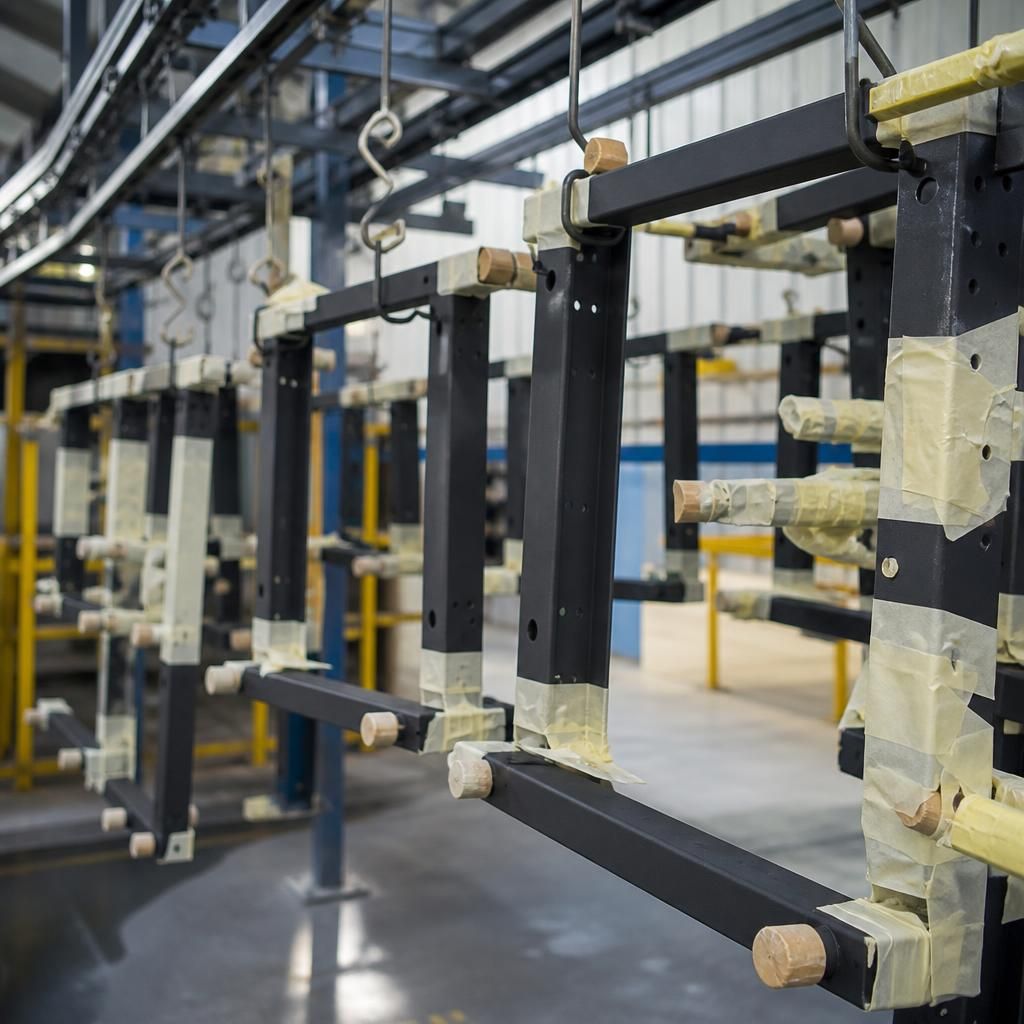
Masking and racking must be planned before coating because they determine which surfaces receive powder and whether the component can be coated consistently. Use suitable plugs, caps or purpose-made masking materials to protect threads, mating faces, bores, earth points and other areas where powder would affect assembly or electrical performance. Masking should be secure enough to remain in place during spraying and curing, without leaving adhesive residue or damaging the prepared surface.
Racking also needs careful attention. Supports should hold each component securely while exposing the required faces to the spray, and contact points should be positioned where minor marks can be tolerated or subsequently removed. Clean metal-to-metal contact is essential for electrostatic application, so racks and hooks should be checked for accumulated cured powder and contamination before use. A consistent racking arrangement helps maintain access, coating coverage and repeatable contact throughout the batch.