

What maintenance requirements are necessary to ensure the long-term performance of my fluidising hopper?
Long-term fluidising hopper performance depends on scheduled cleaning, inspection and checks of the air supply, fluidising membrane, seals and powder-contact surfaces. Remove residual powder, identify wear or blockages promptly, and follow the equipment manufacturer’s servicing and replacement guidance to maintain consistent fluidisation and protect coating quality.
Long-term fluidising hopper performance requires a planned maintenance system covering operational checks, control equipment, structural condition, powder handling and service records. Routine attention should be supported by the equipment manufacturer’s maintenance instructions, with checks carried out at intervals appropriate to the hopper’s duty, powder type and operating conditions.
Check the hopper’s operating controls and instrumentation. Confirm that pressure regulators, gauges, valves, timers and control panels provide stable, repeatable readings. A drifting gauge, sticking valve or inconsistent control signal can alter powder behaviour without an obvious mechanical fault. Where instruments are used to control the process, compare their readings with a known reference and arrange calibration or replacement if they no longer provide reliable information.
Inspect the hopper body, supports and connections. Look for distortion, corrosion, damaged access covers, loose fasteners and signs of vibration around brackets or mounting points. Check that pipework and flexible connections are properly supported and that movement has not placed stress on the hopper or its fittings. Structural problems can affect alignment and introduce air leaks, so they should be corrected before they develop into a more extensive repair.
Verify electrical safety and earthing. Powder handling equipment should have sound electrical connections and an effective earth path suitable for the installation. Inspect cables, connectors, switches and control enclosures for damage, contamination or loose connections. Any earthing or electrical fault should be investigated by a competent person, particularly where combustible powder is present. Equipment should be isolated and depressurised before maintenance begins, following the site’s lockout and isolation procedure.
Control the storage and condition of powder. Powder introduced into a hopper should be stored in sealed, dry conditions and protected from temperature fluctuations and contamination. Moisture uptake, agglomeration or mixed powder residues can change flow characteristics and place extra demand on the fluidising system. Keep different powders and batches clearly identified, and use a documented changeover procedure where the hopper is used for more than one coating material.
Changeover maintenance should account for areas where powder can remain trapped, including outlets, corners, access points and transfer equipment. The aim is not only to remove visible contamination but also to prevent an unintended mixture of powders with different chemistry, colour or application requirements. Use cleaning methods that are compatible with the hopper materials and the powder manufacturer’s handling guidance.
Monitor performance trends rather than relying only on fixed intervals. Record operating pressure, powder behaviour, control settings, faults and any adjustment made during servicing. A gradual change in these observations may indicate developing problems before they affect coating consistency. Maintenance records should identify the date, task completed, parts changed, person responsible and any follow-up action required.
Keep replacement parts suitable for the specific hopper configuration and do not substitute components solely because they appear physically similar. Incorrect valves, gaskets, electrical parts or control devices may change the equipment’s operating characteristics or compromise safety. Replacement intervals should be based on the manufacturer’s instructions, condition assessments and the severity of the working environment.
Where the hopper forms part of an automated powder coating line, include it in the wider site maintenance plan. Interlocks, level detection, transfer equipment and control-system communication should be tested as part of the relevant planned service, so that a fault in one part of the line does not lead to uncontrolled powder feed or an unexpected process interruption.
Use trained personnel for servicing and retain a clear record of inspections, calibration, faults and repairs. If performance remains inconsistent after the prescribed checks, stop making unrecorded adjustments and obtain technical assistance from the equipment supplier or a suitably qualified powder coating engineer. This approach helps preserve repeatable operation while ensuring that safety-related defects are addressed before the hopper is returned to production.
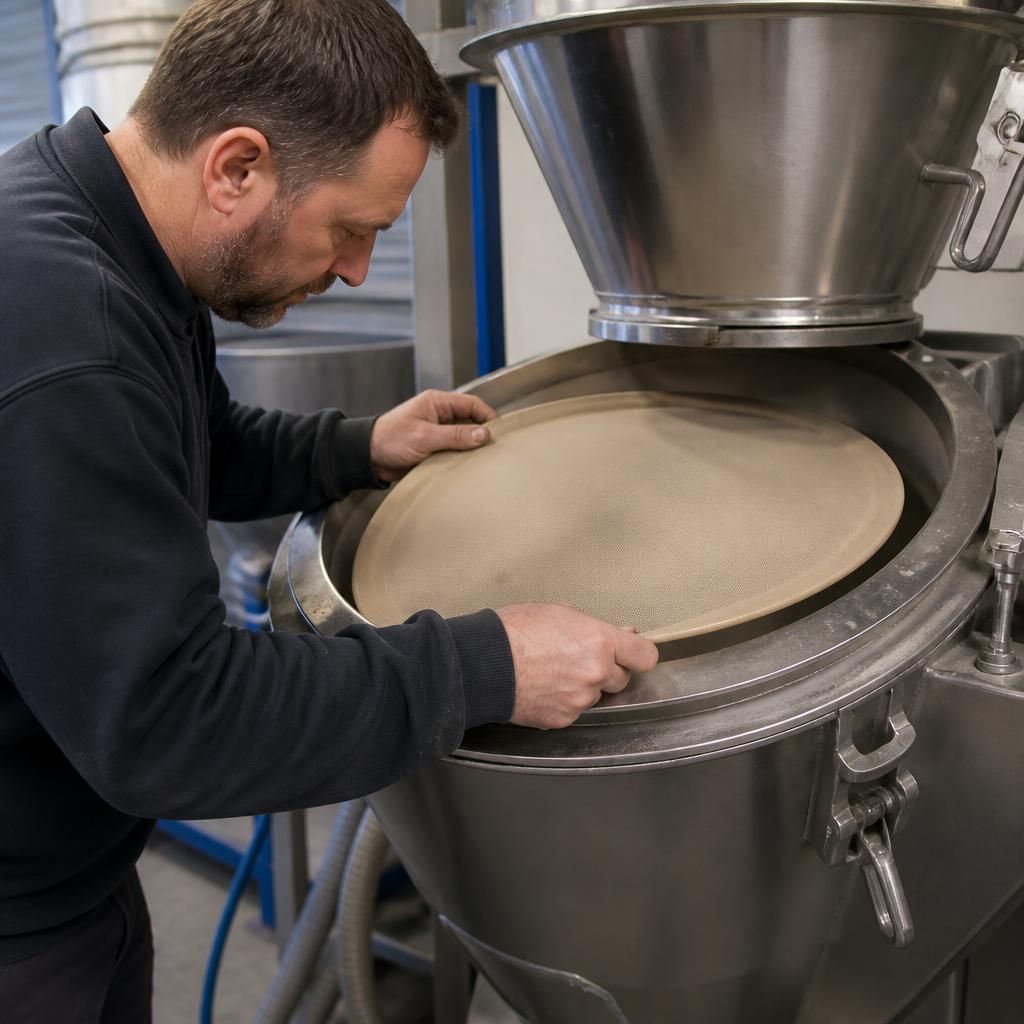
The fluidising membrane needs particular care because its fine pores distribute air beneath the powder bed. During cleaning, use only methods approved for the membrane material and avoid scraping, piercing, folding or directing concentrated high-pressure air at its surface. Abrasive tools and unsuitable solvents can enlarge or block the pores, causing uneven fluidisation even when the air supply is functioning correctly.
When the membrane is refitted, check that it is seated evenly and that its retaining components and gasket are correctly positioned. A crease, damaged edge or poor seal can create localised air paths and reduce the consistency of powder movement. Replace the membrane where cleaning no longer restores uniform airflow, or where the material shows permanent distortion, cracking or contamination that cannot be removed safely.